Venice, FL is one of only two jurisdictions in the region, with Hernando County, whose building department says in writing that rescreening needs neither a permit nor a contractor's license. That holds inside the City of Venice, a town of 25,463 people at the 2020 census with a median age of 69.8, where 62.8 percent of residents are 65 or older. South Venice, Venice Gardens and other areas with a Venice address sit in unincorporated Sarasota County, which publishes no such exemption.
Gated communities add their own layer. This page covers the screen enclosure Venice FL owners run into: city and county rules, the Venetian Golf & River Club standards, what work costs, how the frame is engineered for the highest design wind in the region, and what Milton showed about cages here.
Venice rules at a glance
In city limits: no permit and no license to rescreen, but a permit to enclose a porch or build a new cage. In the county or a gated community, more steps apply.
| Item | City of Venice | Unincorporated Sarasota County | Venetian Golf & River Club |
|---|---|---|---|
| Rescreen only | No permit (item 10, "Re-screening") | Not named on the no-permit list; ask | No ACC approval if it matches existing |
| Contractor license to rescreen | Not required (on the license-free list) | Not stated; some exempt items need one | Follows city or county rule |
| Enclosing a porch or screen room | Permit required | Permit required | ACC approval plus permit |
| New or replacement cage | Permit required | Permit required | Like-for-like replacement is on the approval list |
| Plans for owner-occupied homes | Licensed design professional or contractor signs wind load calculations | Not stated in the guidelines checked | Follows city or county rule |
| Frame and screen | No city color rule | No county color rule | Bronze frame, charcoal screen, bronze super gutters |
| Repainting the cage | No permit listed | No permit listed | ACC application required, even in the same color |
| Online portal | eTRAKiT | Accela | n/a |
Swipe the table sideways to see every column →
From the City of Venice Building Permit Requirement Guidelines and Building Division FAQ, Sarasota County Building Permit Guidelines (updated August 2026), and the Venetian Golf & River Club POA Community Wide Standards (approved Aug 20, 2020). Fetched 2026-10-13. Whether the Venetian sits inside city limits was not confirmed; check your parcel.
What the City of Venice allows
The city lists re-screening twice: once among work that needs no permit, and once among work that can be done in Venice without holding a contractor's license. That means a homeowner can legally rescreen their own cage inside city limits, and a handyman can too, as long as the job stays screen-only. Swapping a bent beam, rebuilding a door frame or adding walls is a different job.
The same guidelines give enclosing existing carports, porches and screen rooms as an example of work that does need a permit. For new structures on owner-occupied one- and two-family homes, the Building Division's FAQ says a licensed design professional or contractor must sign the plans for wind load calculations. Permits are filed through the city's eTRAKiT portal.
If you rescreen it yourself
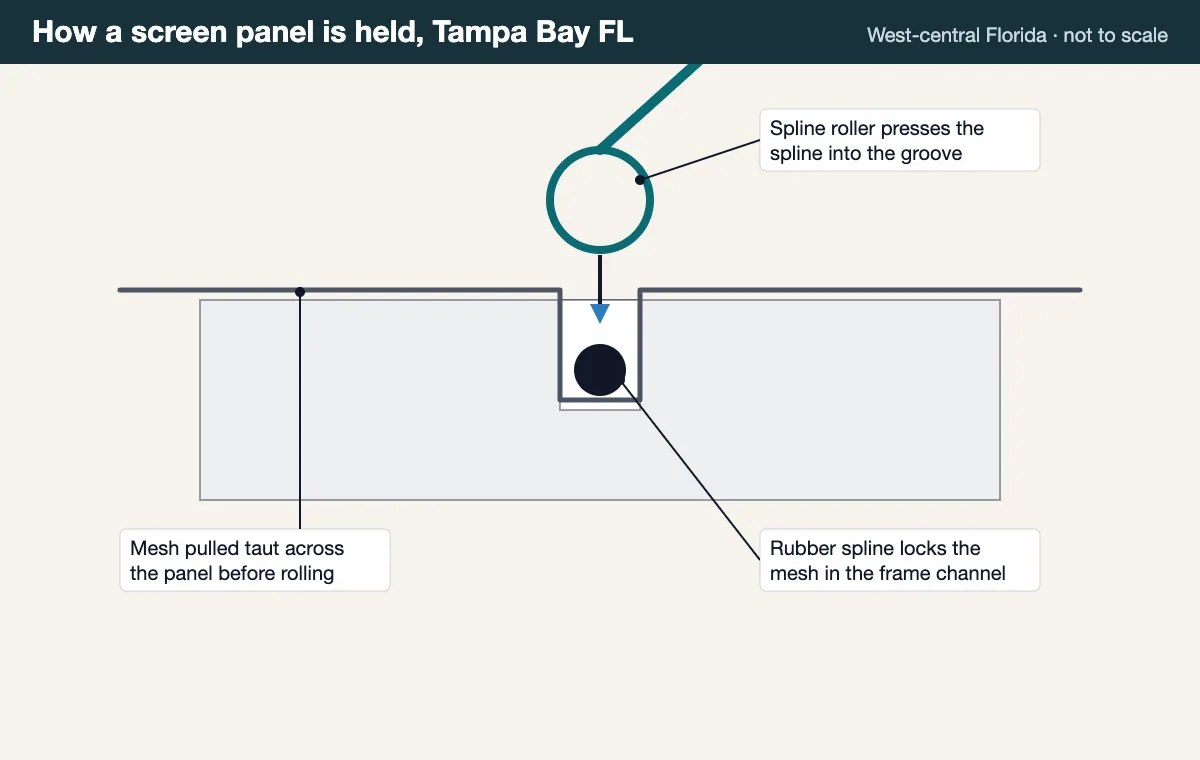
Because the city does not require a license, some Venice owners do a few panels themselves. The job is the same one a crew does at scale: pull the old spline and mesh out of the channel, clean the channel, stretch new mesh over the panel, roll fresh spline in to lock it, and trim. Two things catch people out. Roof and upper mansard panels mean ladder work high on the frame, and a door that is rebuilt badly can stop self-closing, which matters if the cage is the pool barrier. Ground-level wall panels are the sensible do-it-yourself limit.
Outside city limits, Sarasota County's no-permit list does not mention rescreening, and its guidelines note that some exempt items still need a licensed contractor and that flood zones change the answer. The Tampa Bay pool enclosure permit guide lays out every jurisdiction.
Venetian Golf & River Club cage standards
In the Venetian, lanai cages are bronze aluminum with charcoal screens and bronze super gutters, and anything else needs prior approval from the ACC. The Venetian is a 1,039-acre gated community of 1,377 homes in a Northern Italian Renaissance theme, on the north side of Laurel Road about 1.5 miles east of I-75 Exit 195, beside the Myakka River in North Venice. Its Community Wide Standards, approved August 20, 2020, set out what can be done without asking.
- Frame: bronze aluminum. Screen: charcoal. Gutters: bronze super gutters.
- Deviations from that theme only with prior ACC approval.
- Removing a lanai cage and replacing it with a new like-for-like cage and screen is on the list of items that need approval.
- Maintenance that matches the existing condition, including the pool cage, does not need ACC approval.
- Painting is the exception: it needs an ACC application and approval even if the color palette stays the same.
- Lanai hurricane shutters must be metal, fabric in bronze, black or the house color, or clear plastic.
Put plainly: rescreening in charcoal is maintenance, a full cage replacement goes to the ACC even if it looks the same, and repainting always goes to the ACC. Other Venice communities set their own rules, so read your association's documents before ordering screen or paint. See pool cage painting and pool cage replacement for what each job involves.
What screen enclosure work costs in Venice
A full rescreen usually costs $1,500 to $4,500, a new pool cage $10,000 or more, and a replacement on Southwest Florida pricing starts around $12.55 per square foot. Venice sits where Tampa Bay and Southwest Florida markets meet, so both sets of published figures are useful.
| Job | Published range | Source and date |
|---|---|---|
| Rescreen a small lanai or porch, under 20 panels | $800 to $1,800 | Central Florida screen company, 2026 |
| Rescreen a mid-size cage, 20 to 40 panels | $1,500 to $3,200 | Central Florida screen company, 2026 |
| Rescreen a large or two-story mansard, 40 to 60+ panels | $2,800 to $4,500 | Central Florida screen company, 2026 |
| Standard rescreen, per sq ft | $2.50 ($3.00 with metal work) | Southwest Florida company, May 2025 |
| Heavy-duty polyester rescreen, per sq ft | $4.00 | Southwest Florida company, May 2025 |
| No-See-Um 20x20 upgrade | About $10 to $20 more per panel | Central Florida screen company, 2026 |
| Door closer swap | $15 to $40 for the closer, $50 to $150 labor | Tampa Bay contractor guide, Jul 2026 |
| New cage under 800 sq ft | $6,000 to $9,600 | Southwest Florida company, 2026 |
| New cage 800 to 2,000 sq ft | $9,600 to $24,000 | Southwest Florida company, 2026 |
| Replacement cage, per sq ft | From $12.55 standard view, $13.55 mid view | Southwest Florida company, May 2025 |
Swipe the table sideways to see every column →
Published contractor price guides fetched 2026-10-13. Southwest Florida means Fort Myers and Naples companies; Central Florida means Orlando. Use as planning ranges, not a quote.
What raises a Venice price
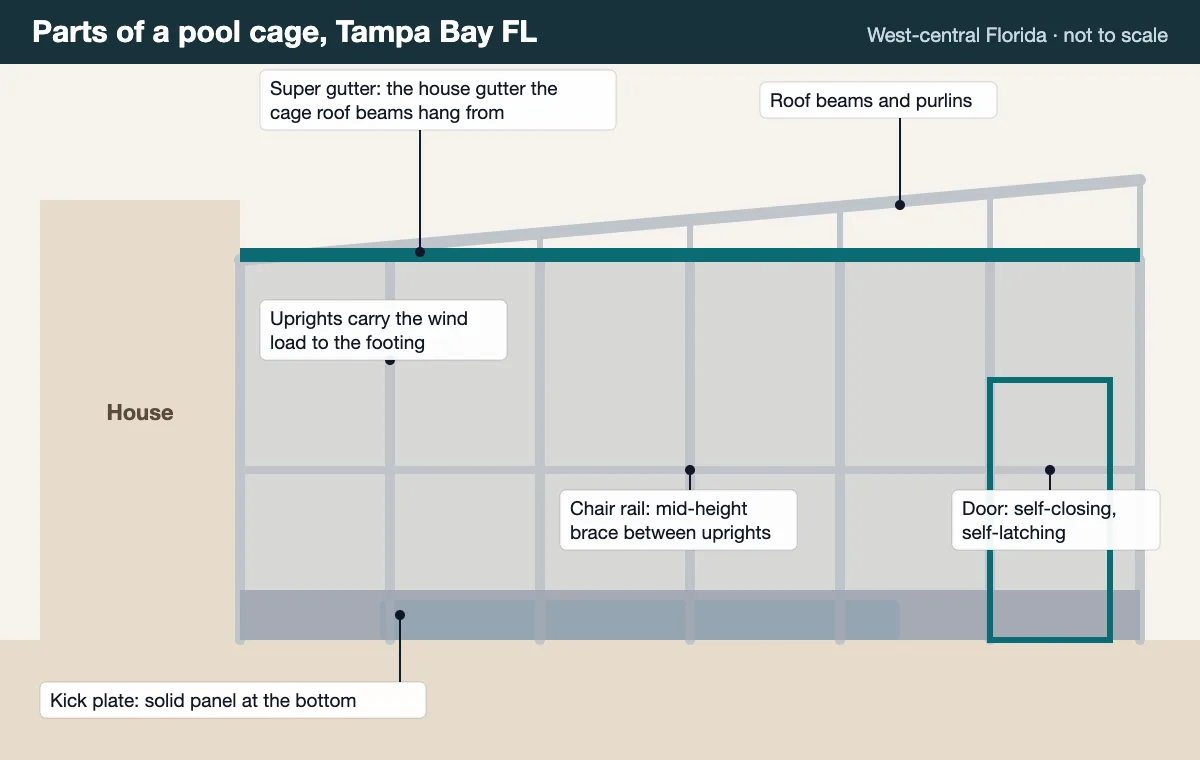
- Height: upper mansard panels cost more per panel than ground-level ones.
- Metal work: one company adds 50 cents per sq ft when loose or damaged framing has to be fixed during a rescreen.
- Screen choice: No-See-Um and heavy-duty polyester cost more than standard fiberglass.
- HOA requirements: bronze super gutters and bronze paint in communities that require them.
- Storm damage: bent members turn a rescreen into structural work with a permit.
Why Florida pools have screen enclosures, not glass
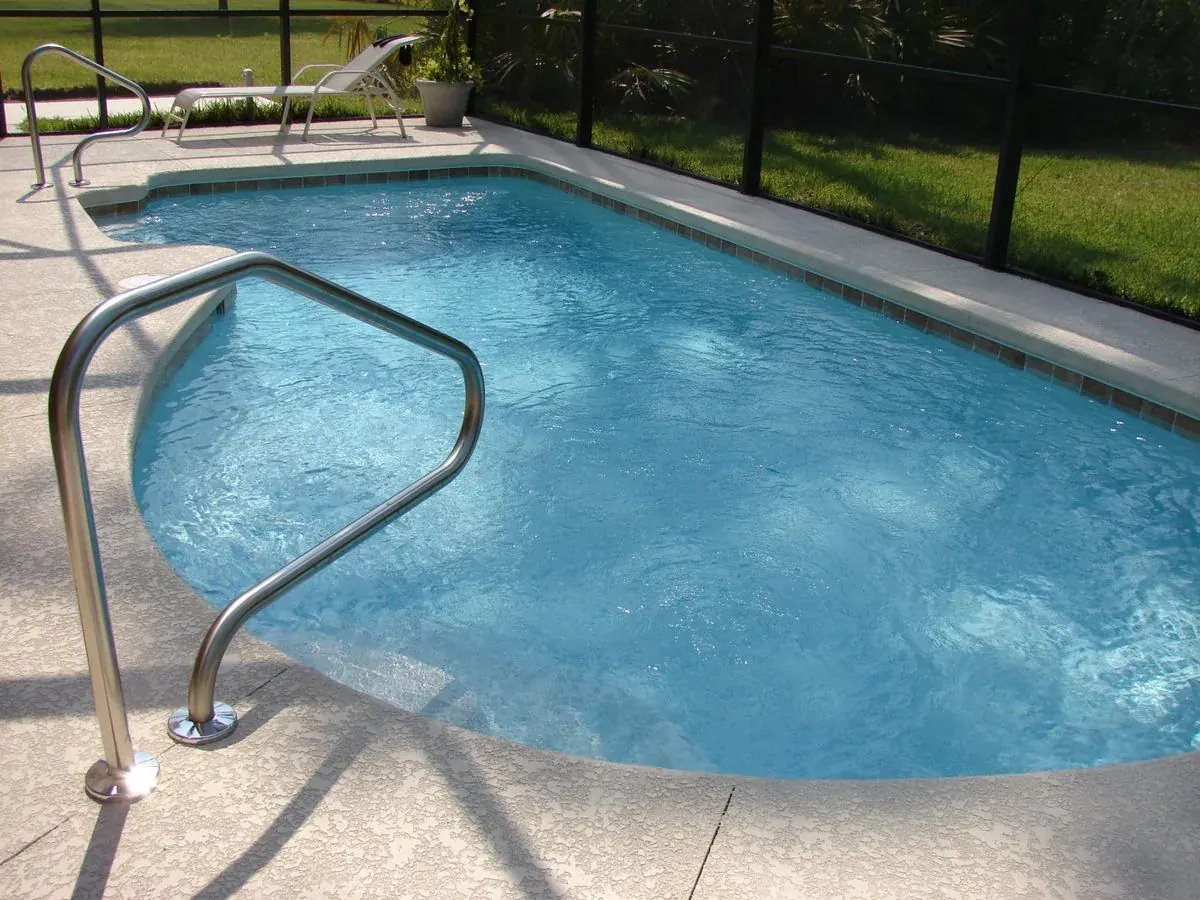
Most Florida pool enclosures are screen because screen lets air and light through while keeping bugs and debris out, and a properly built screen enclosure can also serve as the legally required pool barrier. Glass or panel enclosures exist, but they are a different product with their own rules.
- Bugs: UF/IFAS recommends screens over decks and swimming pools as a defense against lovebugs, which swarm statewide for a few weeks every April to May and August to September. Florida has more than 80 mosquito species.
- Barrier: the Florida Residential Code lets a standard screen enclosure count as the pool barrier, which state law sets at least 4 feet high on the outside with self-closing, self-latching gates.
- Wind: screen lets wind pass in a way solid panels do not. Florida code requires removable vinyl, glass or acrylic panels to carry a decal saying they must be removed when winds exceed 75 mph.
The guide on why Florida pools have cages goes further into the history and the law.
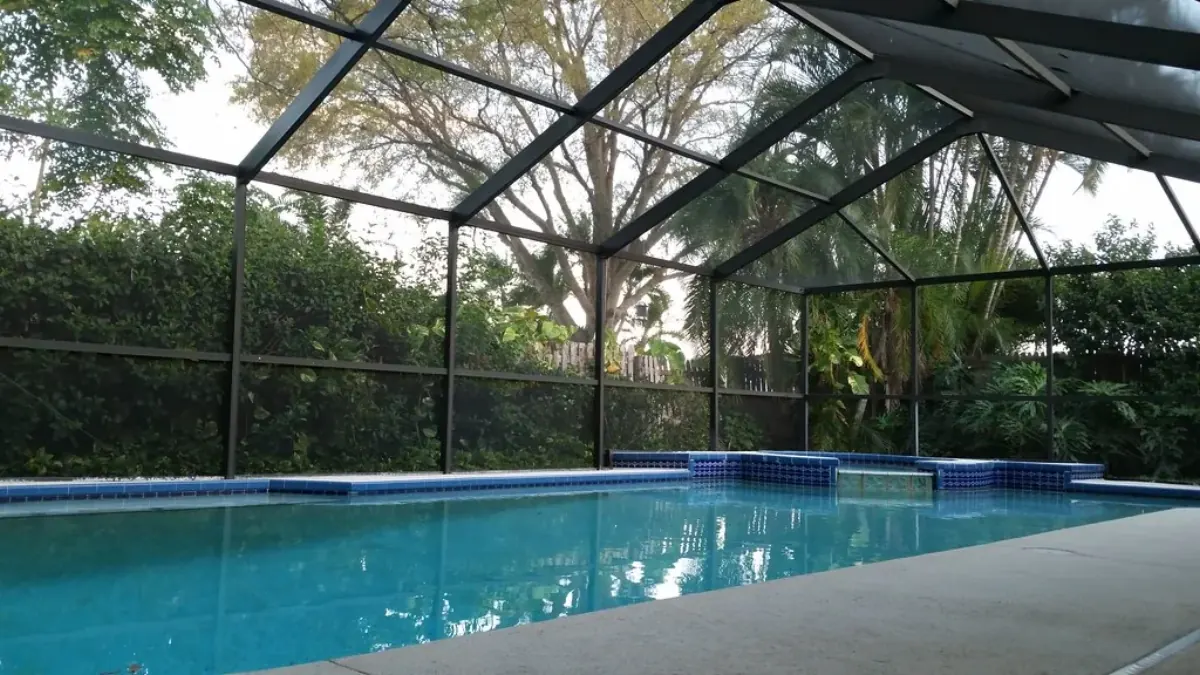
Milton at ground zero
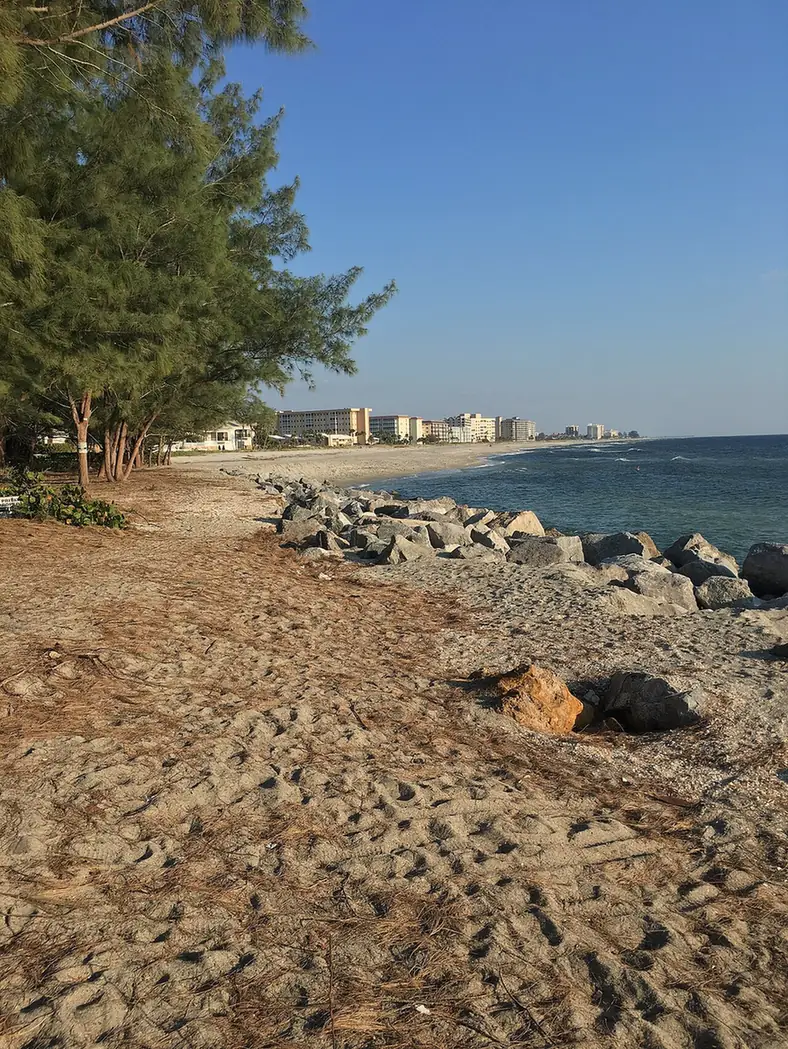
Milton made landfall just north of Venice, near Siesta Key, on October 9 to 10, 2024, putting Venice close to the center of its worst surge and wind. The National Hurricane Center's report says the strongest sustained wind measured anywhere in Florida was 79 knots, about 91 mph, with a 93-knot gust, about 107 mph, at a University of Florida tower on Venice Beach. The NWS logged a 97 mph gust at the Venice C-MAN station.
- Metal was wrapped around a tree in Country Club Estates.
- Surge was forecast at up to 15 feet but peaked at an estimated 7 feet.
- At least two planes flipped over at the Venice Municipal Airport.
- Bay Indies, Golden Beach, Country Club Estates, The Esplanade and Tarpon Center Drive were among the areas hit.
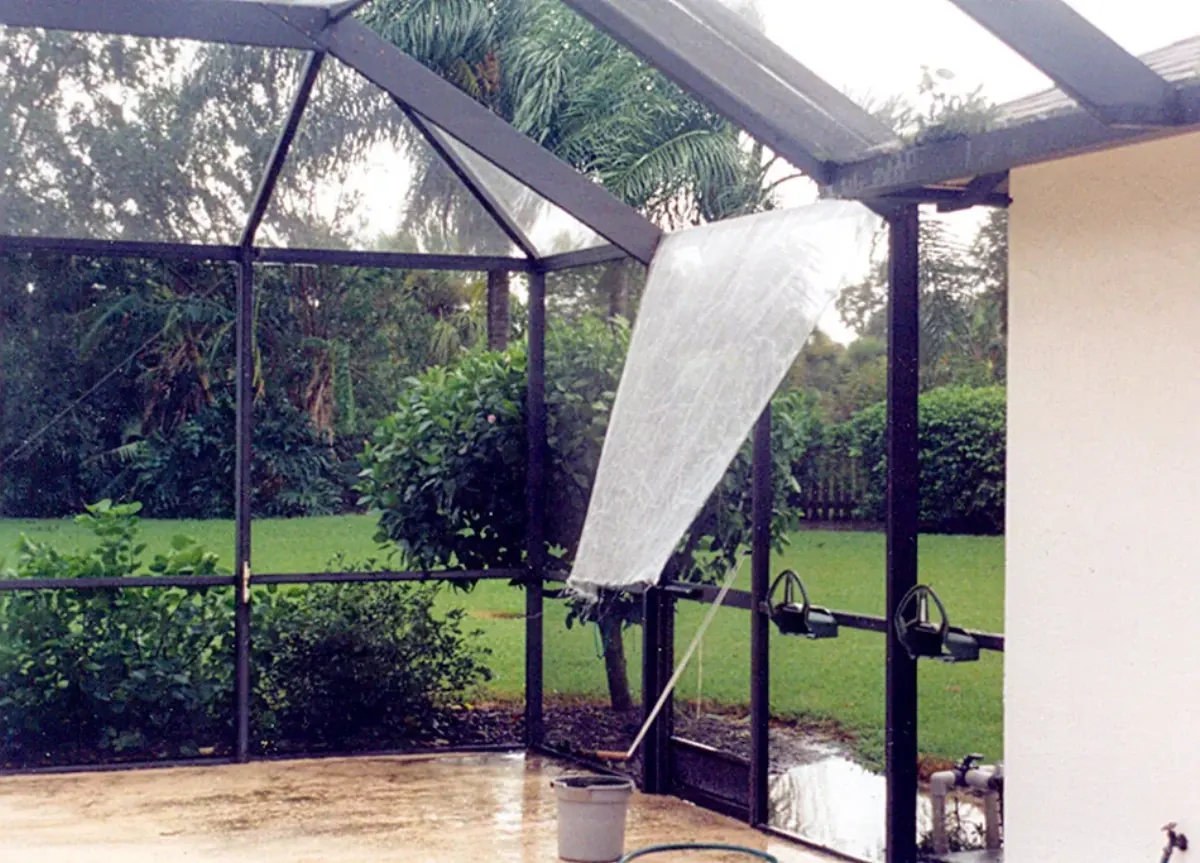
Venice had been tested before. During Ian in 2022, a station offshore Venice recorded sustained winds of 81.7 mph with gusts to 103.6 mph, and in Helene in 2024 the peak gust near Venice was 69 mph. Three storms in three seasons is a lot of strain on an older frame, even one that still looks straight.
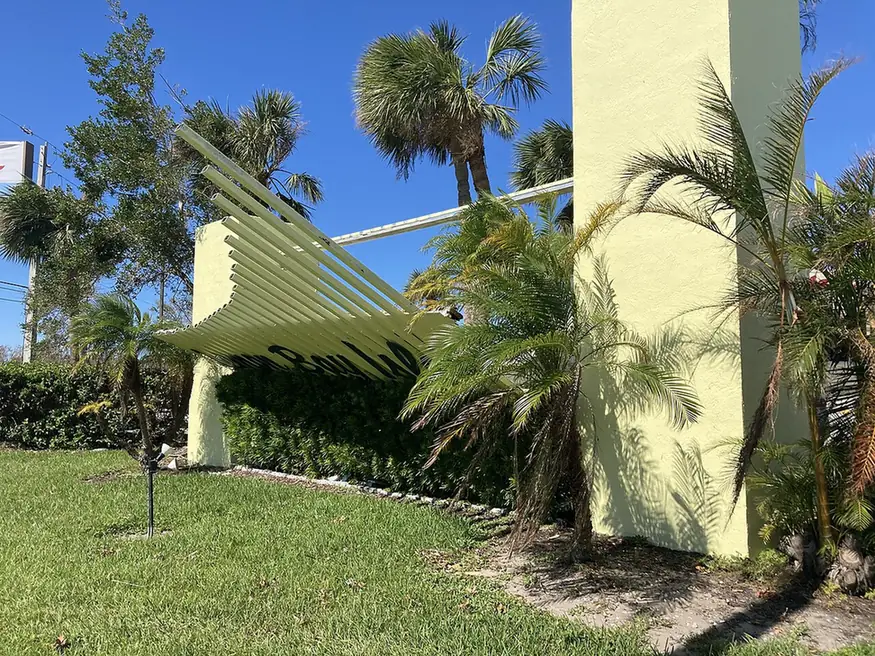
After a storm in Venice
- Stay out of a cage that is leaning or has members hanging; a partly collapsed frame can still move.
- Photograph the whole cage and each damaged spot before anything is cut away.
- Check the house connection and the super gutter for pulled fasteners.
- Test every door: if the cage is the pool barrier, it must close and latch on its own.
- Screen-only damage in city limits can be rescreened without a permit; anything structural needs one.
The hurricane damage repair page covers the claim side. Before the season, read the pool cage insurance guide: Citizens' HO-3 worksheet says screen pool cages open to the weather are not covered, and hurricane deductibles in Florida run $500 or 2, 5 or 10 percent of the dwelling limit.
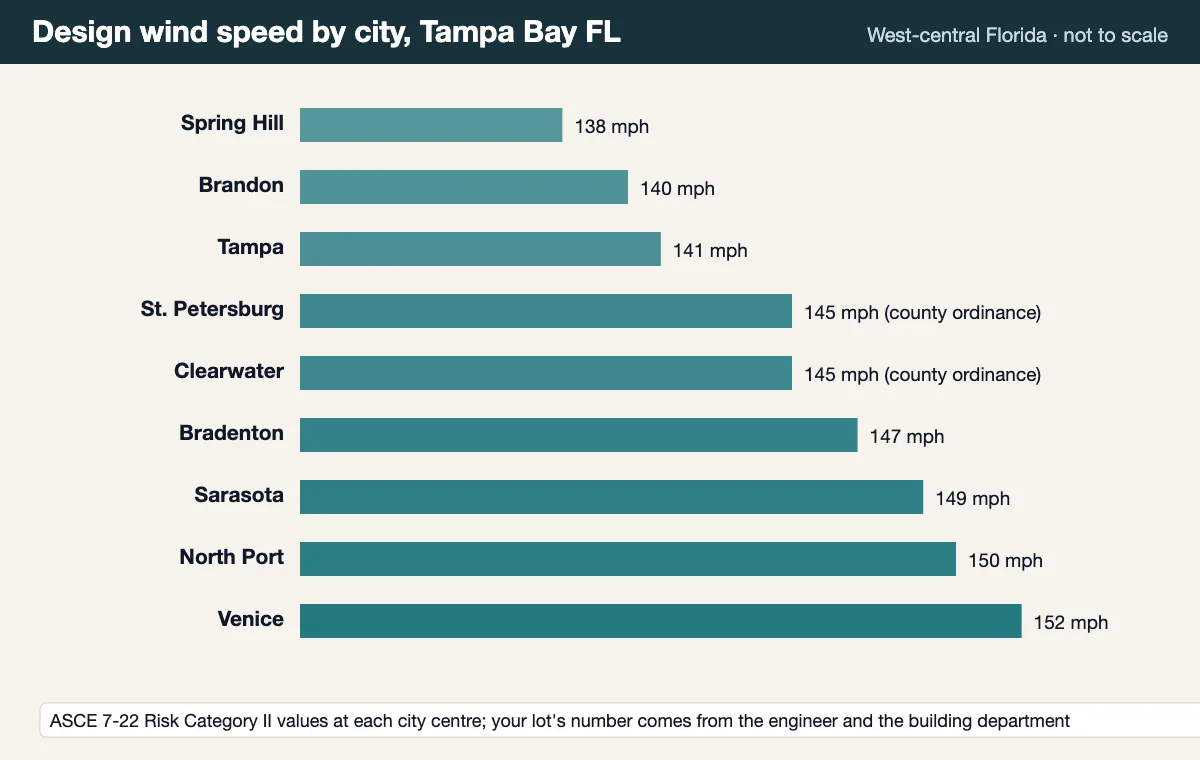
Built for about 152 mph
Venice's city-center value on the ASCE 7-22 wind map is about 152 mph, the highest of the city centers we checked from Spring Hill to North Port. That is a Risk Category II design wind, roughly a 700-year event, and it is the number an engineer uses with the Florida Building Code's Table 2002.4 to size the frame. Treat it as a guide: the Florida Building Commission tells owners to confirm site wind speeds with the local jurisdiction, because maps are often modified locally.
The code also sets a minimum 0.040 inch wall thickness for extruded aluminum members and accepts the AAF Guide to Aluminum Construction in High Wind Areas as conforming engineering. A higher design wind calls for a stronger frame, and sizing it for your lot and exposure is the engineer's job.
Salt air on Venice Island
Homes on Venice Island, reached by bridges over the Intracoastal Waterway, sit in salt air off the Gulf, and that shortens fastener life. Research from the University of Florida for the Florida Building Commission found corrosion worse near the coast because of chloride ions, and it flagged that the coating on stainless masonry screws often used on screen enclosures peeled in testing, which can cause trouble where those screws meet aluminum. Look for white powder and rust streaks around screw heads once a year, and replace failing fasteners when the cage is rescreened.
Doors, latches and visiting grandchildren
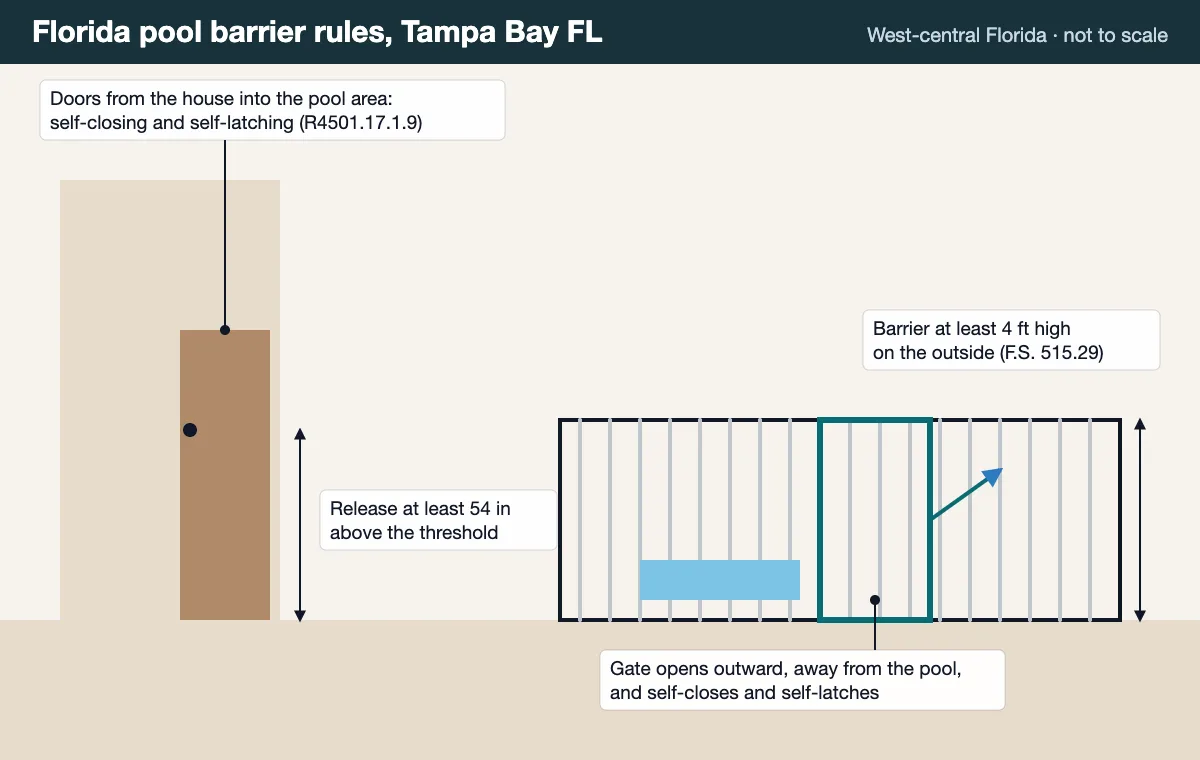
In a town where most residents are over 65, the pool barrier rules matter most when young grandchildren visit. Florida's pool safety law defines a young child as anyone under 6, and requires that the barrier have no gaps a child could squeeze through and that gates open outward, self-close and self-latch with the release on the pool side, out of a child's reach. When a new pool is permitted, state law requires at least one safety feature; the options include an enclosure that meets the barrier rules, exit alarms on house doors that open to the pool, or self-closing, self-latching devices on those doors with the release no lower than 54 inches.
Worn closers and bent latches are the usual failure. A closer swap is one of the cheapest jobs on a cage, and the pool cage door replacement page covers closers, latches and full doors.
Picking a screen for a Venice cage
Charcoal 18x14 fiberglass suits most Venice cages and meets the Venetian's charcoal rule; 20x20 No-See-Um is worth it along the Myakka River, the Intracoastal and the Gulf front. Phifer makes its 20x20 mesh for no-see-ums, gnats and sand flies that live in marshy or coastal areas.
| Screen | What it does | Where it fits in Venice |
|---|---|---|
| 18x14 fiberglass | Phifer's traditional pool and patio mesh | Most cages and roofs; lowest cost |
| 20x20 No-See-Um | Tighter weave against gnats and sand flies | Island, riverfront and canal homes |
| TuffScreen No-See-Um | Vinyl-coated polyester in a fine weave, with a 10-year warranty | Coastal homes that want longer life |
| Glas-Shield | Vinyl-laminated mesh for chair-rail-down panels and privacy walls; not for roofs | Panels facing a close neighbor or a sandy yard |
| PetScreen | Tear and puncture resistant | Doors and lower panels where pets push |
Swipe the table sideways to see every column →
Product facts from phifer.com, fetched 2026-10-13. Check color rules with your HOA before ordering.
Signs a Venice cage needs attention
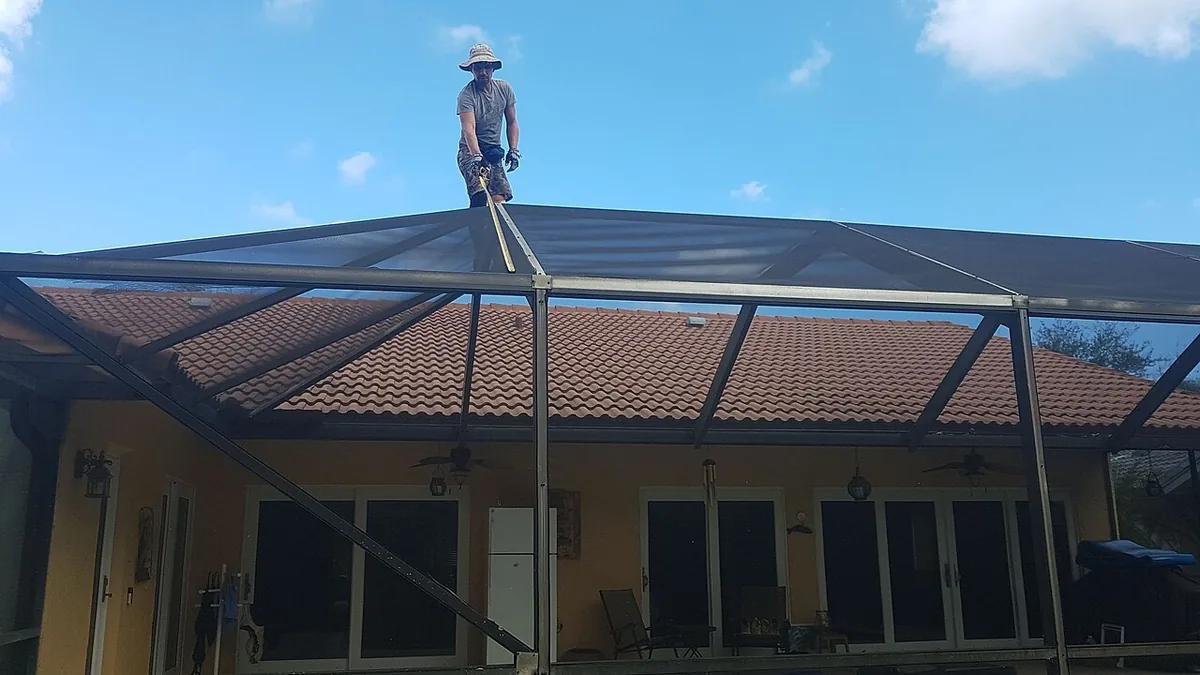
- Screen gone chalky, brittle or baggy
- Panels popped out of the channel since the last storm
- Rust streaks or white powder around screws
- A door that drags, bounces open or will not latch
- Water pouring off the super gutter at the house instead of through the downspout
Common screen enclosure jobs in Venice
Most Venice requests are rescreens, panel repairs and door fixes on existing cages. Standard fiberglass screen lasts about 5 to 10 years in Florida sun, and a well-kept aluminum frame 20 to 30 years or more.
- Pool cage rescreening: the whole cage in new mesh, charcoal where the HOA requires it.
- Pool screen repair: a few panels torn by fronds or popped by wind.
- Lanai screen repair: screened lanais under the house roof.
- Condo and HOA rescreening: balconies and lanais across a whole building or community.
- Pool cage gutter repair: leaking or sagging super gutters at the house.
Venice and nearby
Venice sits on US 41 and I-75, with Venice Avenue (County Road 772) and Jacaranda Boulevard (County Road 765) among its main roads. Nearby pages cover North Port and Sarasota. See every town on the service area page, or request a free quote.