A single torn pool screen panel in Tampa Bay usually costs $75 to $150 to replace, and most screen companies set a visit minimum of about $150 to $250. That makes pool screen repair Tampa homeowners ask about a simple trade-off: fix the few panels that failed now, or wait until enough have failed that a full rescreen is the better buy. This page gives you the numbers for both, plus the Florida rules that apply when the cage around your pool is also its safety barrier.
It covers pool cages in Tampa, FL and across Hillsborough, Pinellas, Pasco, Manatee, Sarasota and Hernando counties.
What pool screen repair costs in Tampa Bay
Ground-level wall panels are the cheapest repair and high roof panels the most expensive, with doors in between. Published Tampa Bay and Florida prices line up like this:
| Repair | Published price | Source and date |
|---|---|---|
| Single panel | $75 to $150 | Tampa Bay contractor guide, Jan 2026 |
| Small screen repairs | From $75 per panel, $150 job minimum | Pinellas and Pasco price list, 2026 |
| Several panels on one visit | $250 to $600 | Tampa Bay contractor guide, Jan 2026 |
| Partial cage repair | From $175; most $250 to $750 | Pinellas and Pasco price list, 2026 |
| Ground-level panel, fiberglass | $35 to $75 (most $45 to $60) | Central Florida screen company, 2026 |
| Upper panel, two-story or mansard | $60 to $120 | Central Florida screen company, 2026 |
| Door panel with kick plate | $90 to $180 | Central Florida screen company, 2026 |
| Door hardware replacement | $100 to $250 per door | Tampa Bay contractor guide, Mar 2026 |
| Screen door closer swap | $50 to $150 labor; closer $15 to $40 | Tampa Bay contractor guide, Jul 2026 |
| Service call minimum | $150 to $250 | Central Florida screen company, 2026 |
Swipe the table sideways to see every column →
Compiled from published contractor price pages and guides fetched 2026-10-13. National sites quote lower per-panel figures (HomeGuide, 2023: $25 to $35 bottom, $40 to $50 sides, $50 to $65 roof), but those predate current Florida pricing. Use these as a planning range, not a quote.
Why one small tear can cost the minimum
The visit minimum, not the panel, sets the price of a one-panel job. A screen company has the same drive, ladder and setup time whether it replaces one panel or four. If three or four panels are scuffed or thinning, having them done on the same visit often costs little more than the single torn one.
What raises the price of a repair
- Height: roof panels and second-story walls need ladders or planks and more time, so they cost roughly double a ground panel.
- Mesh: 20x20 No-See-Um runs about $10 to $20 more per panel than standard 18x14 fiberglass.
- Doors: a door panel usually comes with a kick plate, and a worn closer or latch adds hardware cost.
- Hidden frame problems: a panel that keeps popping out may need its channel straightened or its screws replaced.
- Access: furniture, plants and a narrow side yard all add time.
Repair a few panels or rescreen the whole cage?
Repair when the damage is local and the rest of the screen is still sound; rescreen once roughly 15 to 20 panels need work. That is where the per-panel math catches up with a full rescreen of a mid-size cage, which Florida companies price at about $1,500 to $3,200 for 20 to 40 panels.
| Panels needing work | At $75 to $150 per panel | What usually makes sense |
|---|---|---|
| 1 to 3 | Often the $150 to $250 visit minimum | Repair |
| 5 | $375 to $750 | Repair, unless the screen is past 7 years old |
| 10 | $750 to $1,500 | Get both prices |
| 20 | $1,500 to $3,000 | Full rescreen of a mid-size cage costs about the same ($1,500 to $3,200) |
Swipe the table sideways to see every column →
Arithmetic from the published Tampa Bay per-panel range ($75 to $150, Jan 2026) and a Central Florida full-rescreen range for 20 to 40 panel cages (2026). Many companies discount multi-panel jobs, so the middle rows are an upper bound.
Age matters as much as count. Standard fiberglass screen lasts about 5 to 10 years in Florida, so if the cage was last screened eight years ago, the undamaged panels are close to the end too. A patch also stands out: new charcoal mesh looks darker and tighter than panels that have faded for years.
When the answer is the whole cage, see pool cage rescreening for full-cage prices and screen choices.
Signs a panel needs repair
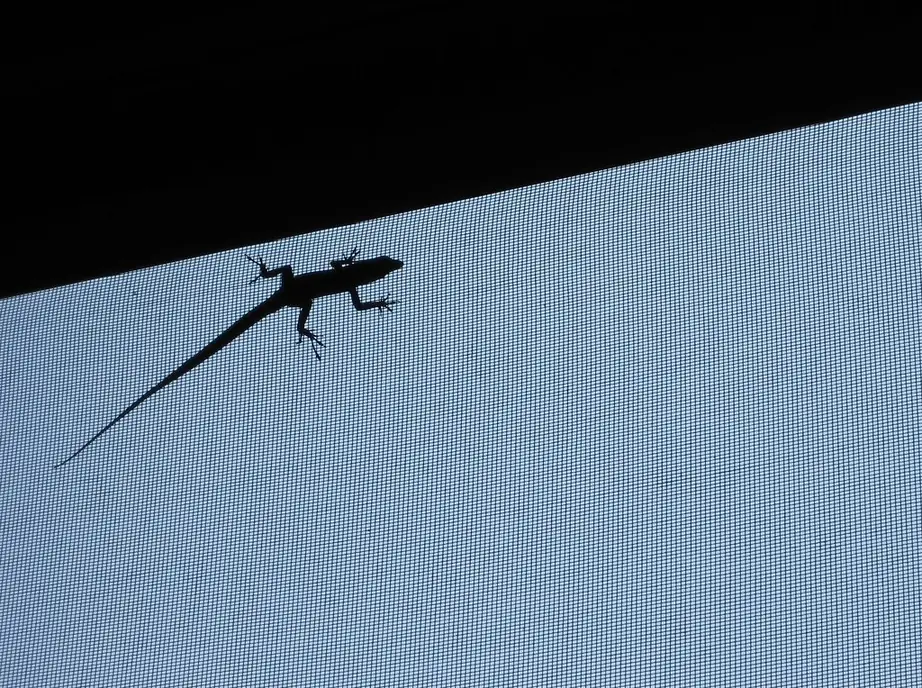
Any hole an insect, lizard or child's hand can get through is worth fixing now, because small tears run in the wind and pets widen them. Look for:
- Tears or punctures from palm fronds, branches, hail or a dog jumping at the screen
- Mesh pulled out of the channel along one edge, with the rubber spline loose or missing
- A panel bellied out or sagging after a storm
- Brittle, chalky screen that splits when you press it
- Screws backing out or rusting where the panel channel meets the frame
- A door screen torn near the push bar or kick plate
- A roof panel letting oak leaves or Spanish moss fall into the pool
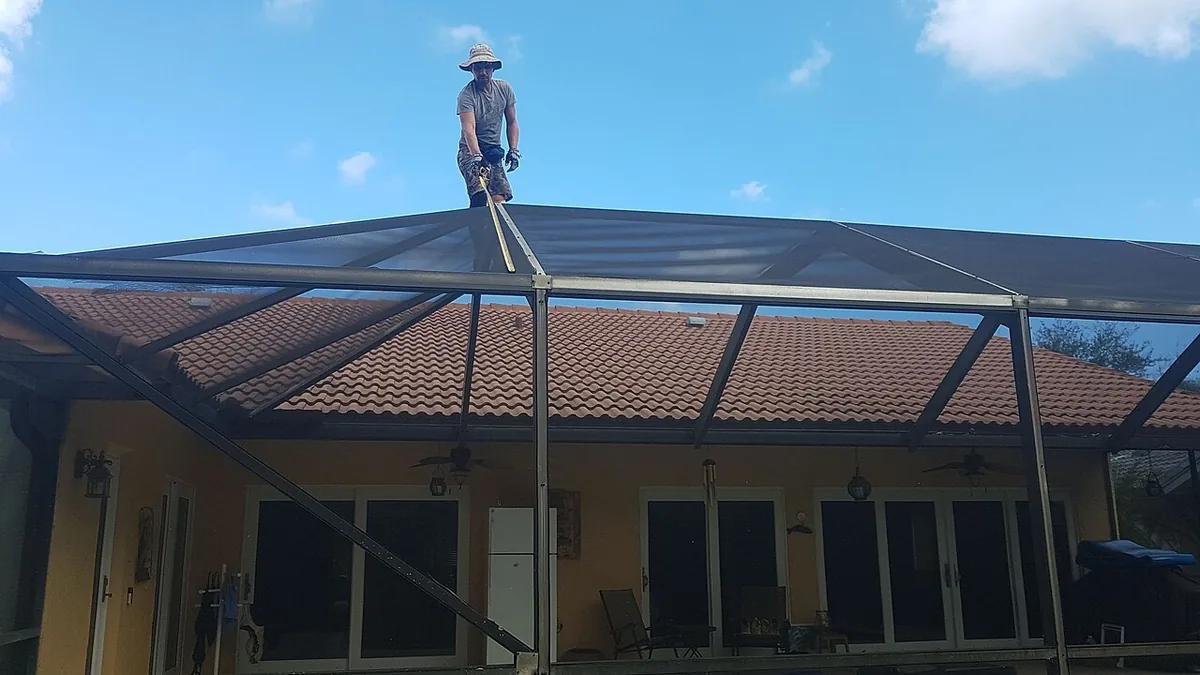
Roof panels and second-story screens
Roof and upper panels cost more because they are harder and riskier to reach, not because the screen is different. Florida companies price an upper panel on a two-story or mansard cage at about $60 to $120, against $35 to $75 for a ground-level wall panel.
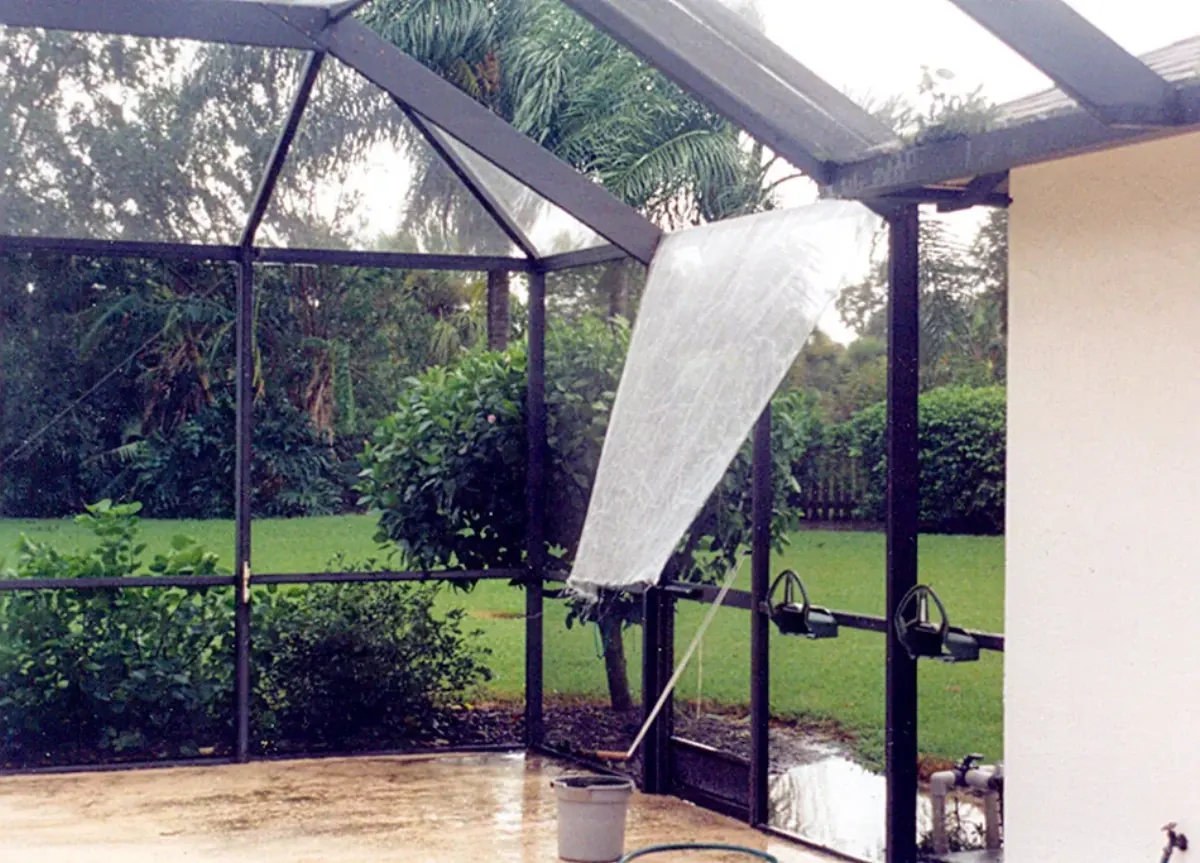
Roof panels are also where storm damage hides. A branch or a gust can lift a roof panel out of its channel without tearing it, and from the deck it can look fine until the next rain sags it. If your cage came through a storm, look up from inside on a bright day for panels that sit lower than their neighbors.
Torn screens and Florida's pool barrier law
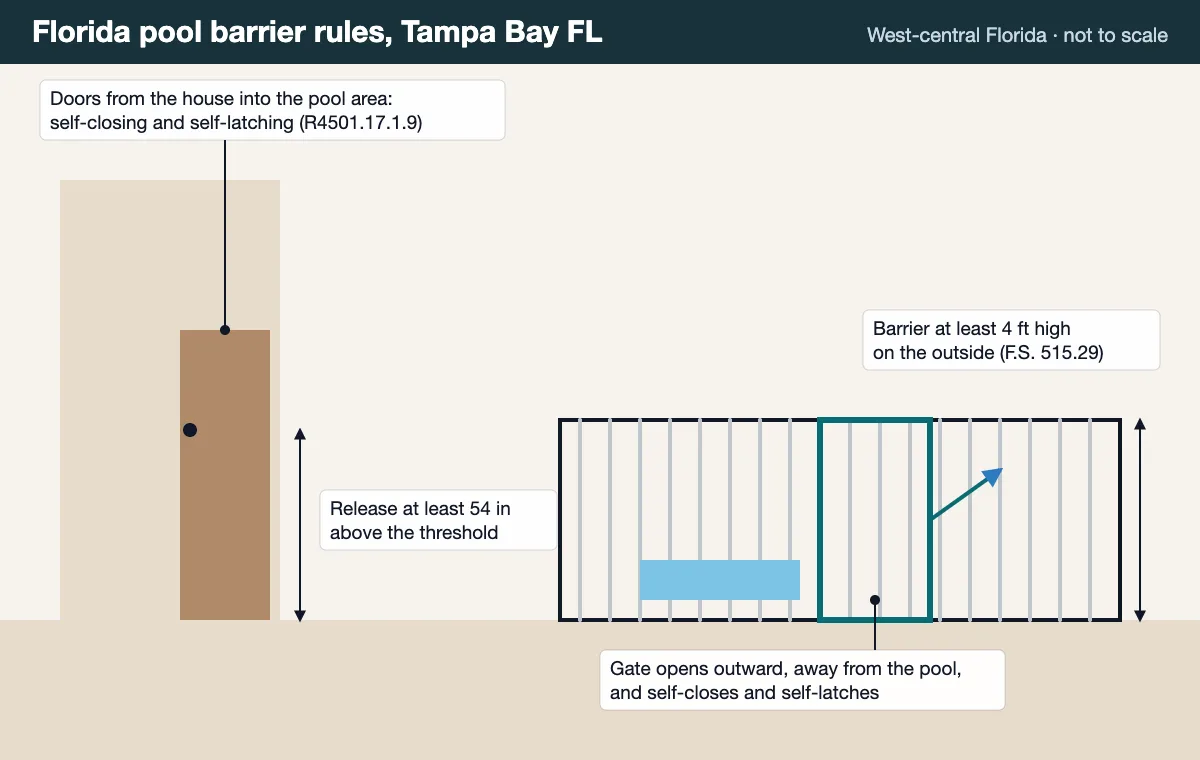
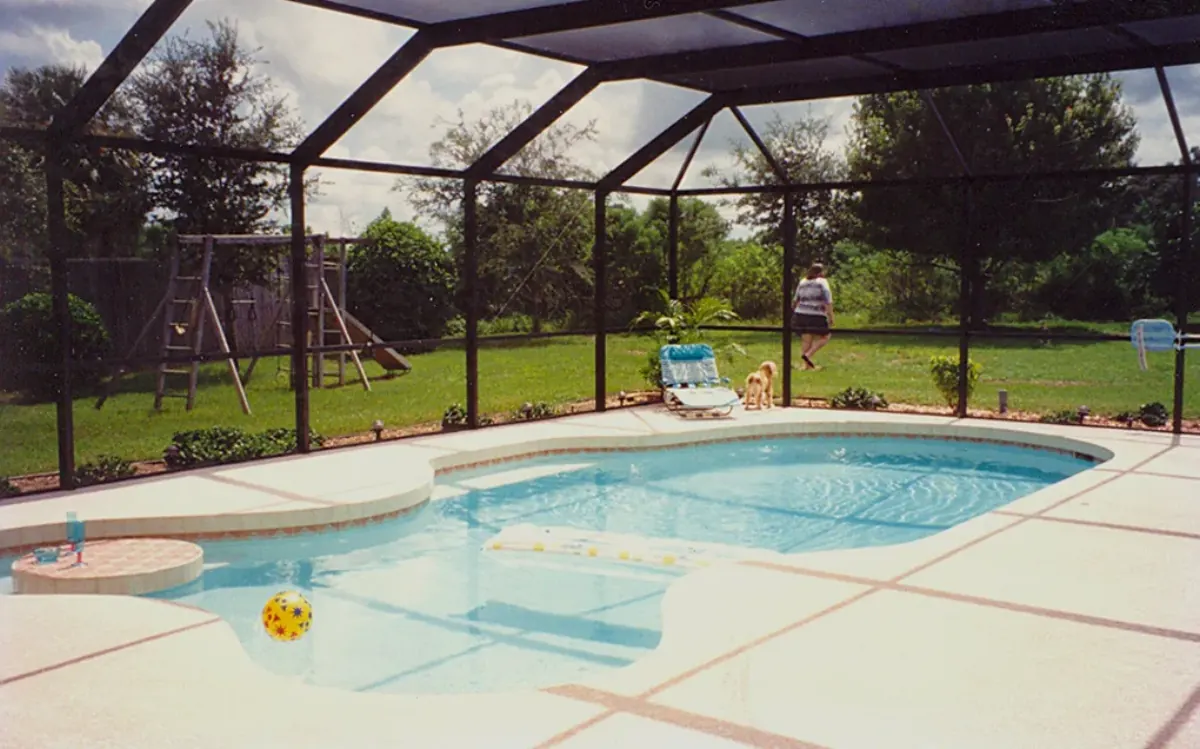
If your pool cage is the pool's safety barrier, a torn lower panel is a safety problem, not just a bug problem. Florida's Residential Swimming Pool Safety Act (F.S. 515.29) says a barrier must be at least 4 feet high on the outside and may not have gaps or openings that would let a young child crawl under, squeeze through or climb over. The Florida Building Code lets a standard screen enclosure serve as part or all of that barrier (R4501.17.1.11).
The doors matter just as much. Under 515.29, gates into the pool area must open outward, away from the pool, and be self-closing and self-latching. The City of New Port Richey adds a local rule that screen enclosure door latches sit at least 54 inches above the exterior landing. A door that drags, a closer that has lost its pressure or a latch that no longer catches is worth fixing at the same visit as the screen. See pool cage door replacement for doors, closers and latches.
Storm damage, insurance and deductibles
Most screen repairs after a storm are paid out of pocket, for two reasons. Citizens Property Insurance's HO-3 coverage worksheet says screen pool cages and aluminum-framed screened enclosures open to the weather are not covered, and its hurricane flyer lists open enclosures as typically not covered. Florida's Department of Financial Services does describe a screened enclosure endorsement that some insurers sell for hurricane damage, so check your own policy.
Even with coverage, the deductible usually wins. Florida Statute 627.701 requires insurers to offer hurricane deductibles of $500, 2 percent, 5 percent or 10 percent of the dwelling limit. On a $400,000 dwelling limit, a 2 percent deductible is $8,000, against a few hundred dollars for panel repairs. The deductible applies once per calendar year, so after a second storm in the same season the math can change.
Bent beams, a crushed roof section or a cage pulled away from the house are structural repairs, and in Pinellas County, replacing or repairing a pool enclosure or screen room after a storm is listed as permit work. After Hurricane Milton in 2024, Sarasota County suspended permit fees for storm repairs including pool cage repair, and Manatee County waived building permit fees for storm-related repairs through March 1, 2025. For frame damage, see hurricane damage repair and the pool cage insurance guide.
Who can repair pool screens, and when a permit applies
Screen-only repair is the lightest-regulated work on a pool cage, but the rules differ by county. Some places let a homeowner or handyman replace screen; others want a licensed contractor even with no permit.
| Jurisdiction | Permit for screen work | License for screen work |
|---|---|---|
| Hernando County | Rescreening exempt | Not needed to repair or replace screen (no new aluminum) |
| City of Venice | Re-screening exempt | Not needed for re-screening |
| Manatee County | Rescreening and hardware or fastener repairs exempt | License required |
| Pasco County | Re-screening exempt (not in flood zones) | Not stated |
| Plant City | Non-structural screen damage exempt | Not stated |
| Pinellas County | Not stated; county permits work over $500 | Contractors must be in the PCCLB database |
| City of St. Petersburg | Not stated | Work of $1,000 or more by a licensed contractor (F.S. 489.103, per the city) |
Swipe the table sideways to see every column →
From each jurisdiction's published exemption list, FAQ or permit guide, fetched 2026-10-13. Hillsborough County and the City of Tampa do not name screen repair either way. Confirm with your building department for your address.
Florida's HB 803 also took effect on July 1, 2026: single-family owners can ask in writing to skip a permit for non-structural work under $7,500, outside flood zones. Frame work never qualifies. The Tampa Bay permit guide covers each county.
Matching the screen on a repair
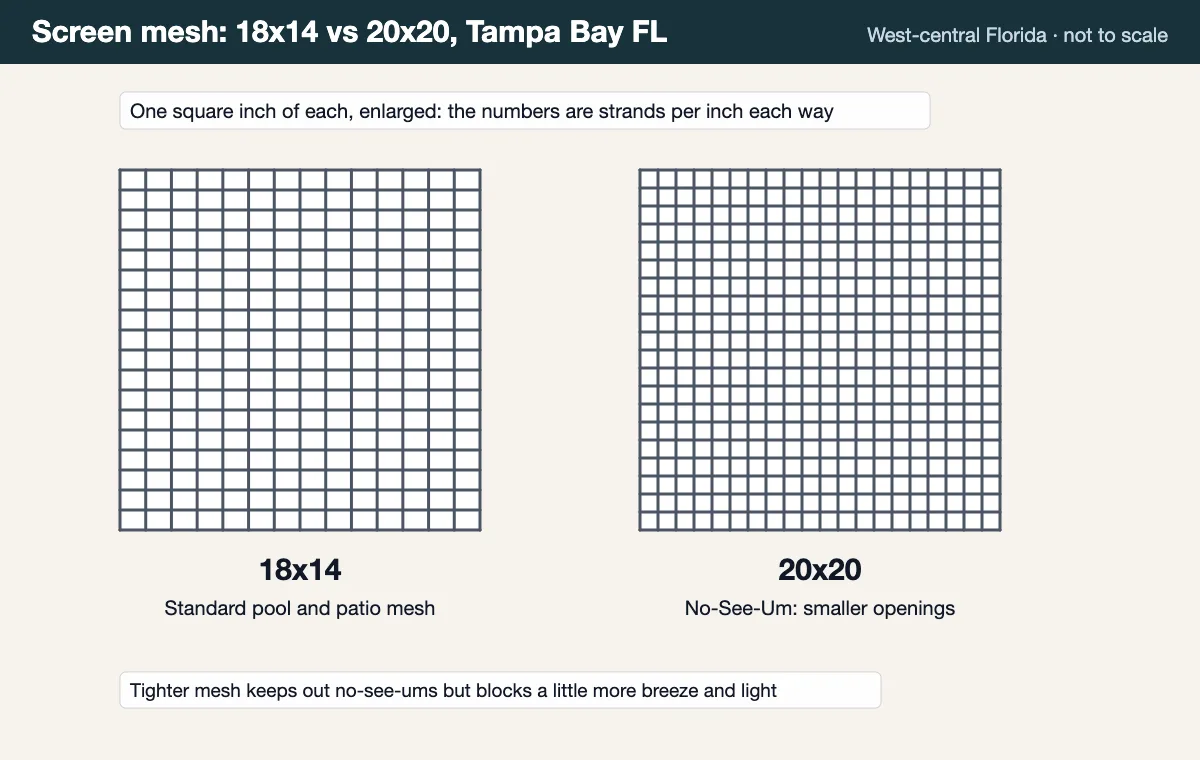
A repair panel should use the same mesh as the rest of the wall, usually standard 18x14 fiberglass, or it will look and perform differently. A repair is also a cheap chance to upgrade the panels that take the most abuse:
- PetScreen, which Phifer makes to resist tears and punctures from dogs and cats, on the lower panels and doors.
- 20x20 No-See-Um on walls facing a pond, canal, marsh or the bay, where gnats and sand flies get through 18x14.
- Glas-Shield, Phifer's vinyl-laminated mesh, below the chair rail to keep dirt and grass clippings out. Phifer says it is not made for roofs.
Check your HOA first. Many Tampa Bay communities require charcoal screen, and Starkey Ranch in Odessa prohibits Florida Glass type screen without architectural approval. The screen types guide compares every mesh.
Pool cage parts, in plain terms
Knowing the part names makes a repair quote easier to read. These are the terms you will see:
| Term | What it is |
|---|---|
| Panel | One framed opening filled with screen; repairs are priced per panel |
| Spline | The rubber cord pressed into the channel that holds the screen in place |
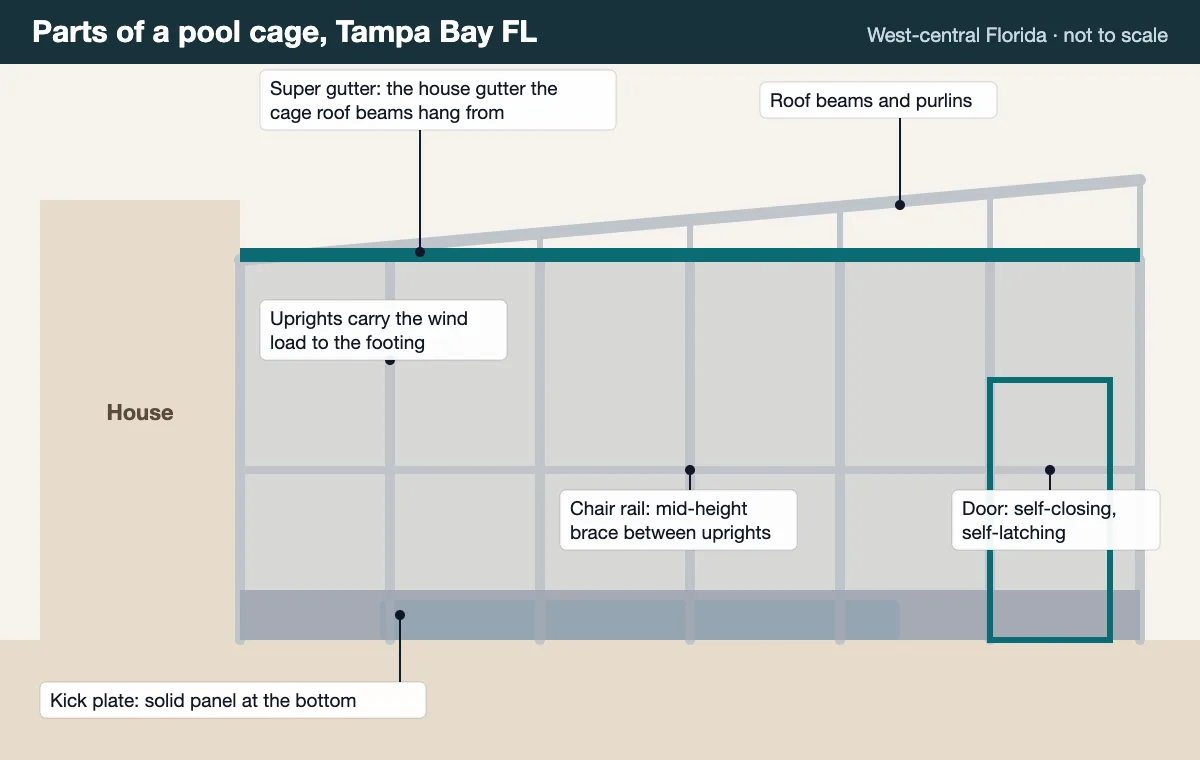
| Kick plate | A solid aluminum panel at the bottom of a wall or door |
| Chair rail | The horizontal rail roughly at seat height; the panels below it take the most wear |
| Primary members | Beams, posts, columns, structural gutters, headers and purlins that hold the cage up (FBC definition) |
| Secondary members | Kick plate rails, chair rails, roof or wall panels and wall braces (FBC definition) |
| Super gutter | A heavy-gauge aluminum gutter, about 5 to 7 inches wide, that supports the cage where it attaches to the house |
| Mansard | A cage roof style with sloped sides and a flat top |
Swipe the table sideways to see every column →
Primary and secondary member definitions from the Florida Building Code 2023, Section 2002. Super gutter description from HomeGuide (2023).
How a pool screen panel is repaired
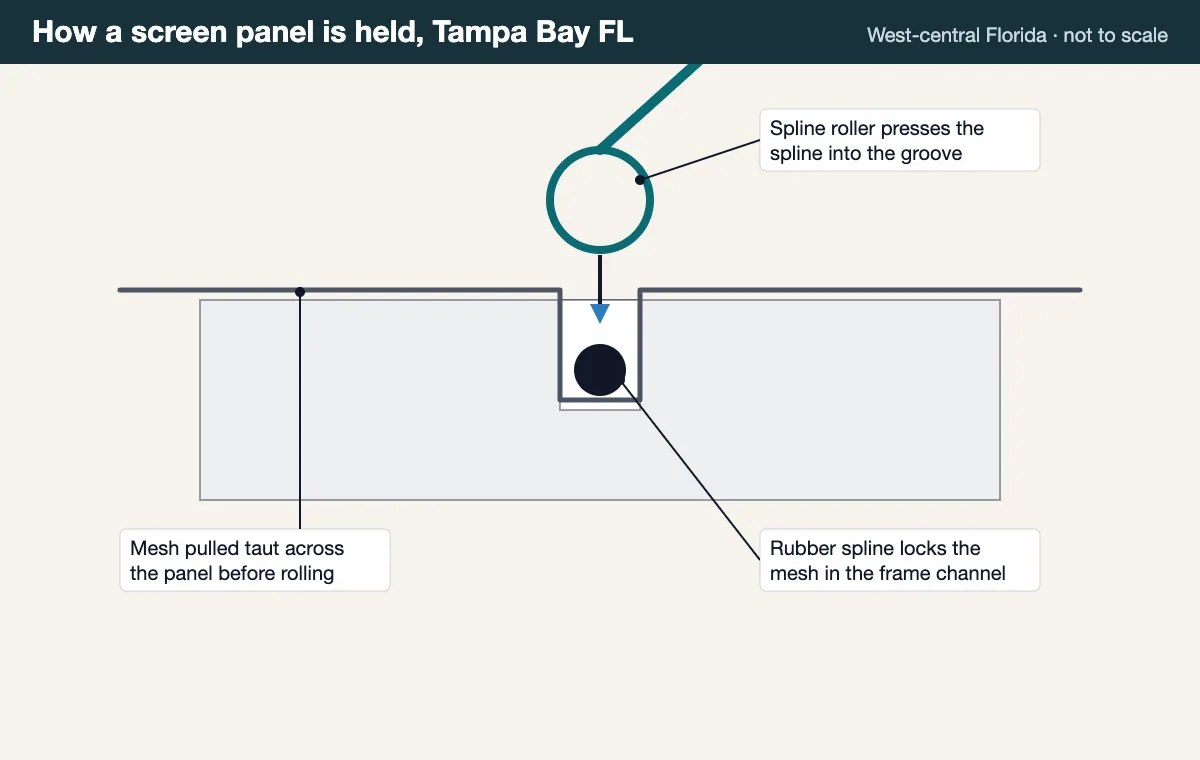
A panel repair replaces the mesh and spline in one opening while the frame stays put. The usual order:
- 1Check what is actually broken
Each damaged panel is checked for torn mesh, popped spline, a bent or loose channel and missing or rusted screws, because a panel that blew out often has a frame or fastener cause.
- 2Pull the old spline and mesh
The rubber spline is pried out of the channel and the torn mesh comes out with it. The empty channel is cleaned so the new spline seats evenly.
- 3Lay in new screen
New mesh, cut larger than the opening, is pressed into the channel with fresh spline on one side, then pulled tight and splined on the opposite side so the panel stays flat.
- 4Trim and check the neighbors
Excess mesh is trimmed off, and the panels on each side are checked, since a storm or a pet rarely damages just one.
- 5Test doors and latches
If a door panel was part of the repair, the closer and latch are checked so the door still swings shut and latches on its own, which matters when the cage is your pool barrier.
A ground-level wall panel is a common do-it-yourself job with a spline roller, utility knife and the right diameter spline. Roof panels are a different matter: they mean working on top of the frame, and the frame and any damage to it are what a licensed screen contractor is there to judge.
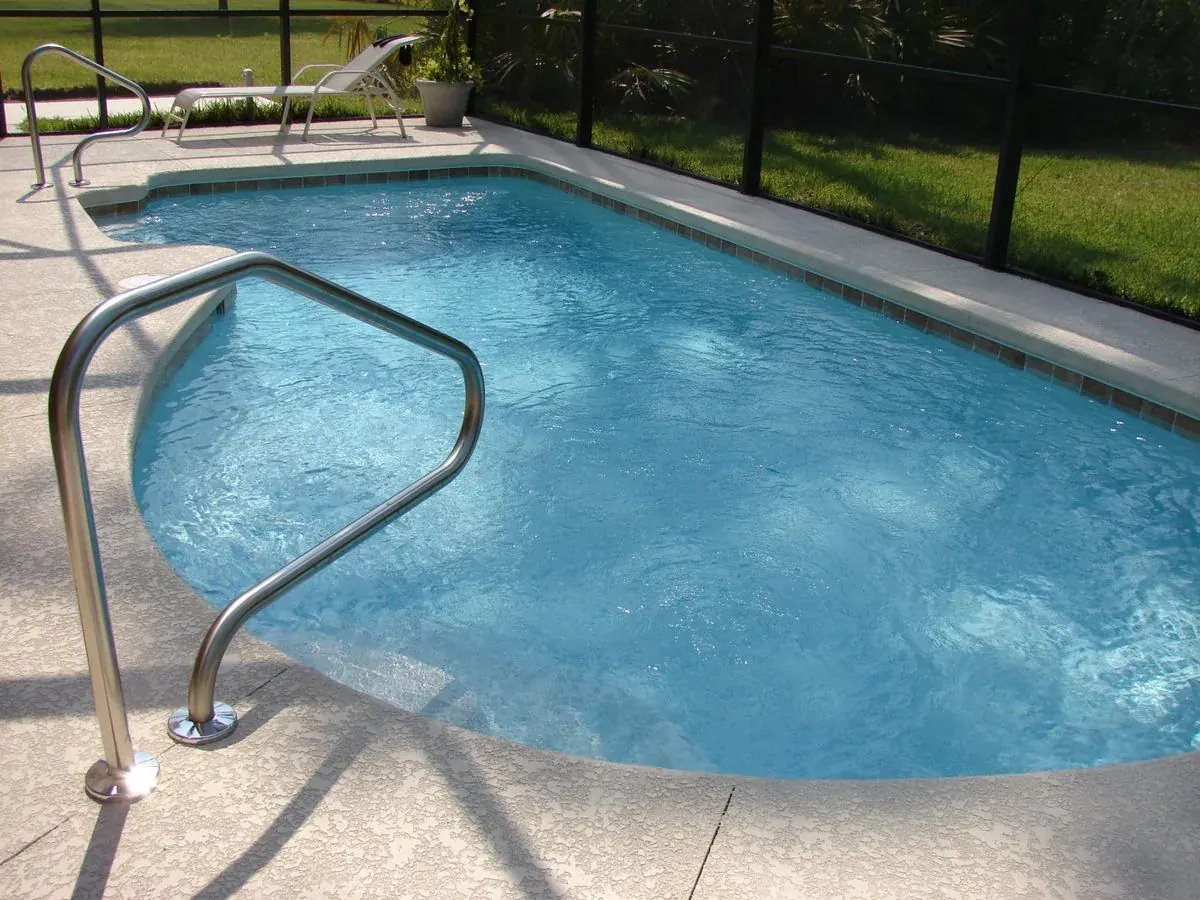
Pool screen repair across Tampa Bay
Coastal cages see the most wear. University of Florida research for the Florida Building Commission found fastener corrosion more serious near the coast because of chloride in salt air, which is why cages in Clearwater, Apollo Beach and Venice often need screws replaced along with screen. Inland, oak canopy in Temple Terrace and Lutz drops branches on roof panels. Every town is on the service area page. For a screened porch or patio off the house rather than a pool cage, see lanai screen repair, or request a free quote.