Last reviewed October 2026
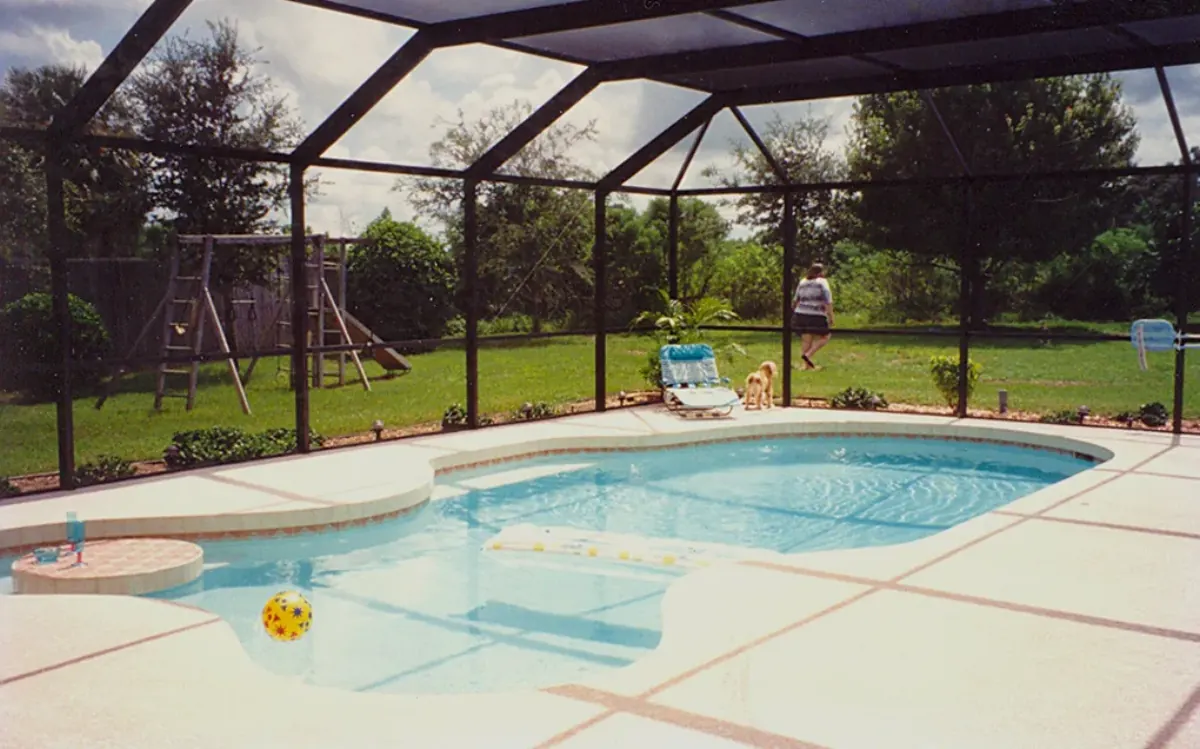
Florida pools have cages mostly to keep out insects and debris, and in many cases the cage also serves as the pool's required safety barrier. Fly over any subdivision in Tampa Bay, FL, from Wesley Chapel to Lakewood Ranch, and you will see rows of screened boxes behind the houses. They exist because the state has year-round insects, a long wet summer, plenty of trees, and a law that says a new pool needs some form of protection for young children.
Here is each reason, with the source behind it, and the answers to the questions people ask most about why Florida pools have cages.
What is a pool cage?
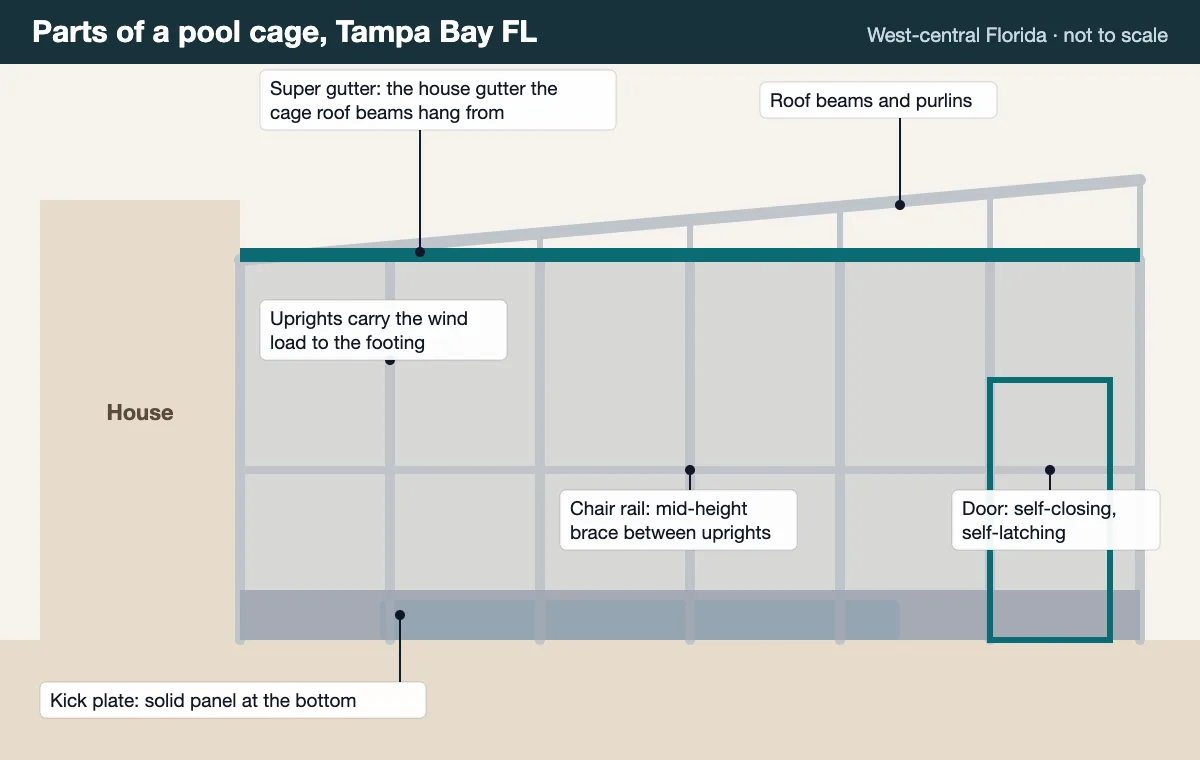
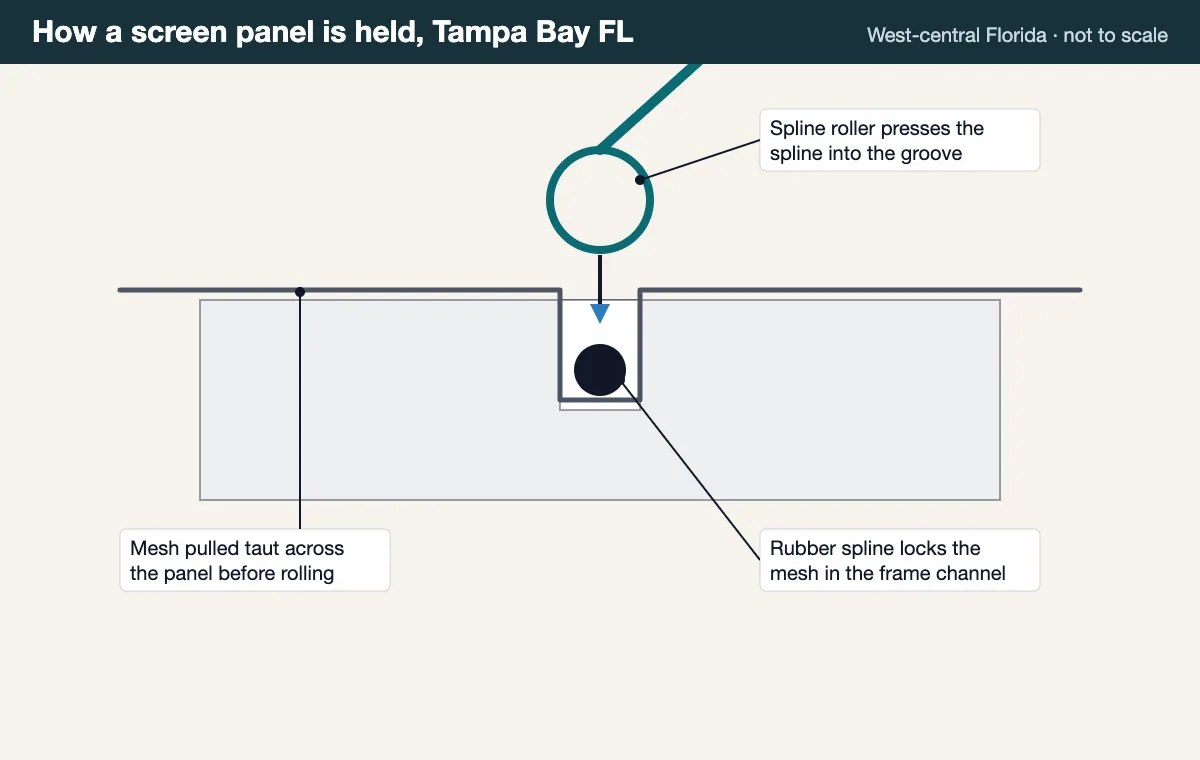
A pool cage is an aluminum frame covered with insect screen that encloses a pool and its deck. Floridians also call it a pool enclosure or screen enclosure, and visitors sometimes call it a bird cage. The frame is extruded aluminum, which the Florida Building Code requires to have an actual wall thickness of at least 0.040 inch for screen enclosures. The screen is usually fiberglass mesh held in channels by a rubber spline, and the whole structure is engineered for the local design wind speed.
A screened area off the back of the house without a pool is usually called a lanai. The pool enclosure styles guide shows the roof shapes cages come in.
The reasons, at a glance
| Reason | The fact | Source |
|---|---|---|
| Mosquitoes | Over 80 species of mosquitoes are known in Florida | UF/IFAS, Mosquitoes and their Control |
| Lovebugs | Swarm throughout Florida every April to May and August to September | UF/IFAS, Living with Lovebugs |
| Screens over pools | UF/IFAS lists screens placed over decks and swimming pools as a lovebug control | UF/IFAS, Living with Lovebugs |
| Rainy season | June 1 to September 30, when mosquito numbers tend to be much higher | UF/IFAS Extension Sarasota County |
| Pool safety law | A barrier at least 4 feet high is one way to meet the state's new-pool safety rule | Florida Statutes 515.27 and 515.29 |
| Building code | A standard screen enclosure may be all or part of the pool barrier | Florida Building Code, Residential R4501.17.1.11 |
| HOA rules | Some communities require a cage or a fence around every pool | Panther Trace II, Twin Lakes of Brandon, Seven Oaks guidelines |
Swipe the table sideways to see every column →
Compiled from UF/IFAS publications, Florida Statutes chapter 515, the 2023 Florida Building Code and published HOA guidelines, fetched 2026-10-13.
Reason 1: Florida's insects
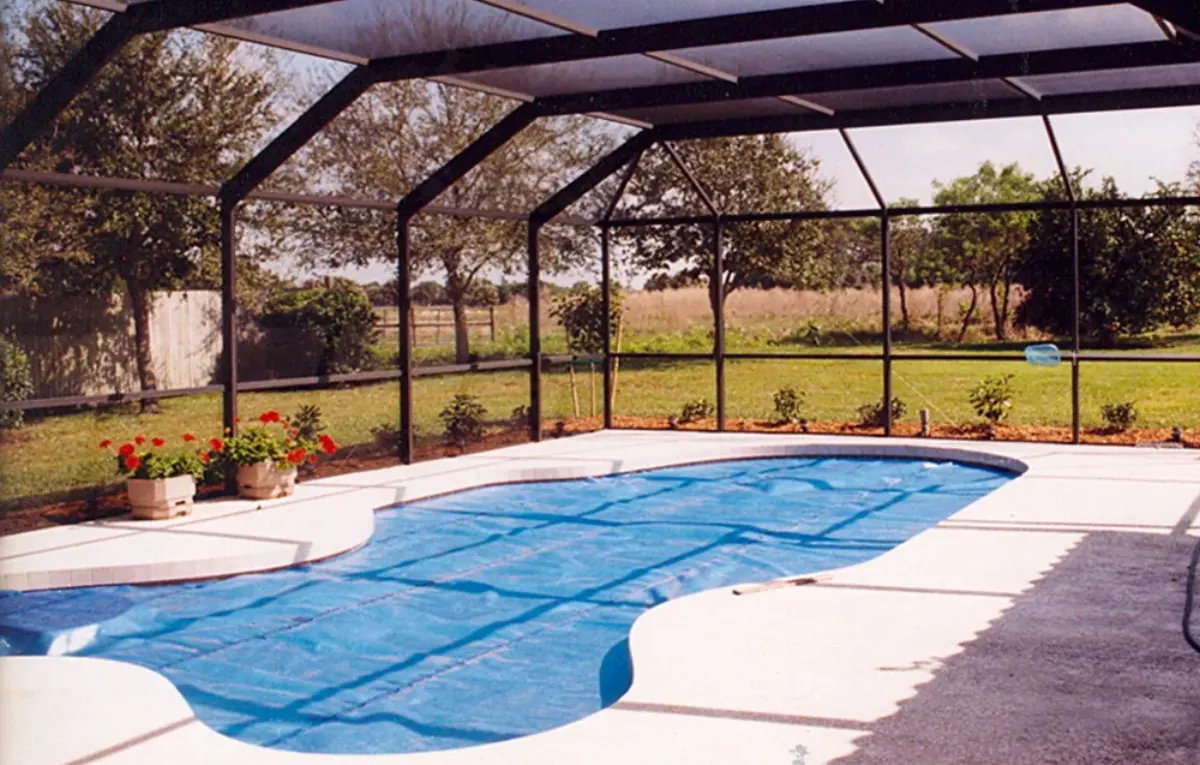
Bugs are the biggest reason Florida pools are caged. An open pool deck in a warm, wet climate is an open invitation to mosquitoes, gnats and lovebugs, and a screen is the simplest way to keep them out without spraying.
Mosquitoes
UF/IFAS says there are “over 80 different species of mosquitoes known to occur in Florida.” The UF/IFAS Extension office in Sarasota County notes that the rainy season runs from June 1 to September 30 and that mosquito populations “tend to be much higher during this time,” and its advice includes repairing or replacing ripped screens. That rainy stretch is also peak pool season. A cage turns the deck into a room you can sit in at dusk.

Lovebugs
Lovebugs are the other Florida signature. UF/IFAS says they “appear in excessive abundance throughout Florida as male-female pairs for only a few weeks every April-May and August-September.” The same publication goes further than most guides: its list of ways to live with them says screens “can be added to windows and doors, particularly on the prevailing windward side of a building, and placed over decks and swimming pools.” In other words, the university's own advice is a pool cage.

No-see-ums near the water
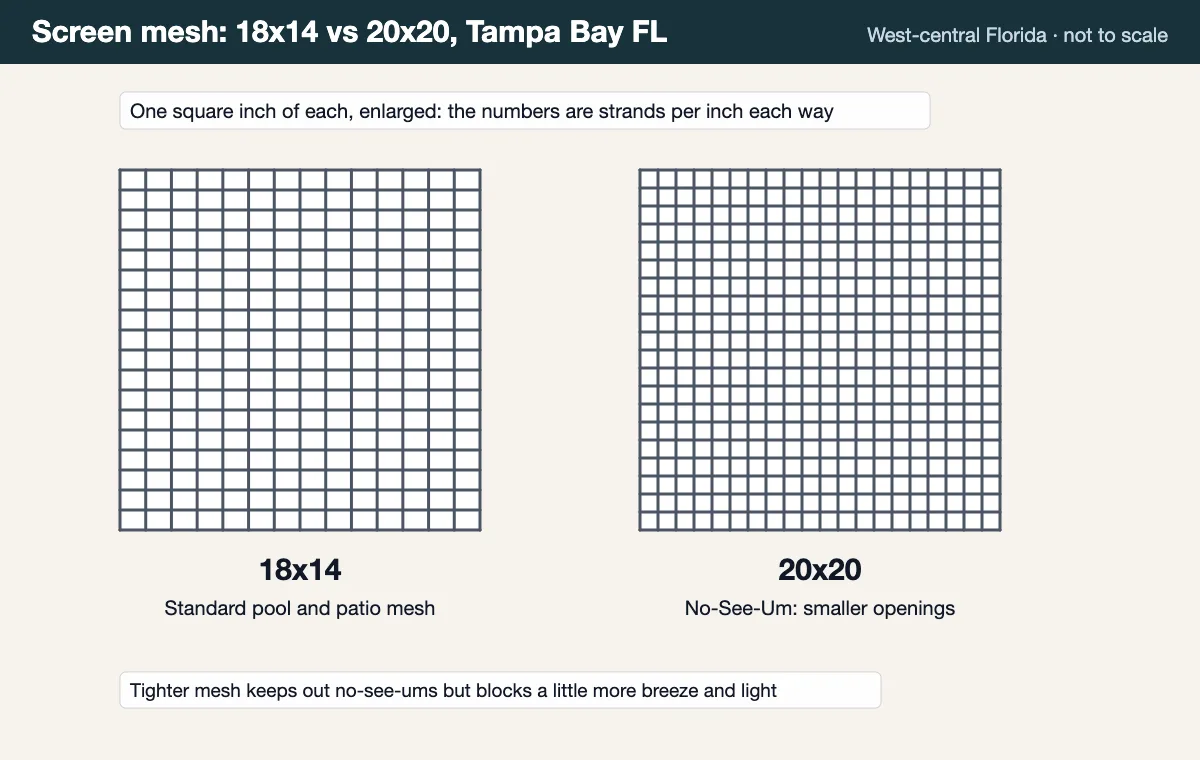
Along Tampa Bay's marshes, canals and bay shoreline, the problem is often insects too small for standard screen. Phifer makes its 20x20 No-See-Um mesh to keep out “most smaller flying insects like no-see-ums, gnats, sand flies, and other bugs that may inhabit marshy or coastal areas.” The pool cage screen types guide compares it with standard 18x14 mesh.
Reason 2: Leaves, moss and storm debris
A screen roof catches leaves, twigs and Spanish moss before they reach the water. Tampa Bay neighborhoods are full of live oaks; Temple Terrace, for one, is a Tree City USA known for its sand live oaks. Without a cage, an oak-shaded pool means daily skimming. With one, the debris sits on the roof until you sweep or rinse it off, and the pool stays cleaner between services.
Lower walls do some of the same work. Phifer says its vinyl-laminated Glas-Shield, often called Florida Glass, can go in the lower panels “to keep dirt and debris out of pool enclosures.” We could not find a university source measuring how much a cage cuts pool cleaning time, so we leave the number out.
Reason 3: Florida's pool safety law
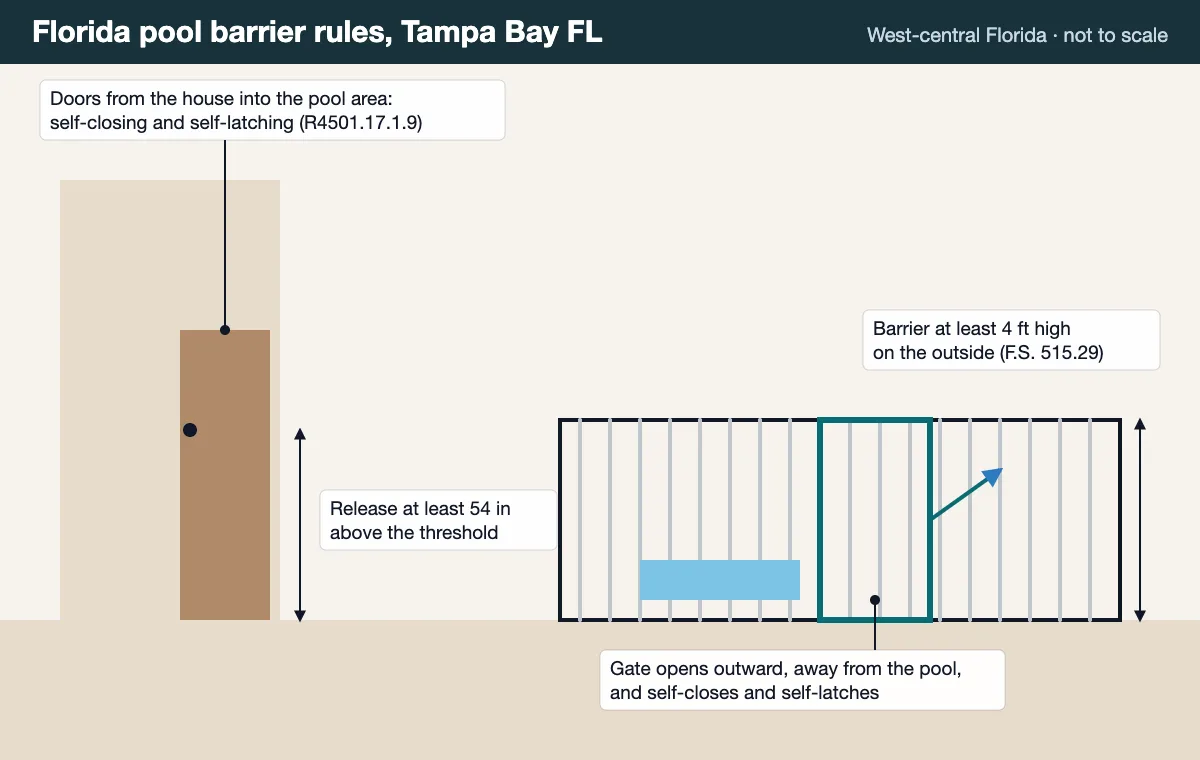
A pool cage is one legal way to meet Florida's pool safety requirement, but it is not the only way. Under Florida Statute 515.27, a new residential pool must have at least one approved safety feature to pass final inspection. One option is that the pool is isolated from the home by an enclosure meeting the barrier rules in 515.29. Others include an approved safety pool cover, exit alarms on doors and windows that open to the pool, and self-closing, self-latching doors with a release no lower than 54 inches above the floor.
The barrier rules in 515.29 say the barrier “must be at least 4 feet high on the outside” with no gaps a young child could crawl under, squeeze through or climb over, and gates must open outward and be self-closing and self-latching. The statute defines a young child as anyone under 6. The Florida Building Code then says plainly that standard screen enclosures meeting its pool rules “may be utilized as part of or all of the barrier” and count as a nondwelling wall.
If your cage door no longer closes and latches on its own, see pool cage door replacement, and the Florida pool enclosure requirements guide covers the barrier rules in more depth.
Reason 4: HOA rules
In some Tampa Bay communities, the HOA decides for you. Published guidelines that address whether a pool needs a cage:
- Panther Trace II, Riverview: “Pool cages are required for all pools.”
- Twin Lakes of Brandon: all pools must be within a screen enclosure or a six-foot fence.
- Seven Oaks, Wesley Chapel: pools shall be enclosed by a screened enclosure or may be fenced with PVC fencing.
- FishHawk Ranch, Lithia: a fence or screen enclosure application is due with the pool application if neither exists.
The same documents usually set frame and screen color too, so check them before you choose.
Other reasons: comfort, privacy and family use
Beyond bugs and law, a cage turns the pool deck into an outdoor room. It is a place for furniture, string lights and a grill; a 2022 draft amendment to Westchase's guidelines, for example, specifically allow string lights and shade sails inside screen enclosures. Privacy is the other draw: Westchase allows privacy screening similar to Florida Glass for up to 40 percent of the screen height.
You will also read that cages block UV and keep pools cooler. We could not find a university or government source that measures it, so we don't claim it here. Solar screen, a denser mesh, is sold for heat and glare on the sunniest walls.
What a pool cage does not do
A pool cage is not hurricane proof, and it often isn't covered by insurance. Florida Building Code Section 2002 designs screen enclosures for a design wind speed, about 140 mph in Tampa and 145 mph in Pinellas County. During Hurricane Milton in 2024, a Lakewood Ranch family heard their pool cage creaking before it blew apart, Your Observer reported. Citizens' HO-3 worksheet says screen pool cages open to the weather are not covered.
Read are pool cages hurricane proof and the pool cage insurance guide for the details.
Is a pool cage worth it in Tampa Bay?
For most Tampa Bay pool owners, yes, if you will use the deck during bug season and your pool sits near trees. The trade-off is cost and upkeep. A Tampa Bay screen contractor puts typical new pool enclosures at $10,000 to $30,000 or more, and the screen needs replacing every 5 to 10 years, at roughly $1,500 to $4,500 for most cages. The frame commonly lasts 20 to 30 years or more.
| Item | Published range | Source and date |
|---|---|---|
| New pool enclosure | $10,000 to $30,000+ | Tampa Bay screen contractor pricing, 2026 |
| Mid-sized code-built cage, about 1,500 sq ft | About $23,000 | Tampa Bay contractor guide, Feb 2026 |
| Full rescreen | $1,500 to $4,500+ | Florida contractor guides, Dec 2025 and Mar 2026 |
| Screen life | About 5 to 10 years | Florida contractor guides, 2025 and 2026 |
| Frame life | 20 to 30 years or more | Florida contractor guides |
Swipe the table sideways to see every column →
Compiled from published contractor price guides fetched 2026-10-13. Planning ranges only.
If you are adding one, start with pool enclosure installation. If you already have one and the screen is tired, pool cage rescreening is the usual fix. Every town covered is listed on the service area page, and you can request a free quote.