Last reviewed October 2026
To clean a pool cage, rinse it top to bottom with a garden hose, wash the aluminum frame with mild soap and a soft brush, brush the screens gently, and rinse again. That covers most cages in Tampa Bay, FL. The parts that take more thought are the roof you can't stand on, the gutter along the house, and the local messes: lovebug season twice a year, a long wet summer, and oaks dropping leaves and moss on the screen.
This guide is for homeowners doing it themselves. If you would rather hand it off, a Tampa Bay contractor guide from March 2026 puts a professional pressure wash at about $150 to $300.
Why pool cages get dirty fast in Tampa Bay
Rain, insects, trees and salt air all leave something on the screen here. Each one points to a different part of the cleaning routine:
| Source | When | What it leaves | Where the fact comes from |
|---|---|---|---|
| Rainy season | June 1 to September 30 | Wet screen, splashed dirt on lower panels, mildew-friendly conditions | UF/IFAS Extension Sarasota County |
| Summer rain totals | Tampa averages 9.03 in. in August, 49.48 in. a year | Standing water in gutters and on low roof panels | Florida Climate Center, 1991 to 2020 normals |
| Lovebug flights | April to May and August to September | Swarms on screens and frames; residue if left | UF/IFAS, Living with Lovebugs |
| Oaks and Spanish moss | Year-round, heaviest under live oaks | Leaves, twigs and moss on roof panels and in gutters | Local tree canopy, e.g. Temple Terrace's sand live oaks |
| Salt air | Year-round near the coast | Chloride that speeds fastener corrosion | University of Florida report to the Florida Building Commission, 2017 |
Swipe the table sideways to see every column →
Compiled from UF/IFAS publications, the Florida State University climate center and a UF corrosion study, fetched 2026-10-13. Timing varies by year.
What to use to clean a pool cage
A hose, a bucket of mild soapy water and soft brushes handle almost every cage. Keep the kit simple and gentle on the finish and the screen:
- Garden hose with an adjustable spray nozzle
- Bucket of water with a squirt of mild dish soap
- Soft-bristle brush on an extension pole, for walls and reachable roof panels
- Soft sponge or microfiber cloths for posts, the chair rail and the door
- Soft long-handled broom for leaves and Spanish moss
- A sturdy stepladder set on the deck, never on screen or framing
- Gloves and eye protection, since rinse water comes back down on you
- Optional: a cleaner labeled for outdoor screens and aluminum, for stains soap will not lift
How to clean a pool cage, step by step
Work from the top down and from dry to wet: sweep, rinse, wash, rinse, inspect. A one-story cage is usually a morning's work.
- 1Clear the deck
Move furniture, grills and potted plants away from the walls, roll up the solar cover if you use one, and pick a calm, overcast morning so soap does not dry on the aluminum.
- 2Sweep off loose debris
With a soft long-handled broom, knock down cobwebs, leaves and Spanish moss from the walls and the roof panels you can reach from the deck. Work from the ground or a ladder on the deck; never stand on the screen or the roof beams.
- 3Rinse top to bottom
Hose the cage from the roof down, inside and out, so dirt runs off the screen instead of soaking into the lower panels. A spray nozzle on a garden hose is enough for most cages.
- 4Wash the frame
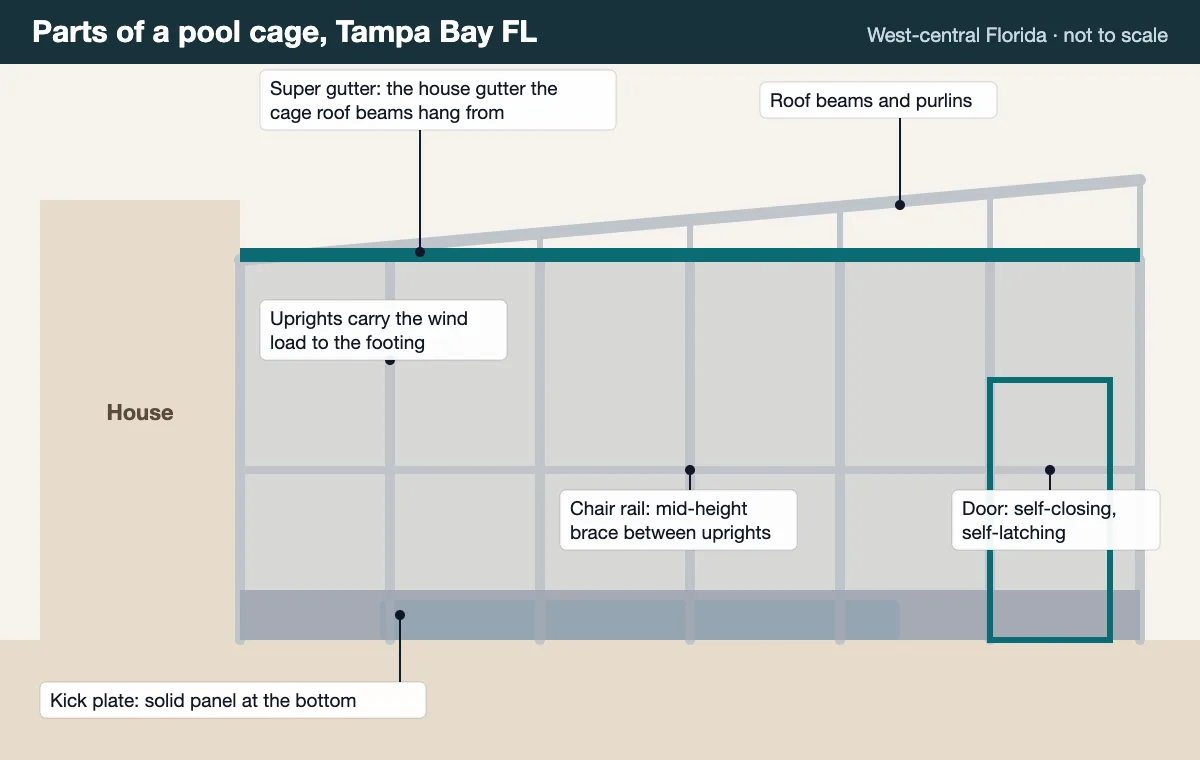
Wipe the aluminum posts, beams, chair rail and kick plates with mild dish soap in a bucket of water and a soft brush or sponge. Abrasive pads and harsh solvents can scratch or dull the finish.
- 5Brush the screens gently
Brush the screen lightly with the same soapy water. Older fiberglass gets brittle, so let the soap do the work and press only as hard as the screen tolerates.
- 6Rinse again and keep runoff out of the pool
Rinse all soap off the frame and screen, working down and away from the water where you can. Check your pool chemistry afterward if a lot of rinse water went in.
- 7Inspect while it is clean
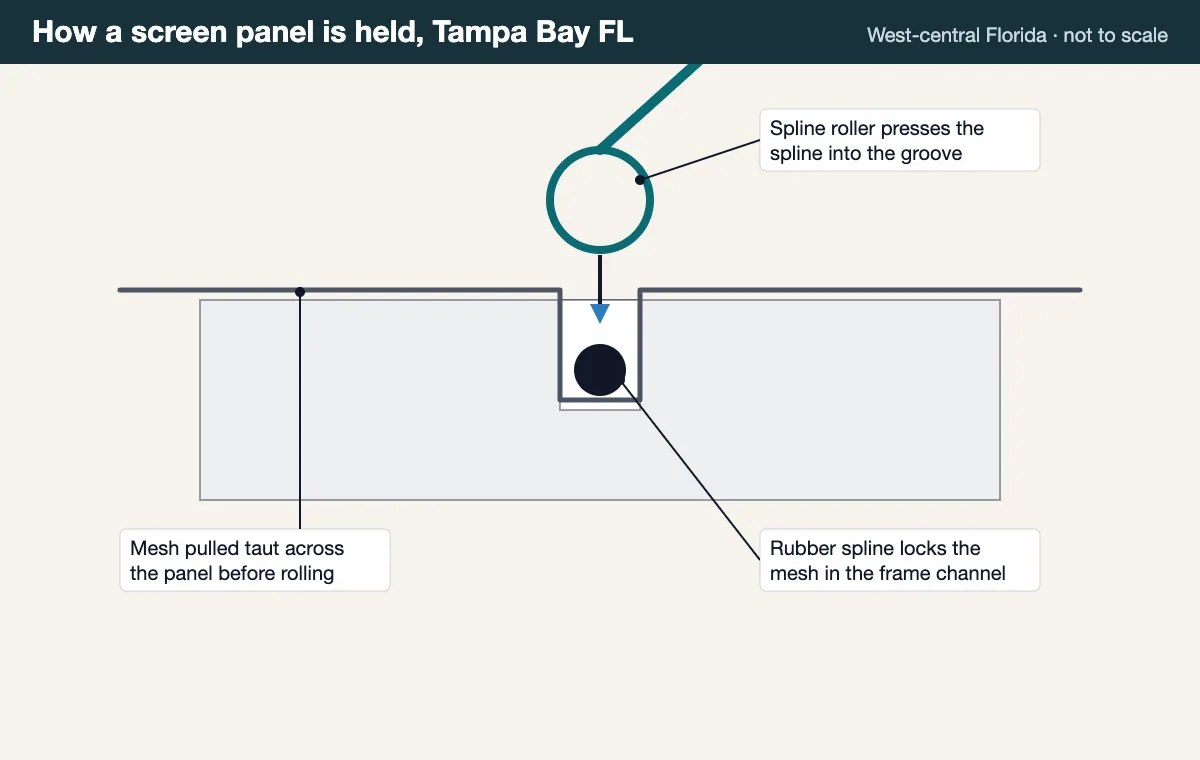
A clean cage shows its problems: look for loose or rusted screws, popped spline, torn panels, gaps at the kick plates and a door that no longer latches on its own.
How to clean the aluminum frame
Clean the aluminum frame with mild soap, water and a soft brush, then rinse it well. The painted or coated finish is what you are protecting. Give extra attention to the chair rail and kick plates, where splashed dirt and grass clippings collect, and to the bottom track, where water sits.
Near the coast, cleaning doubles as a corrosion check. University of Florida research on residential fasteners found corrosion “more serious in coastal environments due to presence of chloride ions,” and noted that the coating on stainless steel masonry screws commonly used for screen enclosures peeled during testing. In St. Petersburg, Clearwater, Apollo Beach and along the Gulf beaches, look closely at screw heads and the base of each post while the frame is wet and clean.
When a white or bronze frame will not come clean
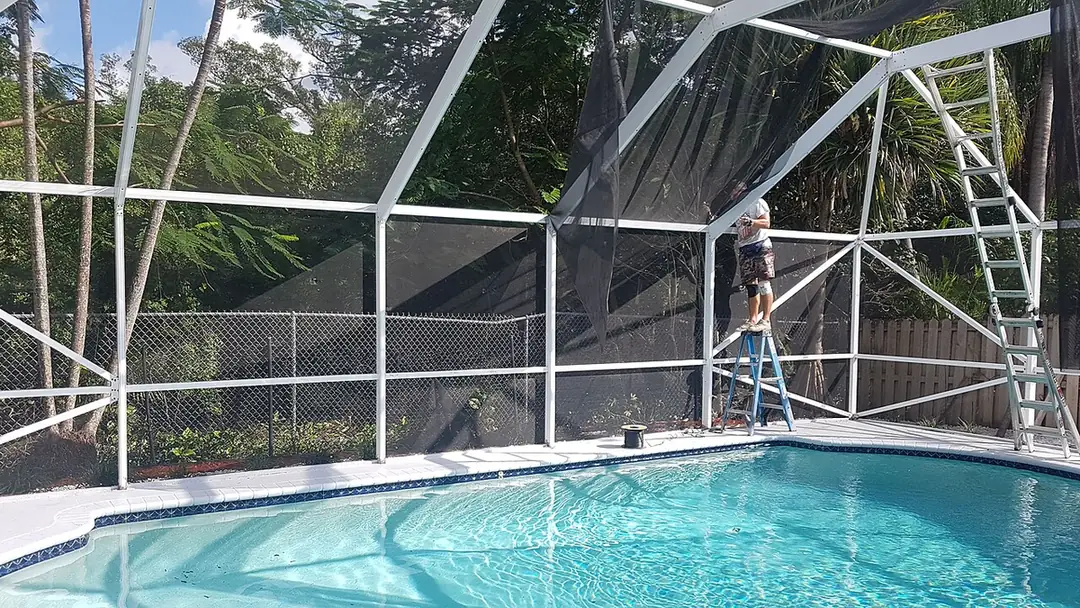
A chalky film that comes off on your hand is oxidized paint, not dirt, and scrubbing harder removes more of the finish. Angi puts repainting at every five to 10 years, at $1.50 to $2.50 per square foot. That is pool cage painting, and it is often paired with a rescreen.
How to clean pool cage screens
Clean pool screens with a gentle rinse, a soft brush and mild soap, and let water, not pressure, carry the dirt off. Fiberglass screen fades and gets brittle with age; one Florida contractor puts its life at about five to seven years in Florida sun. On older screen, firm scrubbing or a close pressure-washer blast can split the mesh or pull it out of the spline.
Brush in one direction along the weave, rinse each wall before the soap dries, and do the side facing the afternoon sun last or on a cloudy day. Vinyl-laminated lower panels (Florida Glass or Glas-Shield) wipe clean like a solid surface, which is part of why Phifer recommends them below the chair rail to keep dirt out of the cage.
Pressure washing without tearing anything
- Use the widest fan tip and the lowest pressure setting.
- Stand well back from the screen and sweep the spray; never hold it on one spot.
- Spray along the screen at an angle, not straight into it or into the spline channel.
- Skip pressure entirely on screen that is chalky, brittle or already torn.
- Keep the spray off door closers, latches and any electrical fixtures.
Tampa Bay messes and how to handle them
Lovebugs
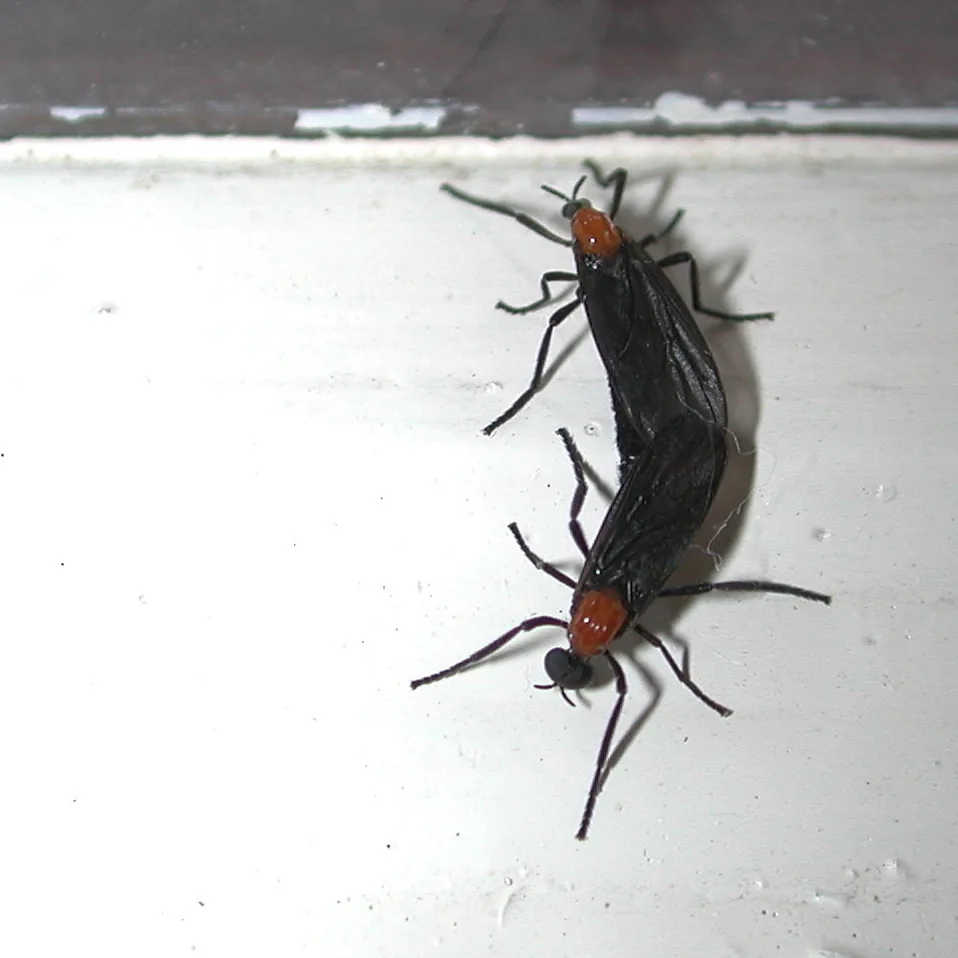
Rinse lovebugs off the cage soon after each flight instead of letting them dry on. UF/IFAS says lovebugs appear “in excessive abundance throughout Florida as male-female pairs for only a few weeks every April-May and August-September.” On cars, UF/IFAS notes that smashed lovebugs leave body contents, especially eggs, coating the painted surface. A cage frame is a painted surface too, so a hose-down at the end of each flight season is cheap insurance for the finish.
Mildew, algae and black spots
Treat mildew with soap and a soft brush first, and only then with a cleaner made for outdoor screens and aluminum. UF/IFAS Extension in Sarasota County puts the rainy season at June 1 to September 30, and screen under trees or in shade dries slowest. Follow the cleaner's label, test a small panel first, rinse thoroughly, and keep the runoff out of the pool. If the dark staining is in the screen fibers and will not wash out, the screen is likely near the end of its life.
Oak leaves, Spanish moss and pine needles on the roof
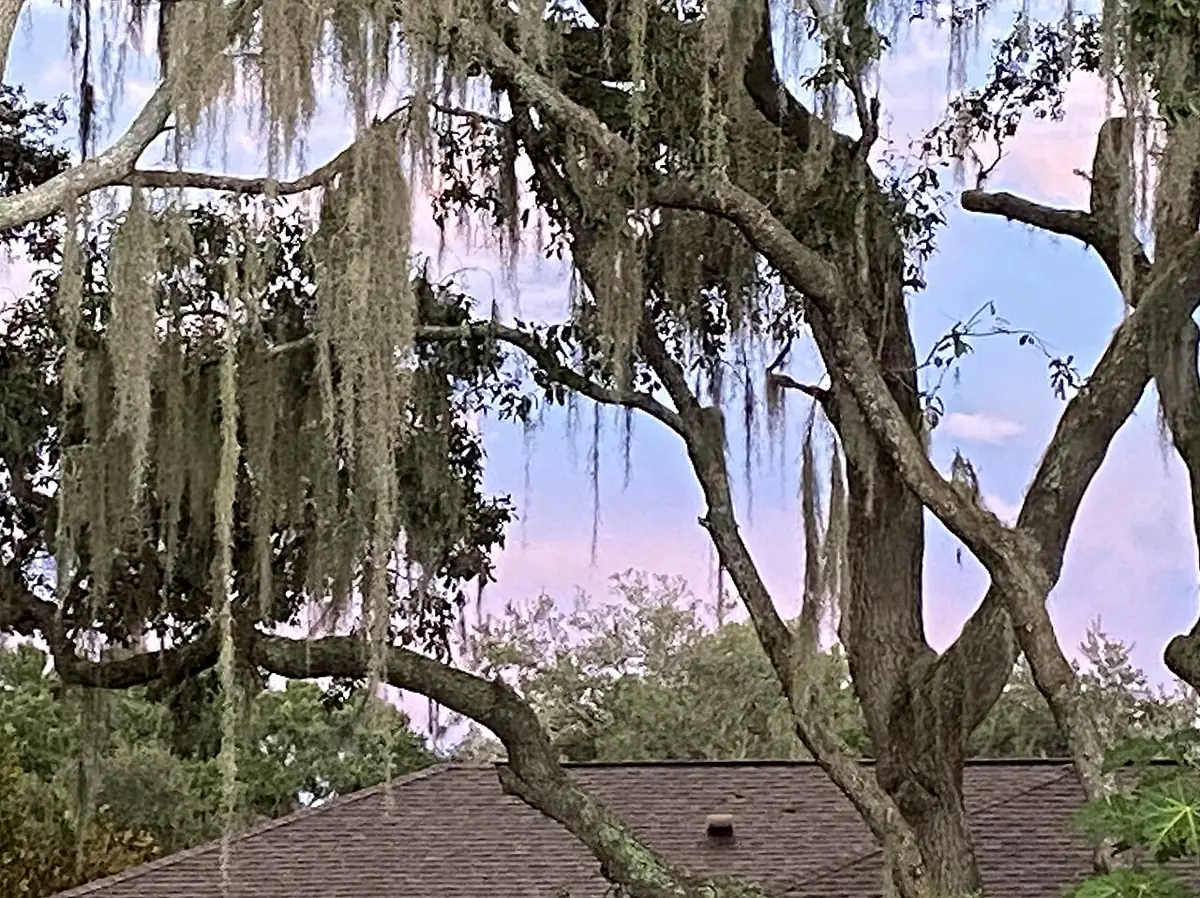
Sweep the roof from below with a soft broom and rinse, rather than letting debris pile up. Live oaks are everywhere in Tampa Bay: Temple Terrace, for example, is a Tree City USA known for its sand live oaks. Wet leaves and moss sitting on roof panels hold water against the screen and stain it, and heavier limbs tear it. Trim branches that hang over the cage so the debris has less to fall from.
Bird droppings, pollen and cobwebs
Soften bird droppings with water before wiping them off so you don't grind them into the finish. Pollen rinses off with a hose. Cobwebs gather in the upper corners and along the chair rail; a dry brush before the rinse clears them faster than water.
How to clean the pool cage gutters
Scoop the gutter clear, flush it and the downspouts with a hose, and check every seam for leaks. On many cages the gutter along the house is a super gutter, which HomeGuide describes as a 5 to 7 inch wide heavy-gauge aluminum piece that supports the weight of the enclosure, protects the fascia and drains the roof. A Central Florida gutter company says a quality super gutter lasts 20 to 30 years in Florida's climate with proper maintenance.
- Clear leaves and moss by hand from a ladder set safely against the house, not against the cage.
- Flush each run with a hose and confirm water exits the downspout freely.
- Look for drips at seams and end caps while the water runs.
- Check that the gutter is straight; a sag can mean a loose connection, not just weight.
- Clean before June 1, when the rainy season starts, and again after storms.
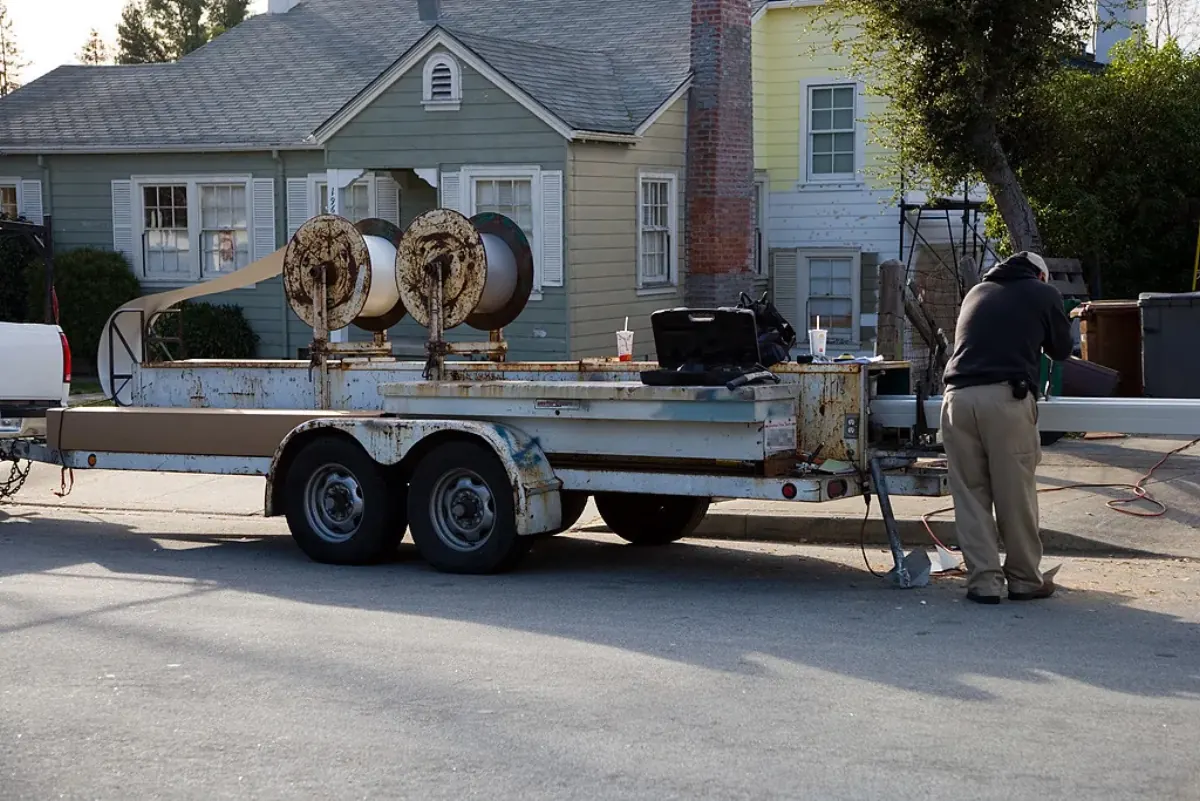
Leaking seams and sagging runs are pool cage gutter repair. A Florida screen company prices super gutter repair or replacement at $35 to $75 per linear foot.
How often to clean a pool cage in Tampa Bay
Plan on a full clean about four times a year, timed to Tampa Bay's seasons, plus a rinse after storms. This calendar ties each clean to a sourced local event:
| When | Why then | Focus |
|---|---|---|
| Late May | Spring lovebug flight ends; rainy season starts June 1 | Full wash, gutter flush, frame and fastener check |
| Late September | Late-summer lovebug flight and the rainy season both wind down | Full wash, mildew treatment, screen inspection |
| Winter | Outside the rainy season, an easy time to work | Roof sweep, gutter clean, check for torn panels |
| After any tropical storm | Wind drives debris onto and through the screen | Rinse, clear the roof and gutter, inspect frame and doors |
Swipe the table sideways to see every column →
Season dates from UF/IFAS (lovebug flights April to May and August to September; Sarasota County rainy season June 1 to September 30). Adjust for trees and coastal exposure at your house.
What to avoid
- Standing or kneeling on roof screen or roof beams.
- Leaning a ladder against the screen or a thin wall member.
- Wire brushes, scouring pads or abrasive powders on the frame.
- Harsh solvents or undiluted bleach without checking the product label for aluminum and screen.
- A narrow pressure-washer tip close to the screen.
- Letting cleaner run into the pool in quantity.
- Cleaning in full afternoon sun, when soap dries into streaks.
When cleaning is not enough
If the screen tears when you brush it, the problem is age, not dirt. Florida contractor guides put standard fiberglass at about 5 to 10 years. A few torn panels are a pool screen repair; widespread brittleness or stains that won't lift call for a full pool cage rescreening. The pool cage screen types guide explains which mesh holds up best to the dirt your yard throws at it.
This site covers Hillsborough, Pinellas, Pasco, Manatee, Sarasota and Hernando counties; see the service area page or request a free quote.