After a hurricane in Tampa Bay, FL, a damaged pool cage needs three things in order: a safe yard, a record of the damage, and a licensed repair with a permit for any structural work. Pool cage hurricane damage repair Tampa homeowners search for ranges from a few blown-out screen panels to a frame that has folded onto the deck, and the cost, permit and insurance answers are different for each.
Tampa Bay has had four storms in three years that tested its pool cages: Ian in 2022, Idalia in 2023, and Helene and Milton two weeks apart in 2024. This page uses the official National Hurricane Center and National Weather Service reports for what those storms actually measured here, and the counties' own pages for what they require after a storm.
What Milton, Helene, Idalia and Ian did in Tampa Bay
Milton was the wind storm and Helene the water storm. Milton came ashore on Siesta Key on October 10, 2024 as a category 3 hurricane, with hurricane conditions from Clearwater Beach south across Sarasota to near Venice. Helene made landfall far to the north two weeks earlier, but pushed a record surge into Pinellas and Tampa Bay. The peak gusts the National Weather Service recorded in each county show the difference:
| County | Milton 2024 | Helene 2024 | Idalia 2023 | Ian 2022 |
|---|---|---|---|---|
| Pinellas | 101 (Albert Whitted) | 73 (Clearwater Beach) | 61 (PIE airport) | 77 (Albert Whitted) |
| Hillsborough | 93 (Tampa Intl.) | 68 (Tampa Intl.) | 61 (Tampa Intl.) | 75 (Tampa Intl.) |
| Manatee | 102 (SRQ airport) | 74 (SRQ airport) | 70 (SRQ airport) | 86 (SRQ airport) |
| Sarasota | 102 (SRQ), 97 (Venice) | 69 (near Venice) | 62 (near Sarasota) | 86 (SRQ airport) |
| Pasco | 59 (near Zephyrhills) | 56 (near New Port Richey) | Not listed | Not listed |
| Hernando | 76 (Brooksville) | 66 (Weeki Wachee) | 58 (Brooksville) | Not listed |
Swipe the table sideways to see every column →
Milton, Helene and Idalia: NWS Tampa Bay county impact narratives. Ian: NWS Ruskin figures reported by Bay News 9 and the Sarasota Herald-Tribune (SRQ is Sarasota-Bradenton International, the highest land gust in both Manatee and Sarasota). Compiled 2026-10-13.
Milton, October 2024
Milton's gusts ran 80 to 100 mph across Hillsborough, Pinellas, Manatee and Sarasota, with 18.54 inches of rain in a day at Albert Whitted Airport in St. Petersburg and 11.43 inches at Tampa International. In east Manatee, the Your Observer newspaper reported winds of 100 mph or more around Bradenton and Lakewood Ranch, where one Mill Creek family heard their pool cage creaking before it blew apart. Tropicana Field lost its fabric roof. Pasco and Hernando were on the weaker side of the storm, with peak gusts in the 55 to 76 mph range.
Helene, September 2024
Helene made landfall near Perry as a category 4, yet its surge reached 5 to 7 feet above ground from the Anclote River south to Longboat Key. The St. Petersburg tide gauge hit 6.31 feet above high water, breaking a record set by Hurricane Elena in 1985, and Clearwater's gauge reached 6.67 feet. Shore Acres in St. Pete, Gulf Harbors in New Port Richey and Apollo Beach's canals all flooded. Gusts stayed between 56 and 74 mph, so most cage damage from Helene was from water and debris, not wind alone.
Ian (2022) and Idalia (2023)
Ian came ashore at Cayo Costa as a strong category 4 and gusted to 86 mph at the Sarasota-Bradenton airport and 106 mph at Sarasota Bay Marker 17. North Port took 21.45 inches of rain and the Myakka River closed part of I-75. Idalia passed about 110 nautical miles west of Tampa, but still pushed 3 to 5 feet of surge into Tampa Bay, and Pinellas counted 811 structures with major damage.
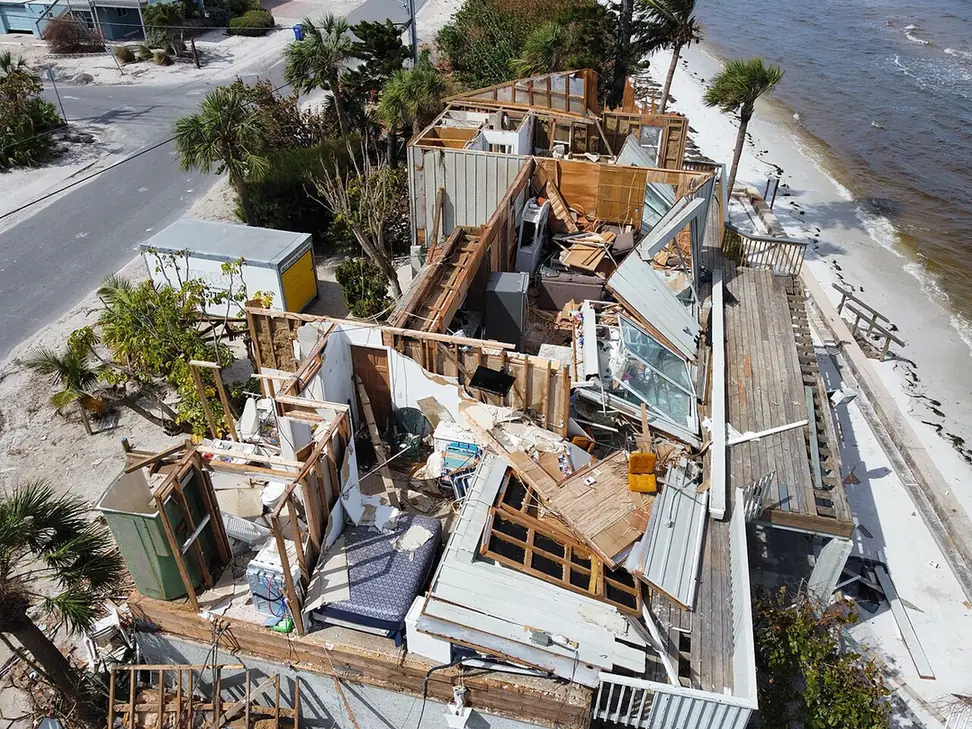
Common storm damage and what it usually involves
The first question after a storm is whether the damage is only screen or reaches the aluminum. Screen damage is a repair priced by the panel. Frame damage is structural, needs a licensed contractor and usually a permit, and is priced by the member.
| Damage you see | Screen or structure? | Published price |
|---|---|---|
| One or two panels blown out or torn | Screen | $75 to $150 per panel (Tampa Bay) |
| Many panels torn, frame straight | Screen | $250 to $600 for multiple panels; full rescreen $1,500 to $4,500+ |
| Upper or mansard roof panels torn | Screen | $60 to $120 per panel (Florida) |
| Screen door torn or door frame racked | Screen or structure | $250 to $650 per door, with hardware (Florida) |
| A post bent, cracked or pulled from the deck | Structure | $300 to $700 per post (Florida) |
| A roof beam or purlin bent | Structure | $400 to $1,200 per beam (Florida) |
| Super gutter pulled from the fascia or sagging | Structure | $35 to $75 per linear ft (Florida) |
| Several members bent or the cage collapsed | Structure | Rebuild: $12,000 to $25,000+ (Tampa Bay) |
Swipe the table sideways to see every column →
Compiled from Tampa Bay and Florida contractor price guides published 2025 and 2026, fetched 2026-10-13. A planning range, not a quote.
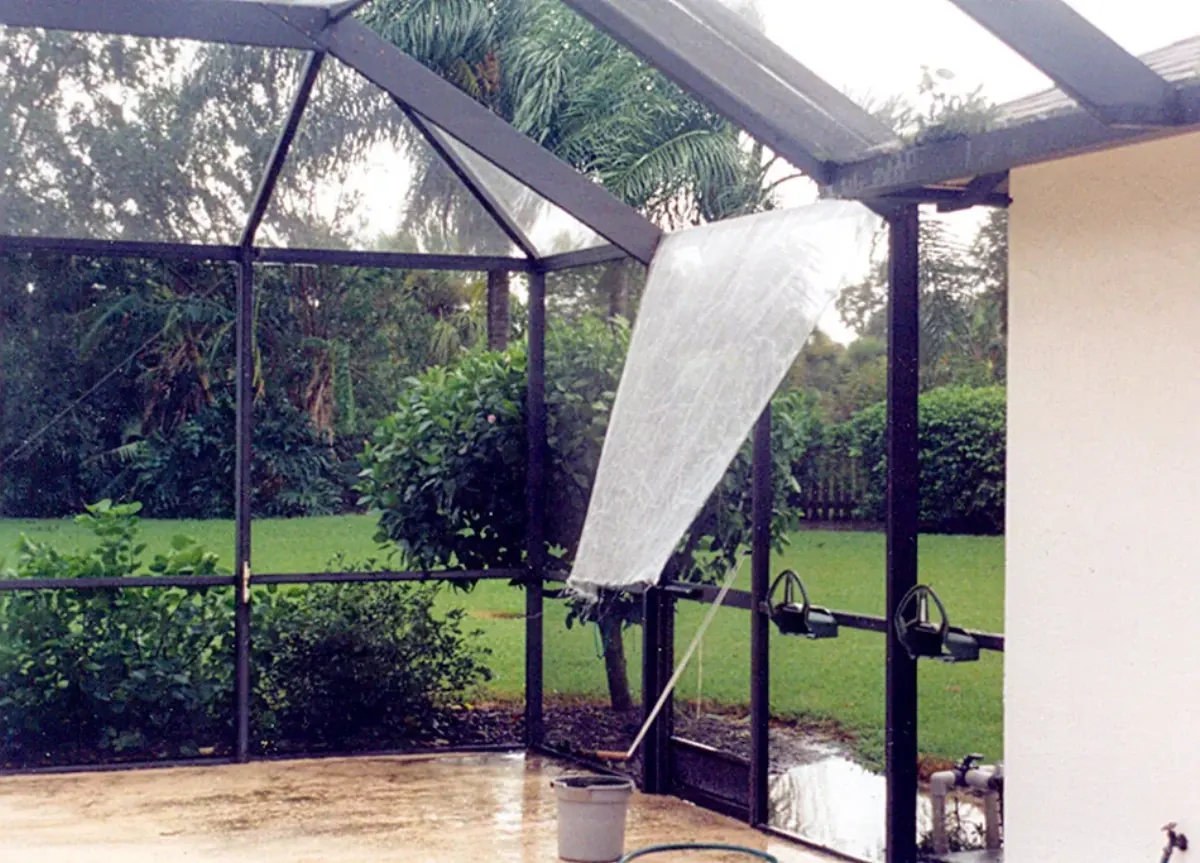
Damage that is easy to miss
- Purlins on the roof that look straight from the deck but sag when viewed along their length
- Screws sheared or pulled at the gutter and the house wall
- Cracks at the base where posts meet the deck anchors
- A door that now drags or will not latch because the frame shifted
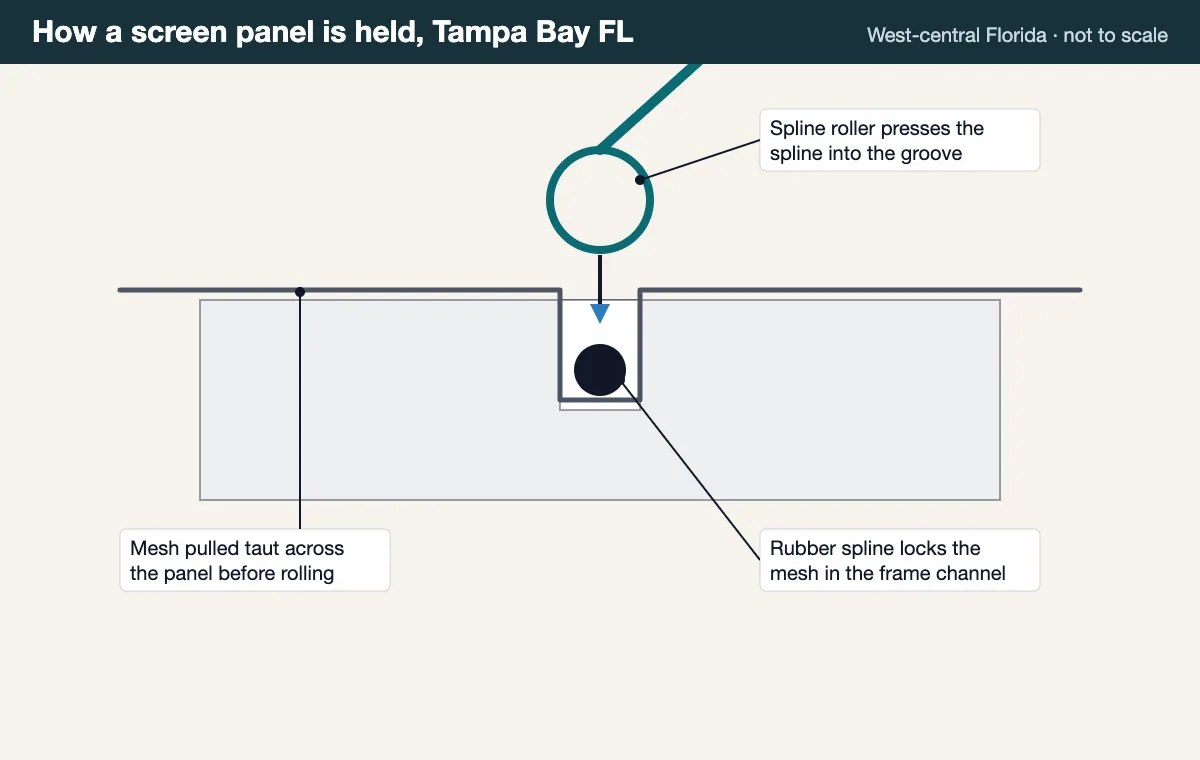
- Panels still in place but pulled partly out of their spline channel
- Dents and scrapes from flying debris that cracked the paint and will corrode later
Staying safe around a damaged cage
Treat a storm-bent cage as a hazard until someone qualified has looked at it. Bent aluminum can be under tension, loose panels and beams can drop in the next gust, and a sagging roof section can give way if someone climbs on it. Stay off ladders on a damaged frame.
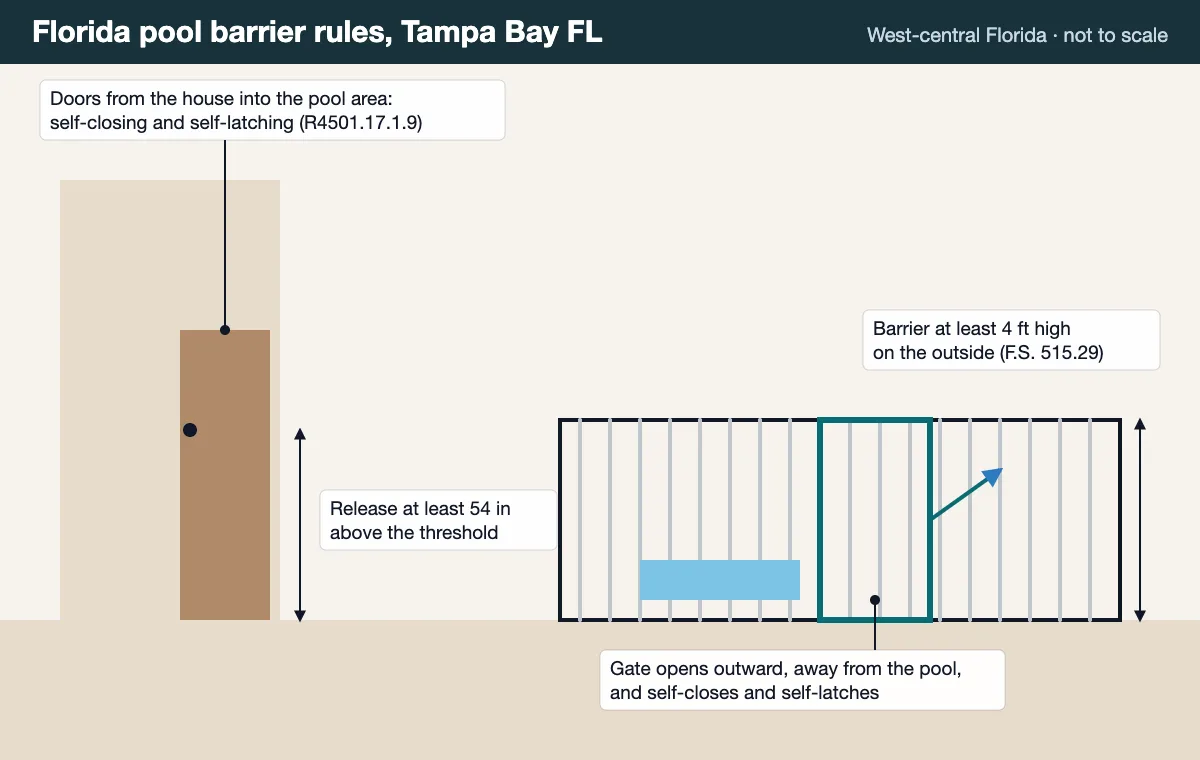
The pool is the other hazard. Many Tampa Bay cages are the pool's safety barrier under Florida's Residential Swimming Pool Safety Act, which defines a young child as anyone under 6 and requires a barrier at least 4 feet high. With walls or the door torn out, the pool is open. Keep children away and the pool off-limits until a barrier is back, and see pool cage door replacement for the self-closing door rules.
What insurance will and will not pay
Do not assume your homeowners policy covers the cage. Citizens Property Insurance, Florida's state-backed insurer, says in its HO-3 coverage worksheet that carports, porches, aluminum-framed screened enclosures and screen pool cages constructed to be open to the weather are not covered. Its hurricane coverage flyer lists open enclosures as typically not covered.
Florida's Department of Financial Services describes a Screened Enclosure and Carport Endorsement that covers screened enclosures damaged as a result of a hurricane. Whether your insurer offers it, and what limit you carry, is on your own declarations page. Ask your agent before hurricane season, not after the storm.
How the hurricane deductible changes the math
Florida Statute 627.701 requires insurers to offer hurricane deductibles of $500, 2 percent, 5 percent and 10 percent of the dwelling limit. It applies once per calendar year to all hurricane losses, so if two storms hit in one season, as Helene and Milton did, you pay it once.
| Deductible option | You pay first | A $4,500 screen and frame repair | A $20,000 rebuild |
|---|---|---|---|
| $500 | $500 | Insurer would pay the rest, if the cage is covered | Insurer would pay the rest, if covered |
| 2 percent | $6,000 | Below the deductible | $14,000 above the deductible, if covered |
| 5 percent | $15,000 | Below the deductible | $5,000 above the deductible, if covered |
| 10 percent | $30,000 | Below the deductible | Below the deductible |
Swipe the table sideways to see every column →
Deductible options from Florida Statute 627.701(3)(a) and Citizens' HO-3 worksheet. Dwelling limit and job sizes are an illustration, not a quote. Other storm damage to the house in the same year counts toward the same deductible.
The pool cage insurance guide covers endorsements and policy wording in more depth.
How to document pool cage storm damage
Record everything before cleanup, because a claim, a permit and a contractor's estimate all start from the same evidence. This is general advice; your insurer may ask for more.
- Wide photos and a slow video of the whole cage from the yard and from inside, before anything is moved
- Close-ups of every bent post, beam and purlin, with something in the frame for scale
- Photos of the gutter and the house wall where the cage attaches
- A count of torn or missing panels, wall by wall and on the roof
- Photos of debris that hit the cage, such as branches or a neighbor's fencing
- Older photos of the cage in good condition, if you have them
- Receipts for anything you buy to make the area safe
- The contractor's written estimate, with their license number on it
Permits and fee waivers after a storm
Structural storm repairs need a permit, and counties sometimes waive the fee after a declared storm. What the Tampa Bay departments have published:
| Jurisdiction | What it says about storm repairs |
|---|---|
| Pinellas County | Replacing or repairing a pool enclosure or screen room requires a permit. Standard fees apply, but may be waived after a major storm at the County Commission's discretion. |
| Manatee County | After Milton: all storm-related repairs require permits; building permit fees for storm repairs were waived through March 1, 2025. |
| Sarasota County | After Milton: permit fees for storm repairs, including pool cage repair, were temporarily suspended. |
| Plant City | Non-structural damage to a screen enclosure needs no permit; structural damage does. |
| Hillsborough County | Non-structural work under $7,500 on a single-family home is exempt; structural work is not. |
| Statewide (HB 803) | The under-$7,500 exemption excludes structural work and any property in a flood hazard area. |
Swipe the table sideways to see every column →
From Pinellas County's Storm Recovery Permitting page (updated May 1, 2026), WGCU's October 24, 2024 report on post-Milton county permit rules, Plant City's disaster permitting FAQ, Hillsborough County's exempt-work page and Florida Statute 553.79. Waivers are announced storm by storm; check your county's current notice.
Homes in a flood zone face one more rule: Pinellas County says special building regulations and Substantial Improvement rules apply to work on flood-zone properties, which matters when the house itself was also damaged. The permit guide lists each building department.
Why storm repair needs a licensed aluminum contractor
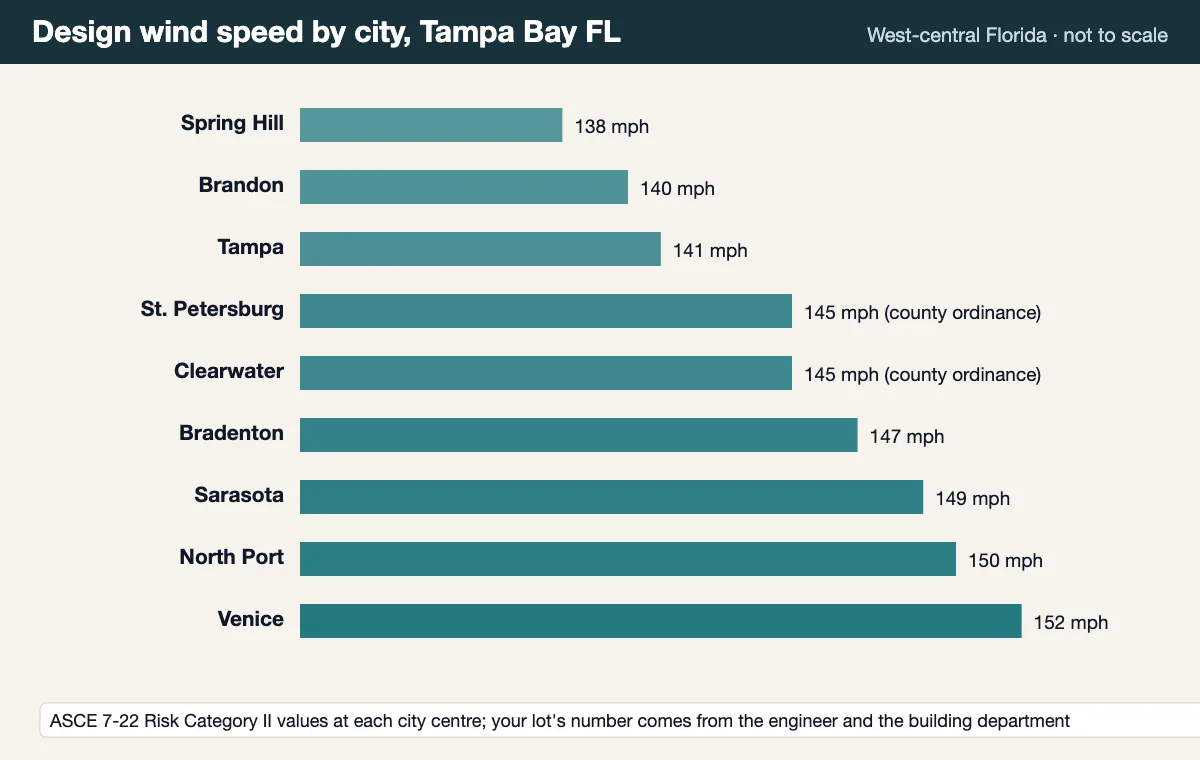
Bent beams, posts and gutters are structural work, and Florida licenses it. The state's Specialty Structure Contractor license covers screened enclosures and pool enclosures, Hillsborough County issues a local aluminum structure license, and Pinellas requires registration with its Construction Licensing Board. The City of St. Petersburg notes that Florida Statute 489.103 requires work of $1,000 or more to be done by a licensed contractor. A rescreen-only crew can fix panels, but straightening or replacing members is a different job.
Questions worth asking any storm contractor
- What is your license number, and is it state or county?
- Who pulls the permit, and is it on the estimate?
- Which members are you replacing, and which are you reusing?
- Will the frame be fixed before any new screen goes in?
- Does the price include hauling away the damaged aluminum?
The repair path after a storm
Safety, documentation, policy, assessment, permit, then repair. In that order:
- 1Make it safe
Keep everyone, especially children, away from the cage and the pool until bent or hanging aluminum is dealt with and the pool has a barrier again.
- 2Document before anything moves
Photograph and video the whole cage from outside and inside, then close-ups of every bent member, torn panel and pulled connection, before cleanup starts.
- 3Check the policy and deductible
Find your hurricane deductible and whether you carry a screened enclosure endorsement, then decide with your agent whether a claim makes sense.
- 4Get a licensed assessment
A licensed screen enclosure contractor separates screen-only damage from frame damage and writes up the members, gutter and doors that need work.
- 5Permit the structural work
Frame repairs or a rebuild go through the building department, with any post-storm fee waiver your county has announced.
- 6Frame first, then screen
Bent or cracked members are replaced and connections refastened before new screen goes in, then the work is inspected.
Rescreen, repair or rebuild after the storm
If the frame came through straight, the storm job is screen work; if several members are bent, it is probably a rebuild. A cage with only torn panels is a pool screen repair or a full pool cage rescreening. One or two bent members can be swapped. When the gutter, posts and roof all took damage, compare the repair estimate against pool cage replacement, which covers rebuild costs and the code a new cage has to meet.
Before the next storm: the cut-screen question
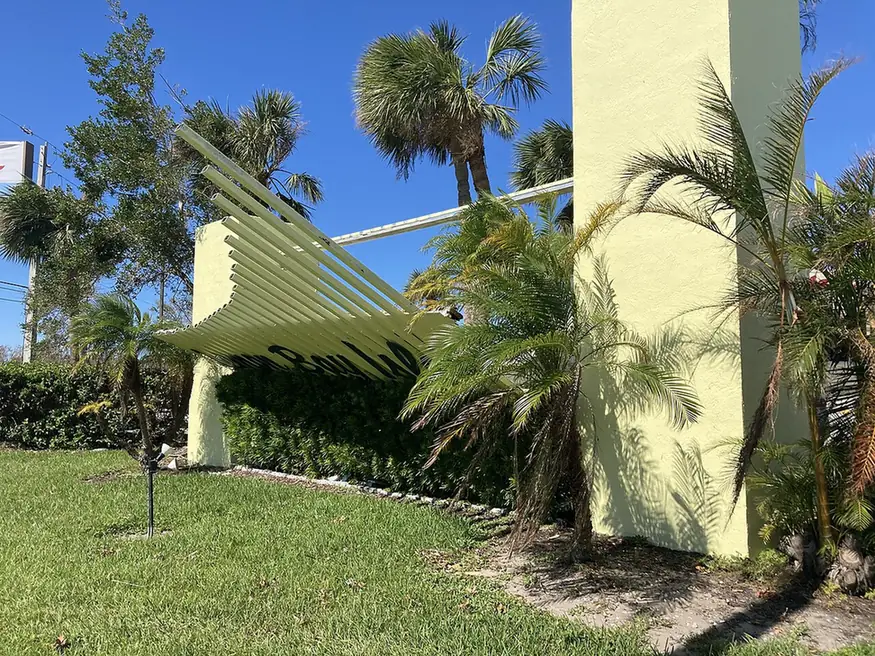
Cutting screen before a hurricane is a feature of specially engineered cages, not a general rule. Florida Administrative Code Rule 61G20-1.002, carried into Section 2002.7 of the Building Code, lets an engineer design a cage on the assumption that marked screen panels will be removed or cut. Those cages need signed and sealed site-specific engineering, permanent labels on the panels to be cut, and panels that can be cut without ladders or scaffolding. The rule says the designated screen shall be completely cut when winds are forecast to exceed 75 mph, and the contractor supplies replacement screen for one full replacement.
A standard cage is designed with all of its screen in place. A Florida structural engineering firm that studied the question notes that screens which are only cut, and left flapping half-attached, still transfer some stress to the frame, and says plainly it is not recommending anyone risk their life cutting screens when they should be evacuating or taking shelter. Removable vinyl or acrylic wind panels are different again: the code requires a decal saying they shall be removed when winds exceed 75 mph.
- Clear the deck: furniture, grills and planters inside the cage become projectiles
- Trim branches that overhang the cage roof before the season, not during a watch
- Check that the door closes and latches so it cannot swing and tear its frame
- Note whether your cage has cut-panel labels; if it does not, leave the screen alone
- Photograph the cage in good condition each spring for your records
Mistakes to avoid after pool cage storm damage
- Hauling debris away before photographing it
- Rescreening a frame that is still bent, which hides the damage and wastes the screen
- Hiring anyone who cannot give a license number for structural aluminum work
- Skipping the permit on frame repairs, which every county above requires for structural work
- Filing a claim without checking the deductible first
- Letting children near an open pool while the cage walls or door are down
Hurricane damage repair across Tampa Bay
Storm repair requests follow the storms: wind damage in Sarasota, Bradenton and Lakewood Ranch after Milton, and surge and debris damage in St. Petersburg, Clearwater and New Port Richey after Helene. Every town is on the service area page. When you are ready, request a free quote.