Last reviewed October 2026
In Florida, a pool cage is often not covered by a standard homeowners policy unless the policy or an endorsement adds it. Citizens Property Insurance, the state-backed insurer many Tampa Bay, FL homeowners end up with, says so in plain words on its own coverage worksheet. Private carriers vary. This guide explains what the forms say, how Florida's hurricane deductible works, and what a cage costs to repair or rebuild, so you can judge pool cage insurance in Florida against real numbers.
Nothing here is coverage advice for your policy. Only your declarations page, policy form and endorsements can tell you what is covered, and only your agent or insurer can confirm it.
What Citizens' own documents say about pool cages
Citizens' HO-3 coverage worksheet lists screen pool cages among the structures that are not covered. The note on the worksheet (revised 11/25) reads:
“Carports, porches, aluminum-framed screened enclosures, screen pool cages or similar structures with a roof covering of aluminum, fiberglass, plastic, vinyl, fabric or screening, constructed to be open to the weather, are not covered.”
Citizens' consumer flyer on hurricane coverage (dated 10/23) says the same thing in shorter form. In its list of what hurricane coverage usually does and does not pay for, the line for “Open Enclosures (screened, aluminum, glass, etc.)” reads “Typically not covered.”
The phrase that matters is “open to the weather.” A pool cage is a frame of aluminum and screen that wind and rain pass straight through, which is why insurers treat it differently from a room with a solid roof and walls. If your policy is with Citizens, read its current form for your exact policy type, since the worksheet compares several forms side by side.
Three ways a Florida policy can treat your cage
Your cage is either excluded, covered under the policy's other structures, or covered only through an add-on. Which one applies depends on the insurer and the form, not on the cage.
| How the policy treats it | What that means after a storm | What to look for in your papers |
|---|---|---|
| Excluded | Damage to the cage is yours to pay, even if the house claim is paid | Wording like the Citizens note: screened enclosures open to the weather are not covered |
| Covered with other structures or the dwelling | The cage claim may be paid, subject to the hurricane deductible and policy limits | Whether the cage is named, and which coverage section it falls under |
| Covered by an endorsement | Paid up to the endorsement's limit, after the deductible | A separate endorsement form on the declarations page, with its own limit |
Swipe the table sideways to see every column →
Compiled from Citizens' HO-3 coverage worksheet (rev. 11/25), Citizens' Hurricane Coverage flyer (10/23) and the Florida Department of Financial Services homeowners endorsements page, all read 2026-10-13. Policy forms vary by insurer.
The screened enclosure endorsement
An endorsement is the usual way a cage gets added to a Florida policy that would otherwise leave it out. On its consumer page about homeowners endorsements, the Florida Department of Financial Services describes a Screened Enclosure and Carport Endorsement this way: it “provides coverage for screened enclosures and aluminum-framed carports that are damaged as a result of a hurricane.”
That description tells you what the endorsement is for. It does not tell you whether your insurer sells it, how much coverage you can buy, what it costs, or whether it pays for the screen as well as the aluminum. Those details live in the endorsement form your insurer files, and they differ from company to company. Ask for the form itself, not a summary.
How the hurricane deductible works
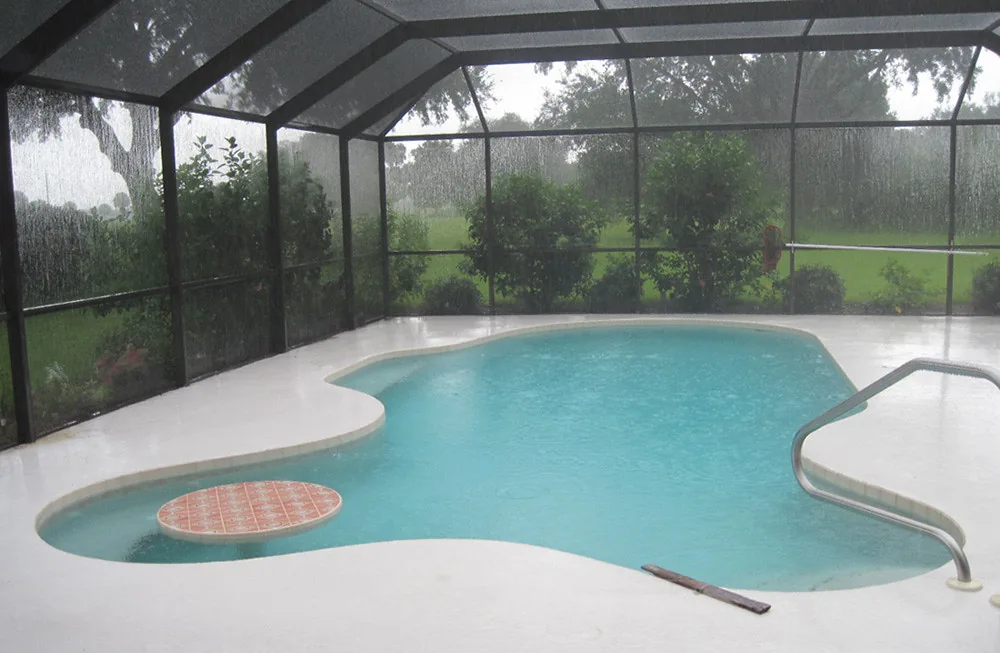
Florida hurricane losses carry their own deductible, and it is usually a percentage of your dwelling limit, not a flat amount. Florida Statute 627.701(3)(a) requires insurers to offer “alternative deductible amounts applicable to hurricane losses equal to $500, 2 percent, 5 percent, and 10 percent of the policy dwelling limits.” Citizens' worksheet lists the same four choices: $500, 2%, 5% and 10% of Coverage A.
Two more rules shape the math. The statute says the hurricane deductible “shall apply on an annual basis to all covered hurricane losses that occur during the calendar year,” and Citizens' flyer adds that during a busy season you pay the hurricane deductible only once, even if you make repairs from more than one named storm. Citizens also notes that homes with Coverage A limits under $100,000 may have a set dollar hurricane deductible instead of a percentage.
A worked example
Take a Tampa Bay home with a dwelling limit (Coverage A) of $350,000. This is an illustration, not a typical policy. Here is what each statutory option means in dollars, next to what pool cage work costs:
| Deductible option | You pay first | Pool cage job that falls under it |
|---|---|---|
| $500 flat | $500 | Most single-panel repairs ($75 to $150 a panel) |
| 2% of Coverage A | $7,000 | Multi-panel repairs ($250 to $600) and most full rescreens ($1,500 to $4,500+) |
| 5% of Coverage A | $17,500 | Everything short of a large replacement |
| 10% of Coverage A | $35,000 | Above the usual full replacement range of $12,000 to $25,000+ |
Swipe the table sideways to see every column →
Deductible options from FS 627.701(3)(a). Repair and replacement ranges from Tampa Bay and Florida contractor price guides published December 2025 to March 2026, fetched 2026-10-13. Your deductible, limit and coverage will differ.
The pattern is clear. With a 2% deductible or higher, most screen damage costs less than the deductible, so a claim would pay nothing for it even if the cage were covered. A claim starts to matter when the frame itself is lost and the whole structure has to be rebuilt.
The calendar-year rule matters here too. Hurricanes Helene and Milton both hit Tampa Bay in the 2024 season, two weeks apart. Under the annual rule, a homeowner with covered losses from both storms would owe the hurricane deductible once for that year, not twice. If your house claim from an earlier storm already used up the deductible, covered cage damage from a later storm that year may be worth reporting even if it is modest.
What pool cage damage costs to fix in Tampa Bay
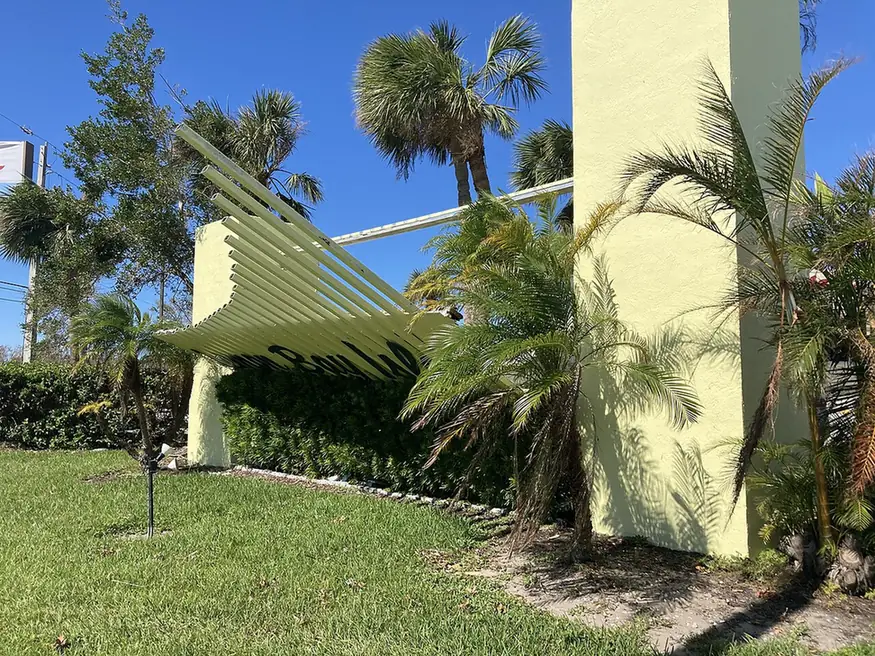
Storm damage to a cage runs from a few hundred dollars for panels to well over $12,000 for a full replacement. Knowing where your damage sits is the first step in deciding whether a claim is worth the paperwork.
| Job | Published range | Source and date |
|---|---|---|
| Single screen panel | $75 to $150 | Tampa Bay contractor guide, Jan 2026 |
| Several panels | $250 to $600 | Tampa Bay contractor guide, Jan 2026 |
| Full rescreen | $1,500 to $4,500+ | Florida contractor guides, Dec 2025 and Mar 2026 |
| Replace a corroded post | $300 to $700 per post | Central Florida screen company, 2026 |
| Replace a beam | $400 to $1,200 per beam | Central Florida screen company, 2026 |
| Full cage replacement | $12,000 to $25,000+ | Tampa Bay contractor guide, Jan 2026 |
| New code-built cage, about 1,500 sq ft | About $23,000 ($12 to $25 per sq ft) | Tampa Bay contractor guide, Feb 2026 |
Swipe the table sideways to see every column →
Compiled from published contractor price guides fetched 2026-10-13. Treat these as planning ranges; a written quote for your cage is the number an adjuster or you will actually use.
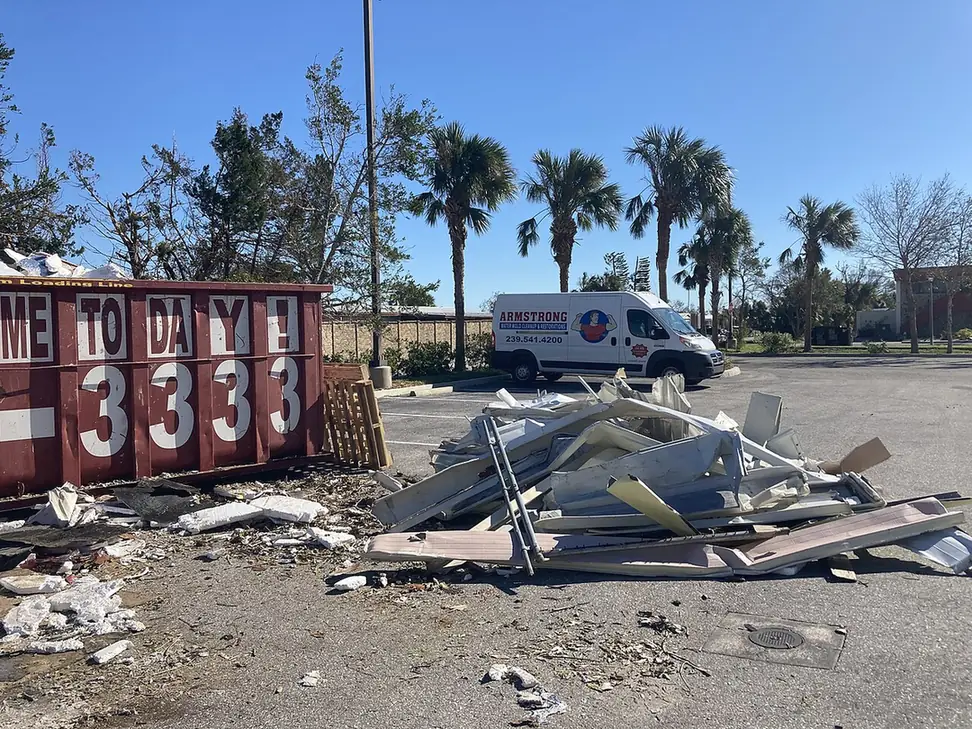
Screen-only damage is usually a pool screen repair or a full pool cage rescreening. Bent beams, torn connections and a frame that racks are hurricane damage repair or a pool cage replacement. The Tampa Bay pool cage cost guide breaks new-cage prices down further.
Why insurers treat pool cages as high risk
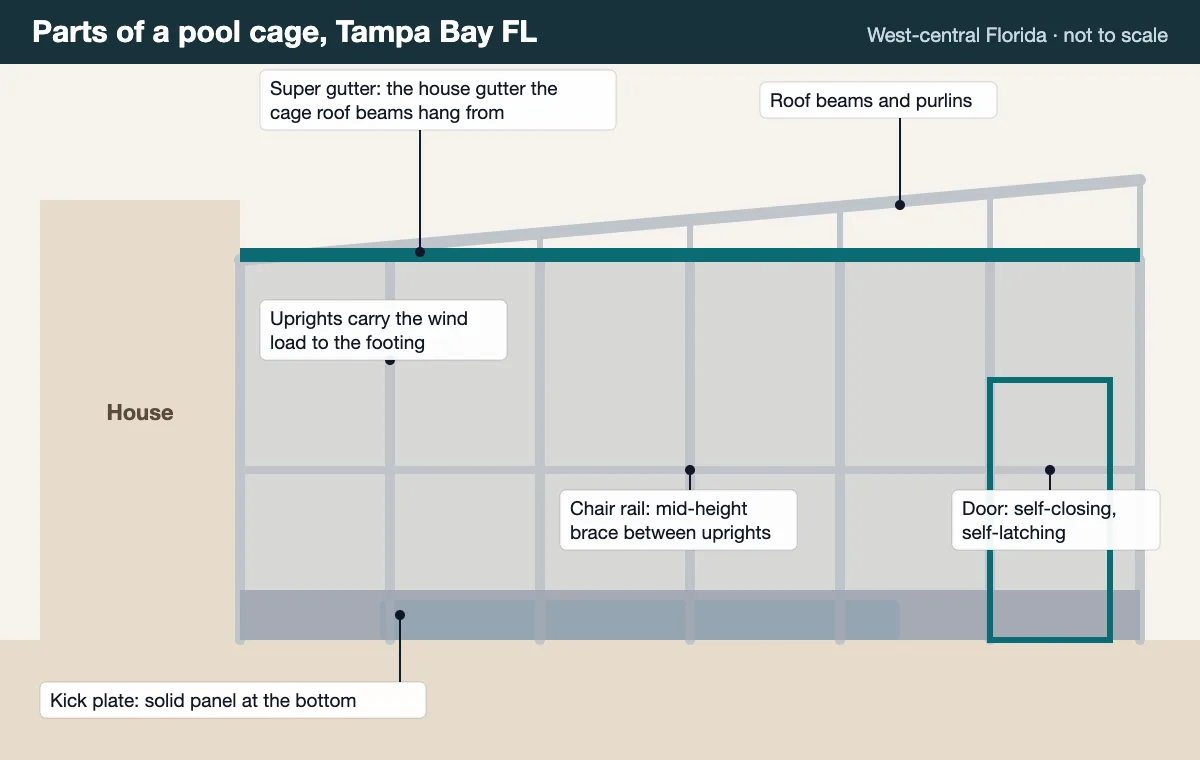
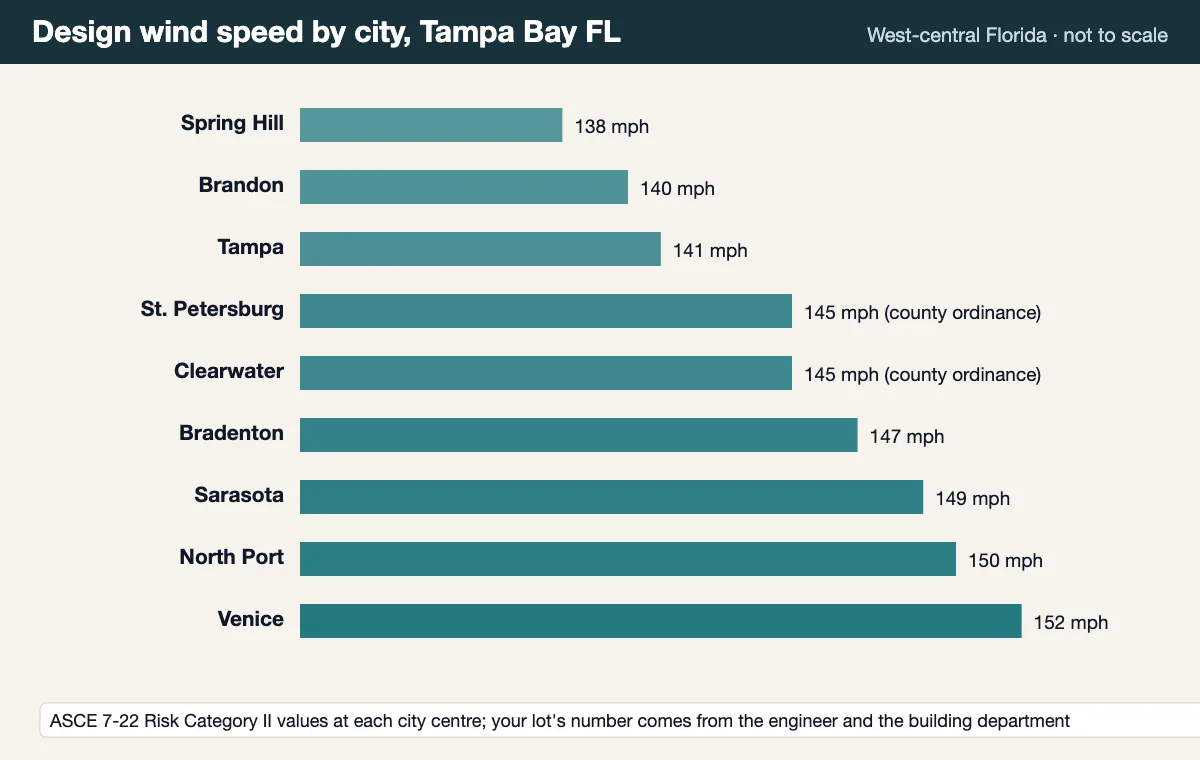
A pool cage is a large, light frame that catches wind, sits outside the walls of the house and is built to a design wind speed, not to survive any storm. Florida Building Code Section 2002 designs screen enclosures for wind by location, and Pinellas County sets its Risk Category II design speed at 145 mph by local amendment.
Hurricane Milton in October 2024 shows the gap between code and condition. The National Weather Service recorded a peak gust of 102 mph at Sarasota-Bradenton International Airport and 101 mph at Albert Whitted Airport in St. Petersburg, below the region's design speeds, and pool cages still came apart. In Lakewood Ranch's Mill Creek, a resident told Your Observer his son heard the pool cage “creaking” before it blew apart. Age, corrosion, loose fasteners, flying debris and older engineering all play a part.
For the engineering side of that question, read are pool cages hurricane proof.
What to ask your agent before hurricane season
Ask in writing, and ask for the form, not a yes or no. These questions cover the gaps homeowners most often find after a storm:
- Is my screen pool cage covered, excluded, or covered only by an endorsement? Which page of my policy says so?
- If there is an endorsement, what is its limit, what does it cost each year, and can I see the endorsement form?
- Does the coverage pay for the screen, the aluminum frame, or both?
- Does it pay replacement cost or actual cash value (replacement cost minus depreciation)?
- What is my hurricane deductible in dollars, and does it apply to the cage claim?
- Is the cage covered for wind outside a named hurricane, such as a summer thunderstorm, and what deductible applies then?
- Does the coverage include rebuilding to the current Florida Building Code, including the permit and engineering?
- Does my policy cover the debris removal if the cage falls on the house or the pool?
- If my cage limit is low, can it be raised to match a current replacement quote?
A current written quote for replacing your cage gives the limit question a real answer. Insuring a cage for what it cost in 2005 rarely covers what it costs to build to today's code.
After a storm: document, secure, then repair
Take photos before anything is moved, keep the pool area closed off, and expect a permit for frame work. These steps protect both a possible claim and your family:
- Photograph every side of the cage, the roof from the ground, the house connection, the gutter and any debris that hit it, with the date showing.
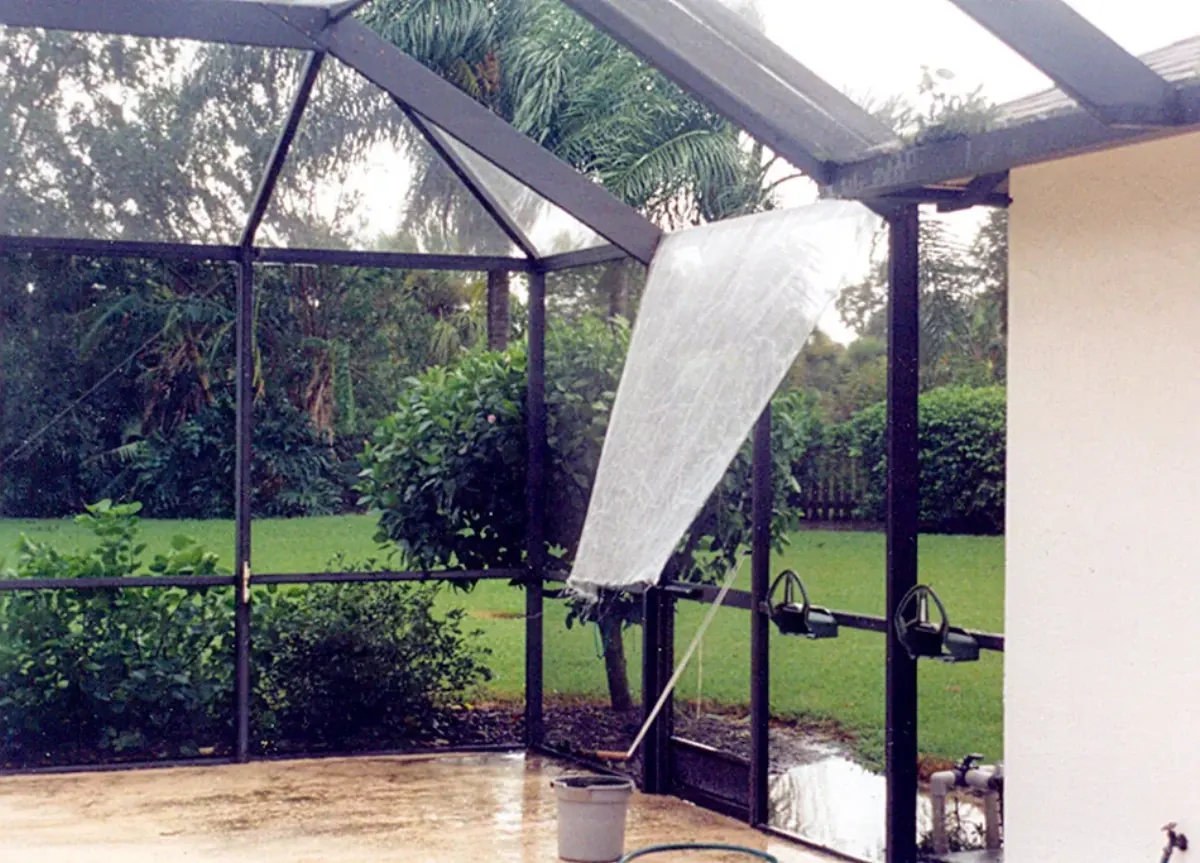
- Stay out of a cage that is leaning, twisted or hanging over the pool. A partly failed frame can still fall.
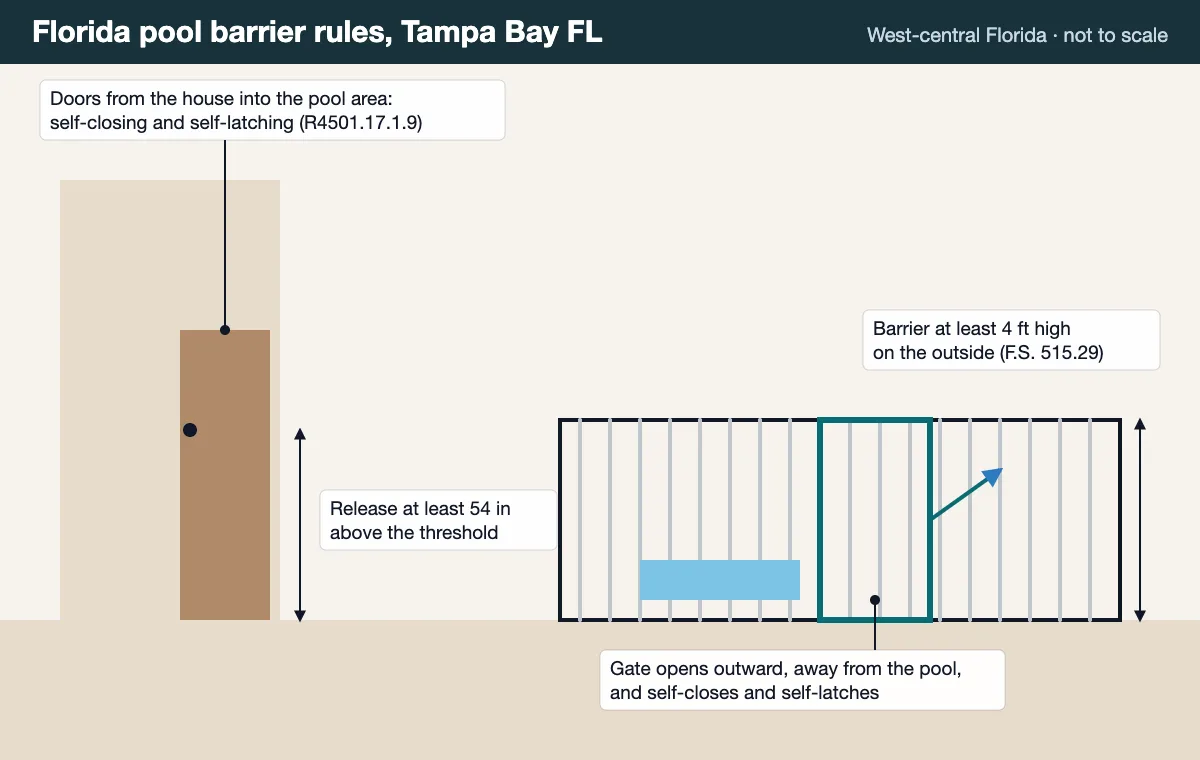
- If the cage is your pool's safety barrier, a blown-out wall means the pool is open. Florida's pool barrier law (FS 515.29) calls for a barrier at least 4 feet high with no gaps a young child could get through.
- Get a written repair or replacement quote and compare it with your hurricane deductible before deciding on a claim.
- Report the damage to your insurer within the deadline your policy sets, even if you are unsure the cage is covered.
- Keep receipts for any emergency work, such as cutting loose hanging panels.
Permits after a storm in Tampa Bay
Pinellas County's storm recovery permitting page lists “Replacing or repairing a pool enclosure or screen room” as work that needs a permit, at standard fees, though fees “may be waived following a major storm event” at the county commission's discretion. After Milton, Manatee County required permits for all storm-related repairs but waived the fees through March 1, 2025, and Sarasota County temporarily suspended permit fees for storm repairs, including pool cage repair.
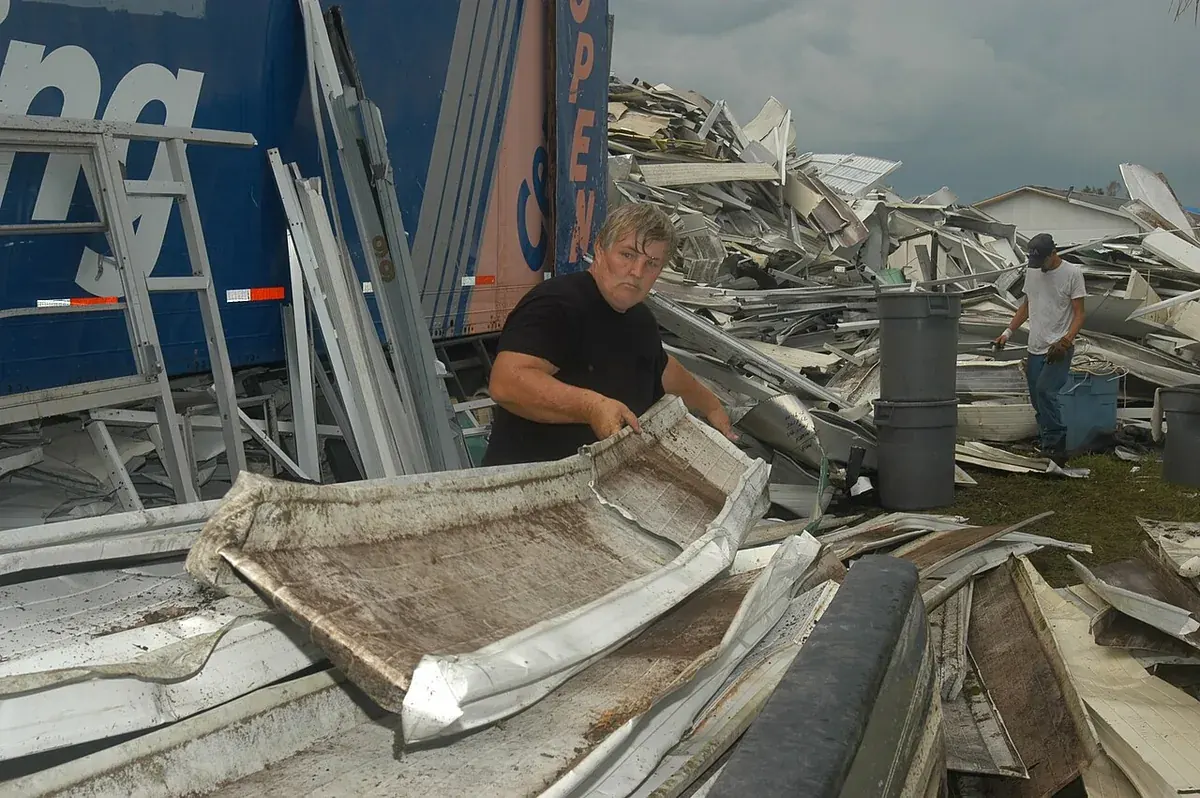
Fee waivers come and go storm by storm, so check your county or city page at the time. The Tampa Bay pool enclosure permit guide lists each building department, and the license to ask for is Florida's Specialty Structure Contractor license, whose scope covers screened enclosures and pool enclosures.
Maintenance that lowers the odds of a loss
The cheapest pool cage protection is a sound frame. A loose screw or a corroded post costs little to fix in April and a great deal after a storm finds it. University of Florida research for the Florida Building Commission found fastener corrosion more serious in coastal areas because of chloride from salt air, which puts cages in St. Petersburg, Clearwater, Apollo Beach and along the Gulf beaches at higher risk.
- Walk the cage each spring and look for rusted or missing screws, cracked connections and loose kick plates.
- Trim limbs that overhang the roof, so a branch does not become the debris that starts the failure.
- Clear the gutter that carries the cage roof so it does not overflow or sag.
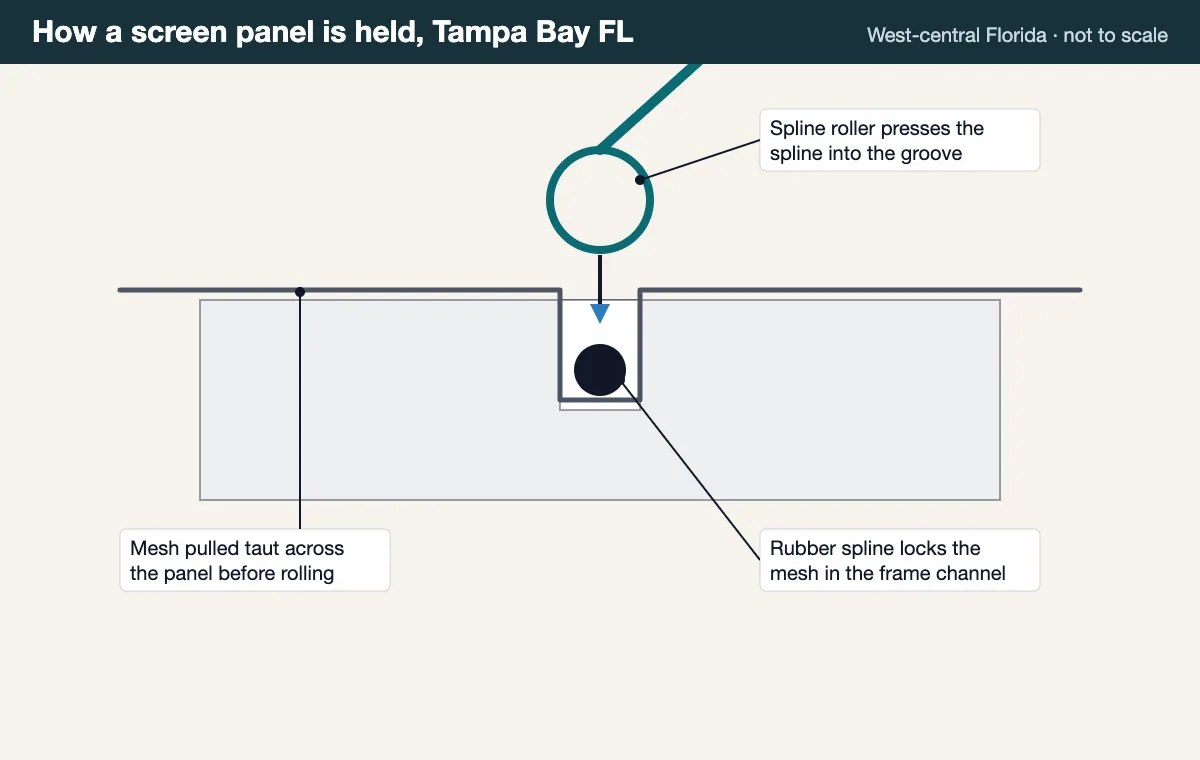
- Keep the screen in good repair: torn panels flap and pull at the spline in high wind.
- Keep your cage photos from a calm day. Before-and-after pictures make any claim conversation easier.
For upkeep between storms, see how to clean a pool cage. The six counties covered are on our service area page, and you can request a free quote to put a number next to your deductible.