Last reviewed October 2026. Rules and fees were read from each building department's own pages and PDFs on October 13, 2026.
Every Tampa Bay building department requires a permit for a new pool enclosure, almost always with engineered, signed and sealed plans, and published fees run from about $90 to $380. Where the answers split is rescreening: six jurisdictions put screen-only work in writing as needing no permit, and the rest are silent. This guide covers the pool enclosure permit Hillsborough County requires in detail, then every other county and city in Tampa Bay, FL.
The license side matters as much as the permit. Florida has a contractor category written for this work, and several counties keep their own local licenses and registration on top of it.
Which office issues your permit
Your permit comes from the city if you live inside city limits, and from the county if you don't. Most of the region's biggest communities are unincorporated: Brandon, Riverview, Valrico, Lutz, Apollo Beach, Sun City Center, FishHawk and Westchase all permit through Hillsborough County, and Wesley Chapel, Land O' Lakes and Trinity through Pasco County. A few addresses need a closer look:
- Oldsmar: permits are issued by Pinellas County's Building and Development Review Services, which also serves Belleair Beach, Belleair Shore, Indian Rocks Beach, Kenneth City and Safety Harbor.
- Odessa: spans Pasco and Hillsborough counties, so the parcel decides which county permits it.
- Lakewood Ranch: spans Manatee and Sarasota counties; the north side goes to Manatee County and the south side to Sarasota County.
- Seminole: city lots permit with the City of Seminole; the large unincorporated areas around it permit with Pinellas County.
- Zephyrhills: inside city limits the City of Zephyrhills issues permits; outside them, Pasco County does.
- Palm Harbor: unincorporated, so Pinellas County.
Pool enclosure permit rules in all 22 Tampa Bay jurisdictions
This table lists what each department publishes for a new enclosure, for rescreening, and the fee."Not stated" means the department's pages do not address it, not that the answer is no.
| Jurisdiction | New enclosure | Rescreen only | Published fee | Where to apply |
|---|---|---|---|---|
| Hillsborough County (unincorporated) | Permit; sealed plans | Not stated; routine non-structural maintenance is exempt | $380 (Oct 2024) | HillsGovHub, hcfl.gov |
| City of Tampa | Permit; sealed plans with design criteria | Not stated; minor repairs need prior approval | $316 + 2.5% surcharge (2020 schedule) | Accela, tampa.gov |
| Temple Terrace | Aluminum structure permit | Not stated; owner-supervised minor repairs only | Not published | City online permitting, templeterrace.gov |
| Plant City | Permit | No permit for non-structural screen damage | $90 to $10k value; $150 to $25k; $225 to $40k | MaintStar portal, plantcitygov.com |
| Pasco County (unincorporated) | Permit; two sets of sealed drawings | No permit (not in flood zones) | Not published | Accela, pascocountyfl.gov |
| Zephyrhills | Permit; all work permitted unless exempted in writing | Not stated | Not published | City permit portal, zephyrhills.gov |
| New Port Richey | Separate permit from the pool | Not stated | Not published | Email or in person, cityofnewportrichey.org |
| Pinellas County (unincorporated) | Aluminum Structure permit; sealed plans | Not stated; permit needed for work over $500 | Not checked (new schedule Jul 2026) | Pinellas County Access Portal, pinellas.gov |
| Oldsmar | Issued by Pinellas County | As Pinellas County | As Pinellas County | Pinellas County Access Portal |
| St. Petersburg | Permit (not on exempt list) | Not stated | Not published | City online portal, stpete.org |
| Clearwater | Permit; two copies of engineering | Not stated | Not published | Accela, myclearwater.com |
| Largo | Permit; survey, sealed plans, product approvals | Ask the building official in writing | Based on job value | LCAP (Tyler), largo.com |
| Dunedin | Permit (on common-permit list) | Not stated | Not published | Citizen Self Service, dunedin.gov |
| Seminole (city limits) | Permit under general code rule | Not stated | $50 first $1,000 + $9 per added $1,000 | In person; Citizenserve for contractors, myseminole.com |
| Tarpon Springs | Permit; licensed contractors only | Not stated | Not published | Building Development Dept., ctsfl.us |
| Manatee County (unincorporated) | Permit and licensed contractor | No permit; license required | $210 (Apr 2023) | Accela, mymanatee.org |
| City of Bradenton | Aluminum structure permit | No permit | $300 (Jul 2026) | cityofbradenton.com |
| Sarasota County (unincorporated) | Permit | Not stated | Not published | Accela, scgov.net |
| City of Sarasota | Permit; five copies, engineered plans or spec | Not named; non-structural repairs under $1,000 need no permit | Not published | FTG Portal, sarasotafl.gov |
| City of Venice | Permit; wind load calcs signed | No permit, no license needed | Not published | eTRAKiT, venicegov.com |
| City of North Port | Permit; excluded from HB 803 | Not stated | Not published | Accela, northportfl.gov |
| Hernando County | Permit for new or structural work | No permit, no license needed | $126.56 (Oct 2022) | EnerGov, hernandocounty.us |
Swipe the table sideways to see every column →
Compiled from each building department's own pages, checklists, exemption lists and fee schedules, read 2026-10-13. Fee dates are the schedule's effective date. Several schedules are years old; confirm the current fee before you budget.
Hillsborough County and the City of Tampa
Unincorporated Hillsborough County permits a new pool cage as a Residential Miscellaneous building permit, using its residential screen enclosure and glass room checklist. The plans must follow the current Florida Building Code and be digitally signed and sealed by a Florida-registered architect or engineer, and the Risk Category of the structure has to be shown on them. The site plan must show easements, conservation or wetland areas and setbacks, and the county asks for a recorded Notice of Commencement. The fee schedule effective October 5, 2024 lists $380 for miscellaneous projects including pool enclosures and screen rooms. Homeowners acting as their own contractor sign an Owner-Builder Disclosure Statement.
For contractors, Hillsborough accepts either a state license from the Department of Business and Professional Regulation or a county license, and its local categories include Local Specialty: Aluminum Structure. Rescreening is not named on the county's exempt-work page. That page does exempt routine maintenance that doesn't alter or install structural components, regardless of cost, which plausibly covers a rescreen, but the county does not say so outright.
City of Tampa
Inside Tampa city limits the permit is filed in Accela as Residential Miscellaneous, permit type Aluminum Screen Room/Pool Cage/Porch. Plans must be signed and sealed by a Florida architect or engineer and include structural design criteria, and the city's guide calls for a topographical survey when the pool includes 1,000 square feet or more of decking. The published fee is $316 plus a Florida surcharge of 2.5 percent of permit value ($4 minimum), from a schedule last updated in May 2020; the city's online fee estimator gives a current figure. Under City Code 5-105.2.2, minor repairs and replacement parts need the building official's prior approval. Contractors must show a state license or a Hillsborough County competency card.
Temple Terrace and Plant City
Temple Terrace has its own Aluminum Structure permit application asking for enclosure height, slab and setbacks, plus the qualifier's state license number. Plant City is the one Hillsborough city that answers the screen question directly: non-structural damage to a screen enclosure needs no permit, structural damage does, and fees scale with job value from $90 up to $10,000.
Pinellas County and its cities
Pinellas County requires a permit for any work in the unincorporated county over $500 or that needs an inspection, and lists Screen Room/Pool Enclosure under its Aluminum Structure permit type. All structural work needs plans signed and sealed by an architect or engineer, and pools need a Safety Act letter. Contractors must be active with the Pinellas County Construction Licensing Board (PCCLB), which regulates contractors in the county and all its cities.
- St. Petersburg: Florida Statute 489.103 requires work of $1,000 or more to be done by a licensed contractor, and the city says PCCLB-registered work must use a registered contractor regardless of any permit exemption.
- Clearwater: screen and pool permits on Accela can only be filed by licensed contractors, and a Notice of Commencement is required over $5,000.
- Largo: plans must be signed and sealed electronically (no wet-seal hard copies), fees are based on job value, and contractors register with a PCCLB card, state license and business tax receipt.
- Dunedin: lists screen enclosures and pool cages among its most common permits and checks licenses with PCCLB or the state.
- Seminole: $50 covers the first $1,000 of value, plus $9 per added $1,000 up to $20,000, so a $10,000 job is $131 before state surcharges.
- Tarpon Springs: only licensed contractors are issued permits, and the city verifies DBPR or PCCLB licenses itself.
Pasco County, Zephyrhills and New Port Richey
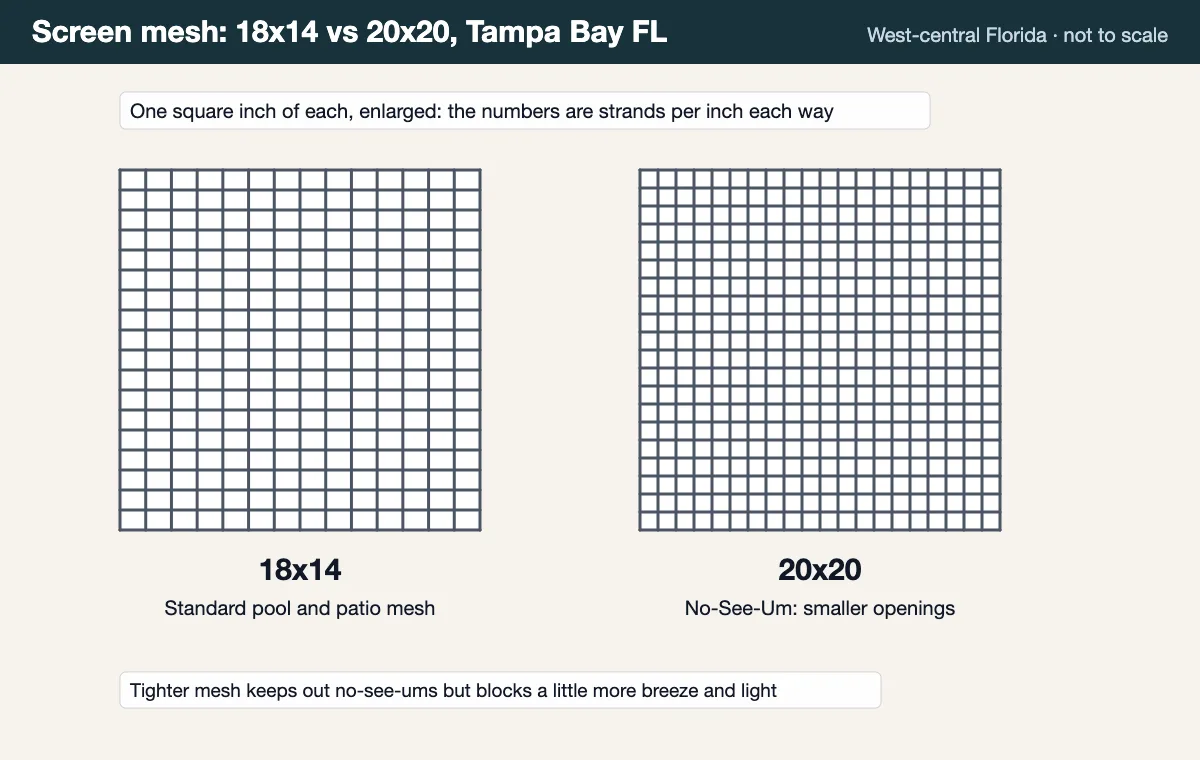
Pasco County puts re-screening on its list of work that does not require a permit, along with vertical aluminum screen inserts under an existing permitted roof and removable wind-breaks in existing screen room openings. None of those exemptions apply to parcels in a special flood hazard area. A new screen room or pool cage needs a permit and two sets of engineered drawings signed and sealed by a Florida architect or engineer, filed through Accela. Pasco's land development code also sets pool screen enclosures at least 5 feet from side and rear lot lines.
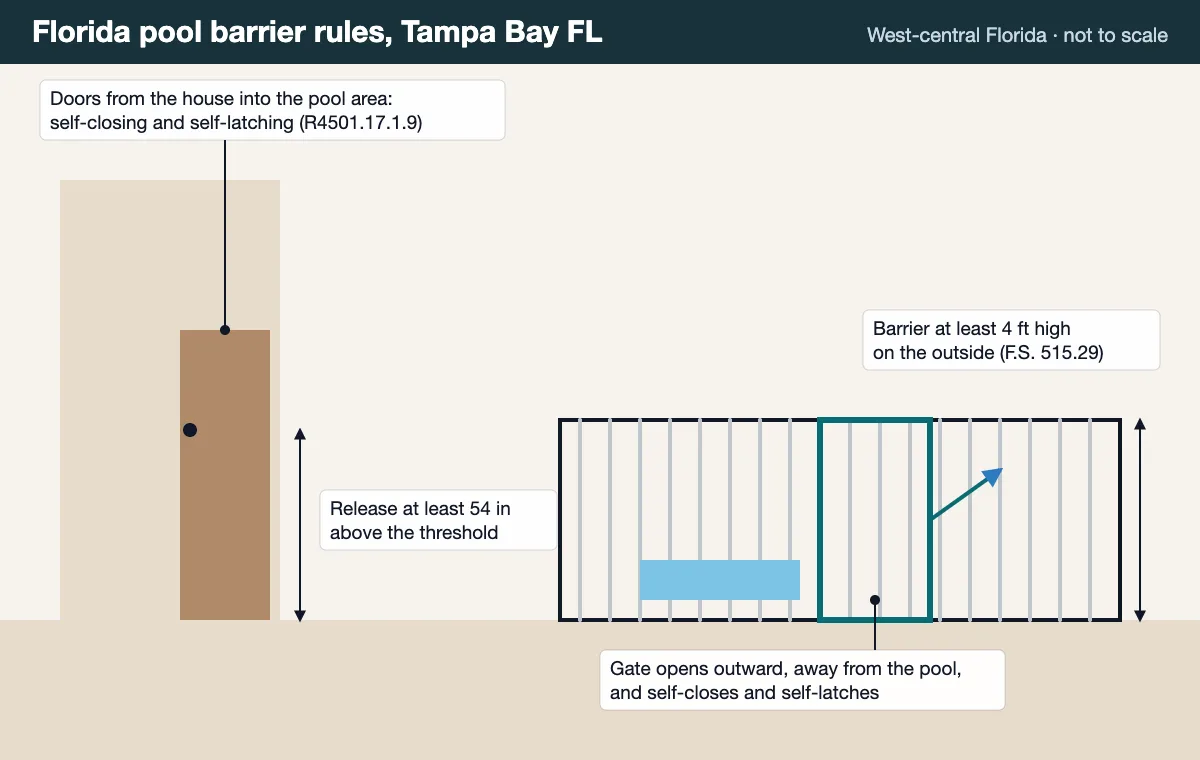
Zephyrhills takes the strictest line in the region: all construction is permitted "whether the job is considered 'minor' or not" unless the building official exempts it in writing. New Port Richey requires a separate permit for screen enclosures and fences, does not take applications on its portal (they go by email or in person), and has its own setback and door rules covered in the Florida pool enclosure requirements guide.
Manatee and Sarasota counties
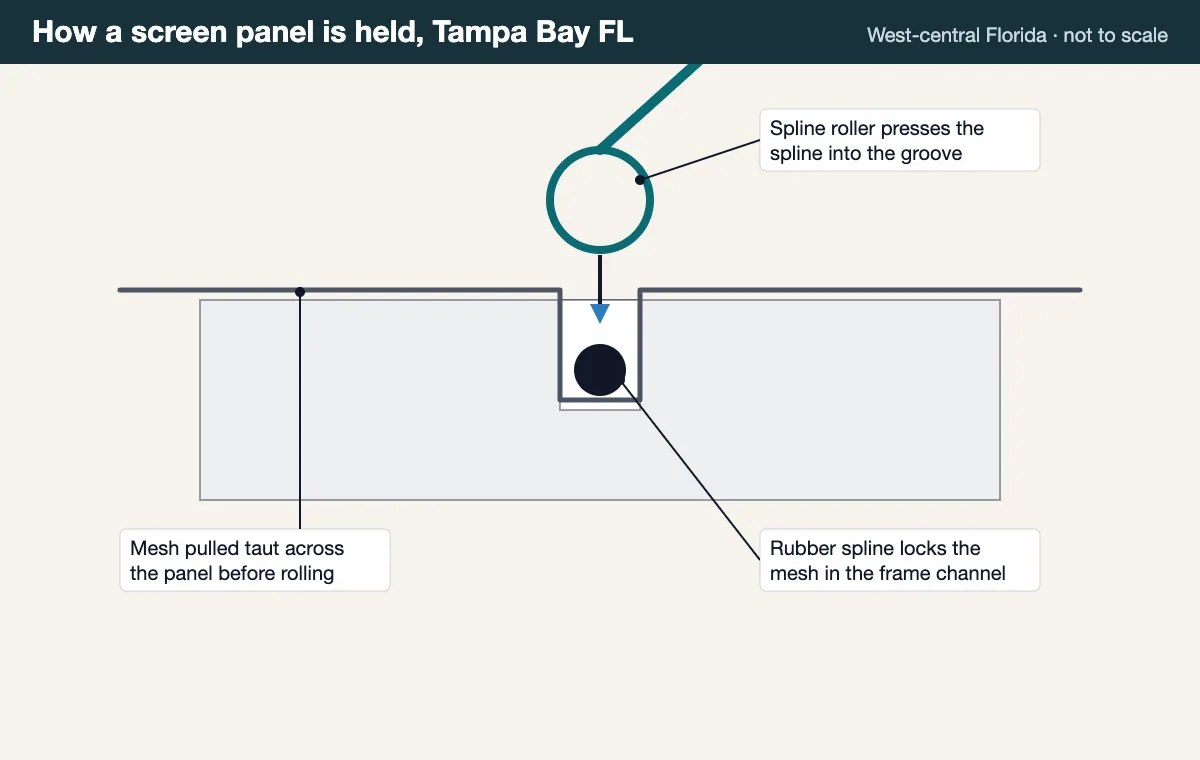
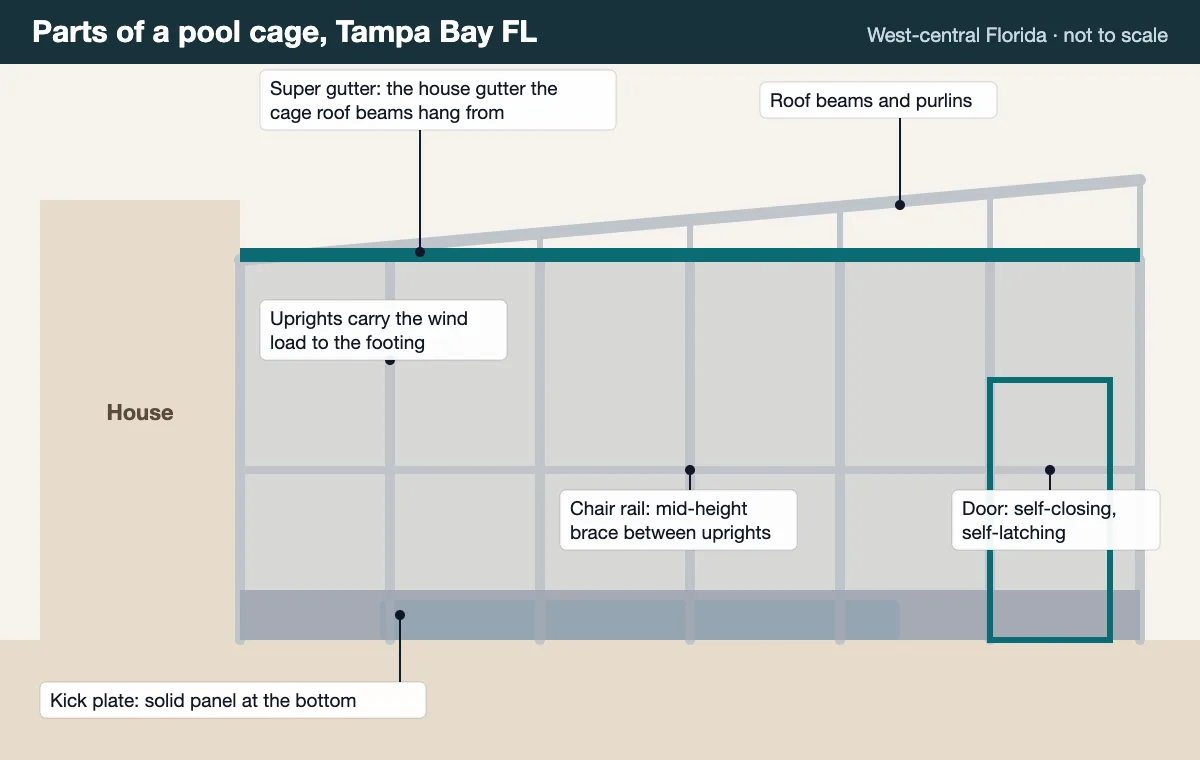
Manatee County is clear on both questions: rescreening needs no permit but does need a licensed contractor, and a new screen room needs both. Its list says screening an existing porch or lanai with an existing roof and slab is exempt, but closing in walls with panels or a kick plate over 12 inches requires a permit. The aluminum structure permit is $210 (April 2023 schedule), and pool cages must sit 5 feet from side and rear lines and stay out of easements and drainage swales. The City of Bradenton lists rescreening as exempt and charges $300 for an aluminum structure permit under a schedule effective July 1, 2026.
Sarasota County requires a permit for any construction, alteration or addition, and its no-permit list does not mention screens. The City of Sarasota wants five copies of plans and accepts either sealed plans or the engineer's name and document number for an engineered specification the contractor is authorized to use. Venice is the most relaxed: rescreening is on both its no-permit list and its no-license list. North Port's HB 803 policy names "structural screen enclosures" among the work that still needs a permit.
Hernando County
Hernando County exempts rescreening and lets it be done without a contractor license, as long as no aluminum, wood or vinyl is installed. It also exempts removable windbreaks on existing screen rooms and aluminum screen enclosures under an existing roof, provided at least one access point has a 36-inch door; extending an entryway roof needs a permit. Exemptions don't apply in flood zones or to work that alters structural components. The 2022 fee schedule lists $126.56 for a screen enclosure, plus surcharges, and applications go through the county's EnerGov portal.
How a pool enclosure permit comes together
Most permits follow the same five steps, whoever files them. Whether a licensed contractor or an owner-builder files, the order is the same:
- 1Confirm which department has your address
Check whether the lot is inside a city or in the unincorporated county, and which county it is in. Odessa, Lakewood Ranch, Seminole and Zephyrhills addresses can fall under either of two offices.
- 2Get HOA approval if you have an HOA
Many Tampa Bay communities require written architectural approval of frame color, screen color and roof style before work starts. HOA approval does not replace the building permit.
- 3Have the plans engineered
Most departments require plans signed and sealed by a Florida-registered architect or engineer, designed to the current Florida Building Code and your site's wind speed. Some accept an engineered specification instead.
- 4File through the department's portal
Applications go through HillsGovHub, Accela, EnerGov, eTRAKiT or a city portal, and a few cities still take them by email or in person. Several portals only accept filings from licensed contractors.
- 5Record a Notice of Commencement if required
Hillsborough County's screen enclosure checklist calls for a recorded Notice of Commencement, and Clearwater requires one when the contract price is over $5,000.
Engineering requirements
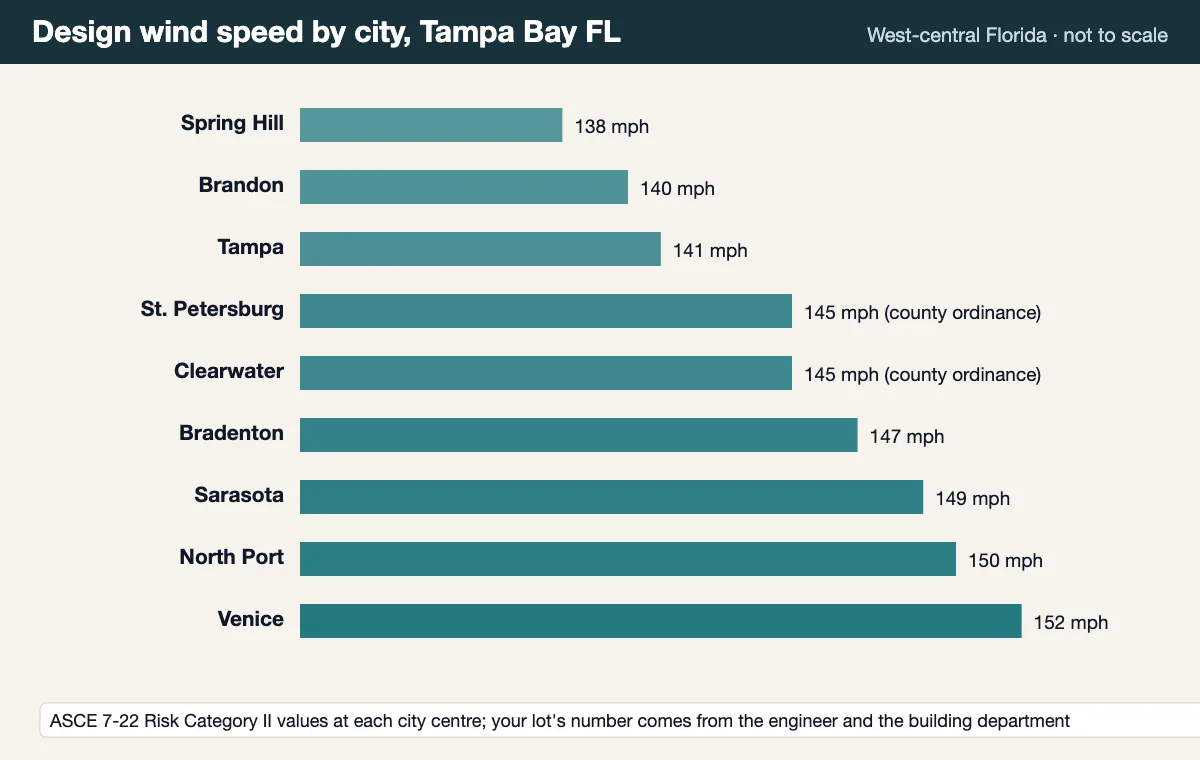
The Florida Building Code designs every screen enclosure for wind, and most departments want proof in the form of sealed plans. Section 2002.4 requires the frame to be designed for wind in two directions using the code's pressure table, and Section 2002.4.1 accepts the Aluminum Association of Florida's guide to aluminum construction in high wind areas as conforming engineering practice. The building official may also require any aluminum structure to be designed by a Florida-registered professional engineer. A cage built under the optional cut-screen method in Section 2002.7 always needs signed and sealed site-specific engineering.
Licensing: who can do the work
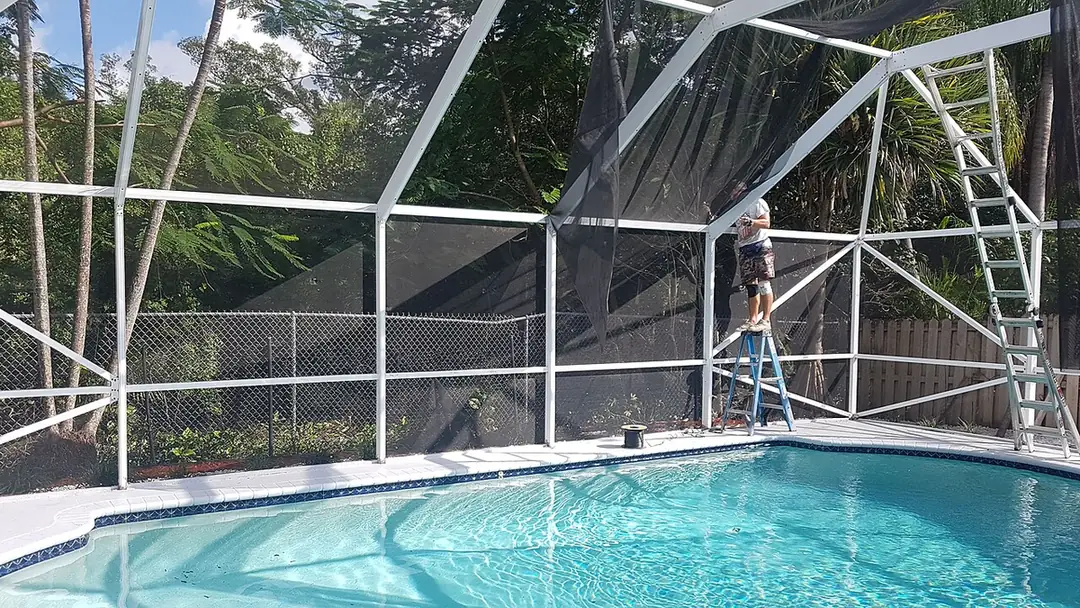
Florida's Specialty Structure Contractor license covers screened porches, screened enclosures and pool enclosures, under Florida Administrative Code rule 61G4-15.015. The same rule bars that contractor from work that alters the structural integrity of the building, such as roof trusses, lintels, load-bearing walls and foundations. Florida Statute 489.113(6)(b) also directed the state board to set up a voluntary certified specialty category for structural aluminum or screen enclosures by July 1, 2025.
Local licenses still apply alongside the state ones: Hillsborough's Aluminum Structure license, PCCLB registration across Pinellas, and city registration in Largo and Seminole. There is no statewide rule on whether a rescreen needs a license. Manatee says it does; Venice and Hernando say it doesn't.
The $7,500 permit exemption (HB 803)
Since July 1, 2026, every local government that issues permits must exempt single-family owners from a building permit for work valued under $7,500, under section 553.79(1)(g) of Florida Statutes. Three conditions limit it:
- No electrical, plumbing, structural, mechanical or gas work, so a new or rebuilt cage never qualifies.
- No property partly or entirely in a flood hazard area.
- A written request with a copy of the contract has to be submitted to the local building department.
Permits after a storm
Storm repairs to a pool enclosure usually still need a permit, but fees are sometimes waived. Pinellas County's storm recovery page lists replacing or repairing a pool enclosure or screen room as permitted work, charges standard fees, and notes the County Commission may waive them after a major storm. After Hurricane Milton, Sarasota County temporarily suspended permit fees for storm repairs including pool cage repair, and Manatee County waived building permit fees for storm-related repairs through March 1, 2025. In Plant City, non-structural screen damage needs no permit at all. See hurricane damage repair for the repair side.
Next steps
For a new build, start with pool enclosure installation and the pool cage cost guide. For screen-only work, see pool cage rescreening or pool cage replacement if the frame is done. Every covered town is on the service area page, or you can request a free quote.