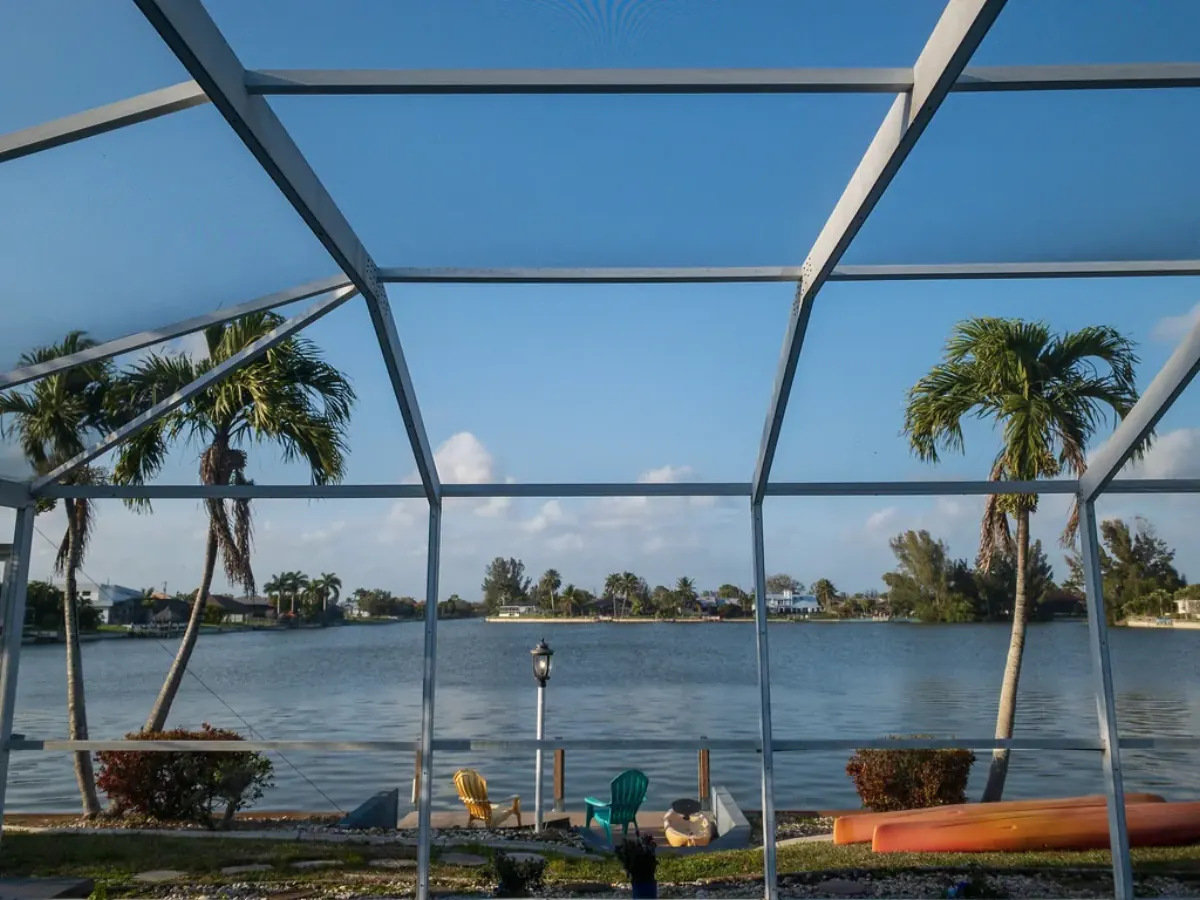
A full rescreen of a standard 600 sq ft pool cage in St. Petersburg, FL usually costs $900 to $2,100, while a new code-built cage is a five-figure aluminum structure designed for 145 mph winds. St. Pete sits on the Pinellas peninsula between Tampa Bay and the Gulf of Mexico, so its screen enclosures take salt air from three sides, and in 2024 the city went through Helene and Milton within two weeks of each other. This page covers screen enclosures St. Petersburg homeowners actually ask about: price, permits, storm wear and whether to rescreen, repair or rebuild.
What screen enclosure work costs in St. Petersburg
Most St. Pete jobs fall into four price bands: panel repairs in the hundreds, full rescreens in the low thousands, restorations in the mid thousands and new or replacement cages from about $10,000 up. The figures below come from published price guides by contractors working in Pinellas County, with the date each was published.
| Job | Published range | Scope of the figure |
|---|---|---|
| Single panel repair | $75 to $150 | Tampa Bay contractor guide, Jan 2026 |
| Several panels | $250 to $600 | Tampa Bay contractor guide, Jan 2026 |
| Full rescreen, 600 sq ft cage | $900 to $2,100 | St. Petersburg example, Jan 2026 |
| Full rescreen, most cages | $2,500 to $6,500+ (from about $1,995) | Pinellas and Pasco contractor, 2026 |
| Lanai or patio rescreen | from $895 to $1,295 | Pinellas and Pasco contractor, 2026 |
| Restoring a 10x20 St. Pete lanai | $2,800 to $4,500 | St. Petersburg example, Jan 2026 |
| Frame painting | $1.50 to $2.50 per sq ft | Tampa Bay contractor guide, Jan 2026 |
| New pool enclosure | $10,000 to $30,000+ | Pinellas and Pasco contractor, 2026 |
| Full cage replacement | $12,000 to $25,000+ | Tampa Bay contractor guide, Jan 2026 |
Swipe the table sideways to see every column →
Compiled from published Tampa Bay contractor price pages fetched 2026-10-13. These are planning ranges, not quotes: cage height, screen type, access and frame condition move every number.
Why two rescreen figures look so different
The $900 to $2,100 figure describes a plain 600 sq ft cage in standard fiberglass. The $2,500 to $6,500+ band covers the cages most contractors actually see, which are taller, have more roof panels or use upgraded mesh. Polyester screen adds roughly 20 to 30 percent, and 20x20 No-See-Um mesh adds about $10 to $20 a panel. Near mangroves and the bay, where gnats and sand flies are worst, that upgrade is often worth it. The rescreening cost guide breaks this down further.
What Helene and Milton did to St. Pete cages
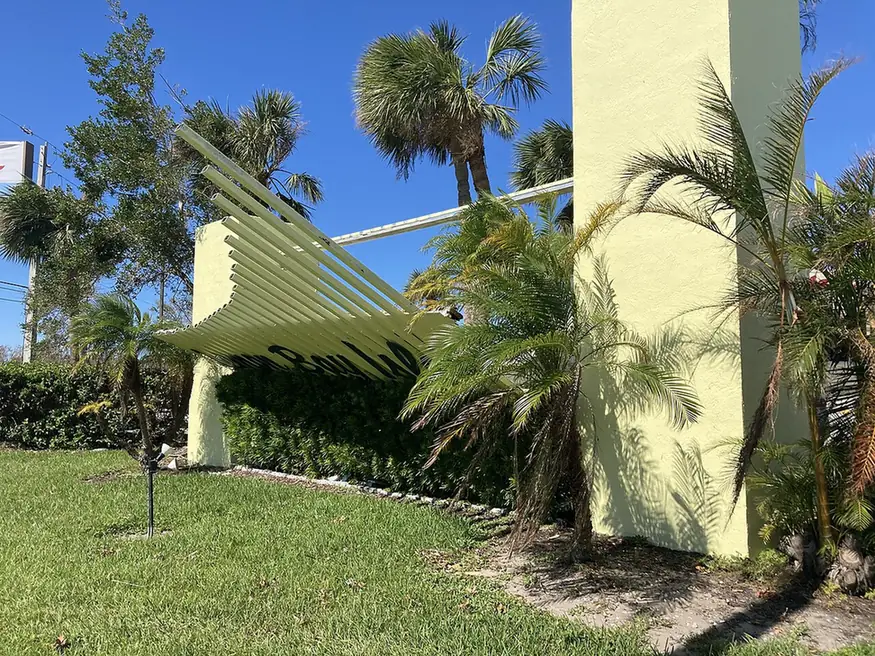
Helene brought record water and Milton brought record wind and rain, and St. Petersburg took both inside two weeks in 2024. That pairing matters for screen enclosures because surge and wind break them in different ways: water undermines and floods the slab and lower panels, wind loads the roof and walls.
| Storm | Reading | What it means for a cage |
|---|---|---|
| Helene, Sept 2024 | 6.31 ft above MHHW at the St. Pete tide gauge, old record 3.97 ft (Elena, 1985) | In flooded yards, kick plates, lower panels, doors and anchors sat in salt water |
| Helene, Shore Acres | A record six feet of surge damaged hundreds of homes | Some owners were still rebuilding two years later |
| Milton, Oct 2024 | Peak gust 101 mph at Albert Whitted Airport | Wind loads on roof beams and wall panels |
| Milton, Oct 2024 | 18.54 in of rain in one day at Albert Whitted, a record | Heavy load on cage gutters and downspouts |
| Ian, Sept 2022 | 77 mph gust at Albert Whitted | Well below the 145 mph design speed, yet a real test for old screen |
Swipe the table sideways to see every column →
National Hurricane Center Tropical Cyclone Reports (Helene, Milton), NWS Tampa Bay county impact narratives, WUSF (Sept 24, 2026) and Bay News 9 (Oct 2022).
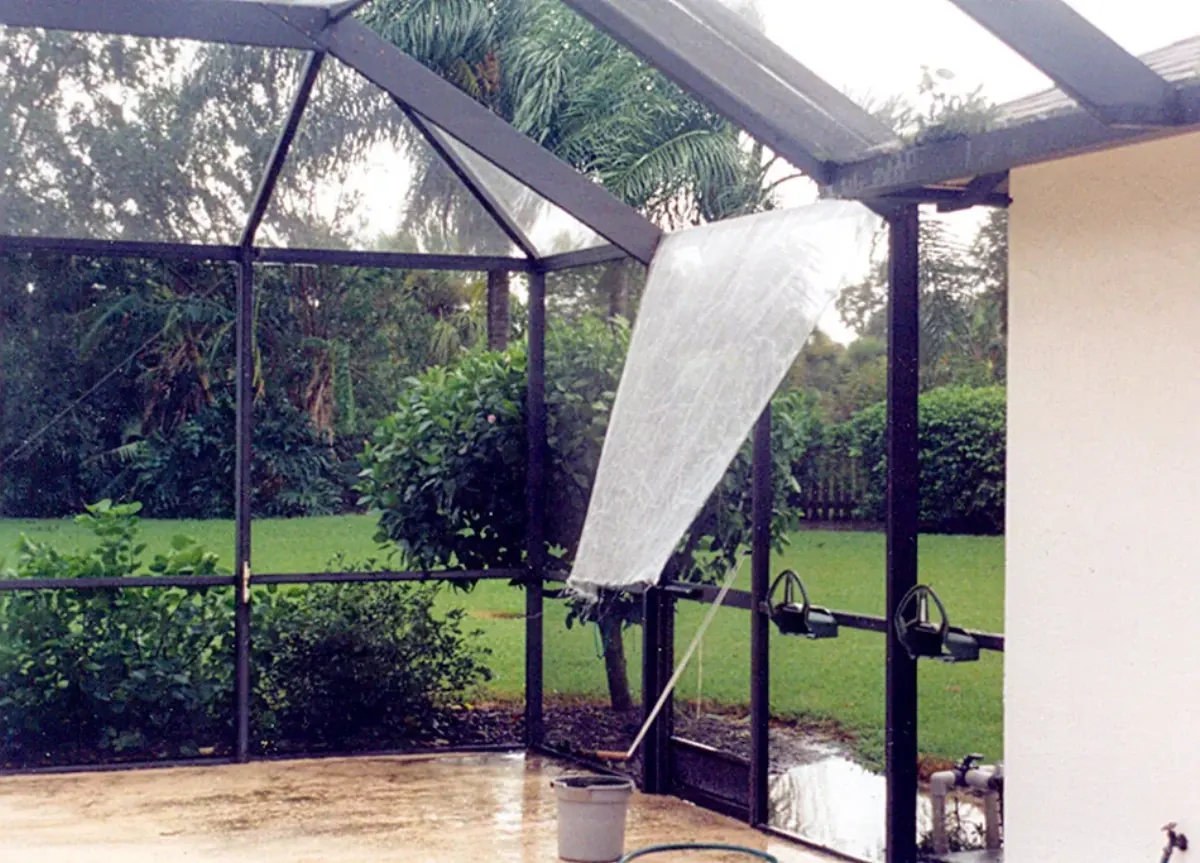
After any storm, sort the damage before you call anyone. Torn or popped screen is usually a pool screen repair. Bent beams, a racked frame or a gutter pulled off the fascia are a hurricane damage repair and need a permit. If the cage sat in surge water, look closely at the bottom rail, the door frame and the screws into the slab, because salt water accelerates the corrosion described below.
The 145 mph rule every St. Pete cage is designed to
Pinellas County sets its own design wind speed by ordinance: 145 mph for ordinary homes and their structures (Risk Category II), across every city including St. Petersburg. Many Florida counties take their number straight from the national ASCE map; Pinellas wrote it into a local technical amendment to the Florida Building Code. The ASCE value at St. Pete's city center, 145.8 mph, lands in the same place.
For a homeowner, this means a new or rebuilt cage is engineered for that speed in two directions, using the pressure tables in Florida Building Code Section 2002, with signed and sealed plans. It does not mean the cage is storm proof: Milton's 101 mph peak gust was below 145 mph, and cages still failed across the region. Age, corrosion, debris strikes and whether the cage was built to current code all decide what survives. The hurricane proof guide explains the difference.
Salt air and the fasteners holding your cage together
Fasteners usually fail before aluminum does on a St. Pete cage. A University of Florida study for the Florida Building Commission found corrosion more serious in coastal environments because of chloride ions, and it noted that the ceramic coating on stainless steel masonry screws, commonly used on screen enclosures, peeled during testing. That can set up unlike-metal reactions against aluminum.
- Rust streaks running down from screw heads at the base rail or the house connection
- White, powdery corrosion where a screw meets the frame
- Screws that spin in their holes or have backed out
- A door frame that has started to drag or sag
- Panels that pop out of their channel on the windward side first
A fastener refresh across the whole cage was priced at $800 to $2,400 in a September 2026 Tampa Bay guide, or $1,000 to $3,400 when it is done together with a rescreen. On a bayfront or canal lot, doing both at once is often the better use of the money.
Permits in the City of St. Petersburg
St. Petersburg runs its own building department, so city addresses do not go to the county. Construction Services & Permitting is at One 4th Street N, St. Petersburg, FL 33701, (727) 893-7231, and plan review is handled through the city's online portal.
| Question | What the city says |
|---|---|
| New enclosure | Needs a permit; screen enclosures are not on the city's exempted permits list |
| Rescreen only | Not mentioned on the exempted list (revised January 1, 2014): ask the city |
| Under $7,500, non-structural | A Permit Exemption form exists for single-family work outside flood hazard areas |
| Who does the work | Any work valued at $1,000 or more must be done by a licensed (registered) contractor |
| Contractor card | PCCLB registration is required for anyone advertising as a contractor |
| Wind design | 145 mph, Risk Category II, set county-wide |
Swipe the table sideways to see every column →
City of St. Petersburg building permits page and List of Exempted Permits; PCCLB 2023 Local Technical Amendment 1609.3. Fetched 2026-10-13.
The flood-zone exclusion in the $7,500 exemption matters in St. Pete more than most places, because so much of the city is low and near water. If your home is in a flood hazard area, plan on a regular permit. Every county and city in the region is compared on the Tampa Bay pool enclosure permit guide.
Rescreen, repair, or start over?
If the frame is straight and the fasteners are sound, rescreen. If the frame is bent or corroded through, replace. Most St. Pete homes fall into one of these situations:
A sound cage with tired screen
Standard fiberglass screen lasts about 5 to 10 years in Florida sun, while a cared-for aluminum frame lasts 20 to 30 years or more. That gap is why pool cage rescreening is the most common job on an older cage. If the frame is chalky but solid, pool cage painting pairs well with it.
An older home with a historic look
Historic Old Northeast, Historic Kenwood and Historic Roser Park are among St. Pete's named historic districts. If your screen work there is a porch or lanai rather than a pool cage, that is a lanai screen repair or patio screen enclosure job.
A cage that did not come through 2024
A frame twisted by wind or soaked in surge is usually a pool cage replacement, built to today's 145 mph design. If you have no cage yet, start with pool enclosure installation.
Glass panels, vinyl panels and screens
Screen is the default in St. Pete because it lets wind pass through; solid panels catch it. The Florida Building Code allows removable vinyl, glass or acrylic panels in screen enclosures, but each one must carry a decal saying it shall be removed when wind speeds exceed 75 mph. Turning a screened lanai into a solid room is a change to the structure, so it goes through the city permit office, not a rescreen order. Phifer's vinyl-laminated Glas-Shield is the screen-side compromise: it suits the lower panels and privacy walls, but the maker says it is not made for roofs.
Questions worth asking before you sign
A clear St. Pete quote names the license, the permit, the screen and what is included. These questions come straight from the rules above:
- Which license covers this job? Florida's Specialty Structure Contractor license covers screened enclosures and pool enclosures, and PCCLB registration is required to work in Pinellas.
- Who pulls the permit, and is it in the price? New cages and structural repairs need one from the city.
- Which mesh, by brand and weave? 18x14 fiberglass, 20x20 No-See-Um and polyester are priced differently.
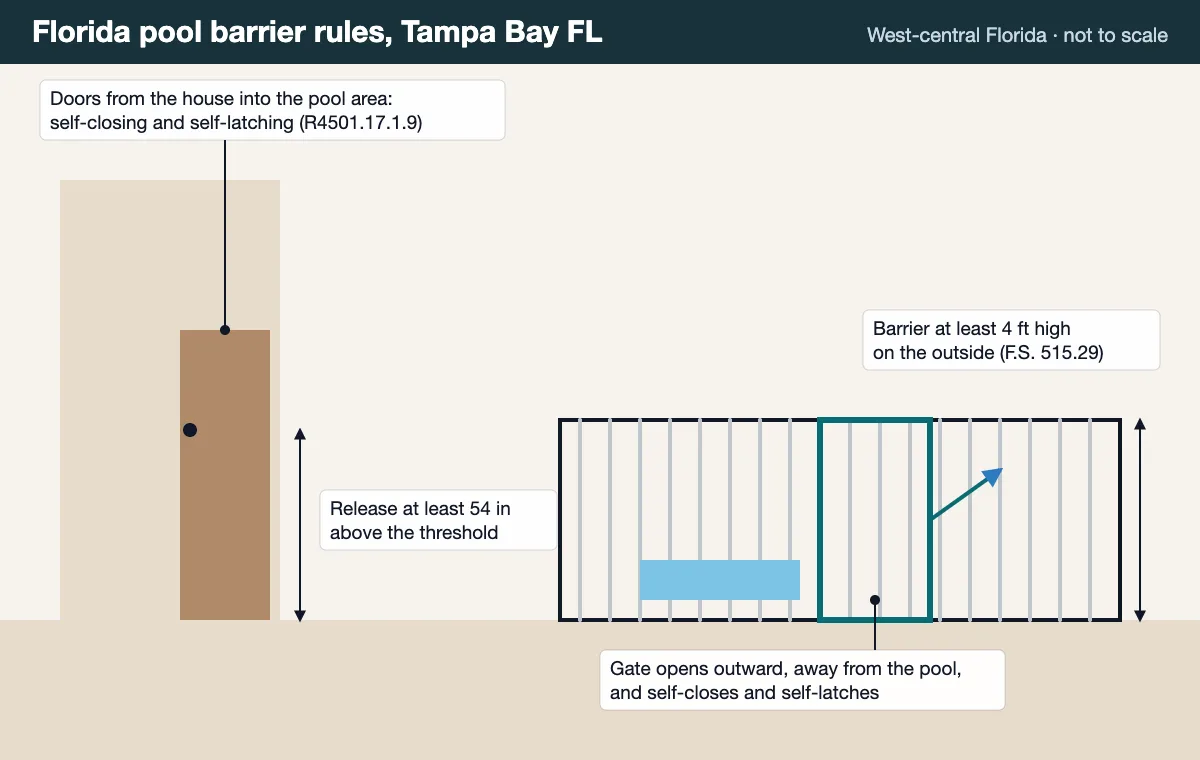
- Are doors, closers and latches included? Pool gates must self-close and self-latch under Florida's barrier law.
- Will screws be replaced or reused? On a bayfront lot, fastener condition is half the job.
- Is the job over $1,000? Then St. Pete says a registered contractor must do it, permit or not.
Florida also caps what the specialty license allows: those contractors may not alter the structural integrity of the house itself, such as roof trusses, lintels or load-bearing walls. If a cage attaches in a way that needs changes to the house, expect a different license on the job.
St. Petersburg and the rest of Pinellas
This page covers all of the city, from the I-275 corridor to the bayfront neighborhoods off I-175 and I-375. Nearby Pinellas towns have their own pages, including Seminole, Largo and Clearwater. Every town is listed on the service area page, and you can request a free quote any time.