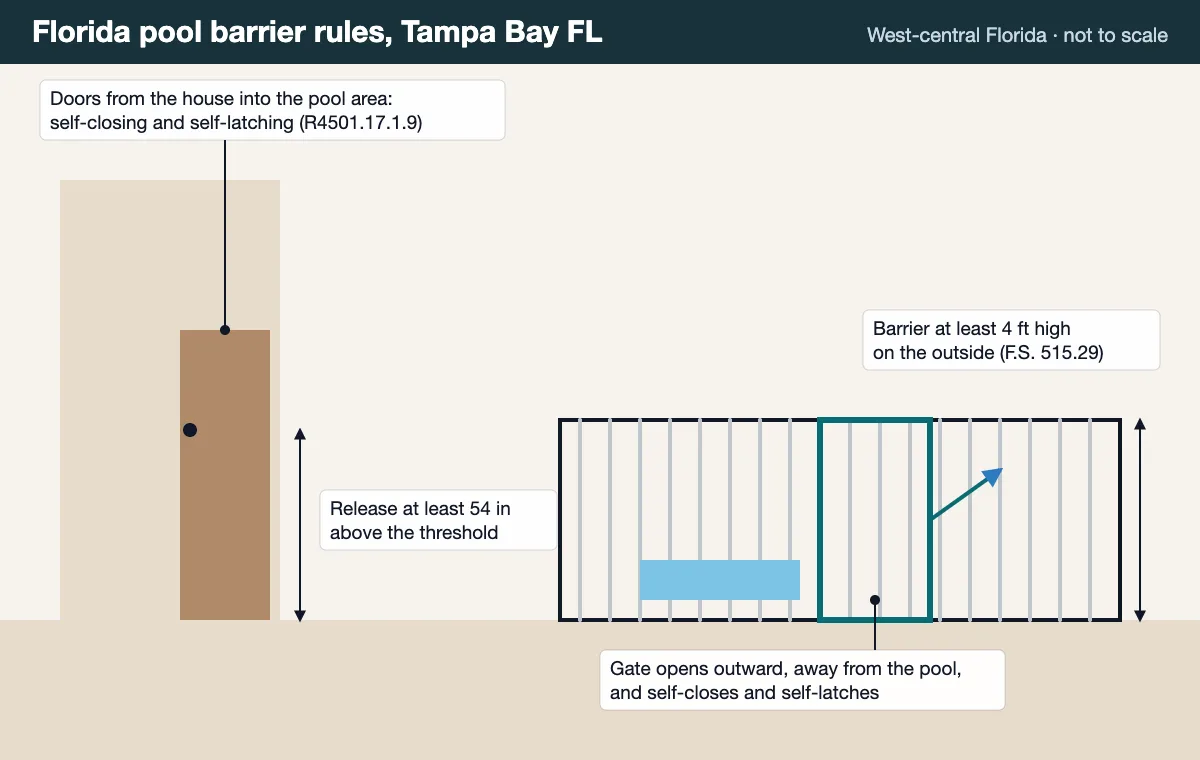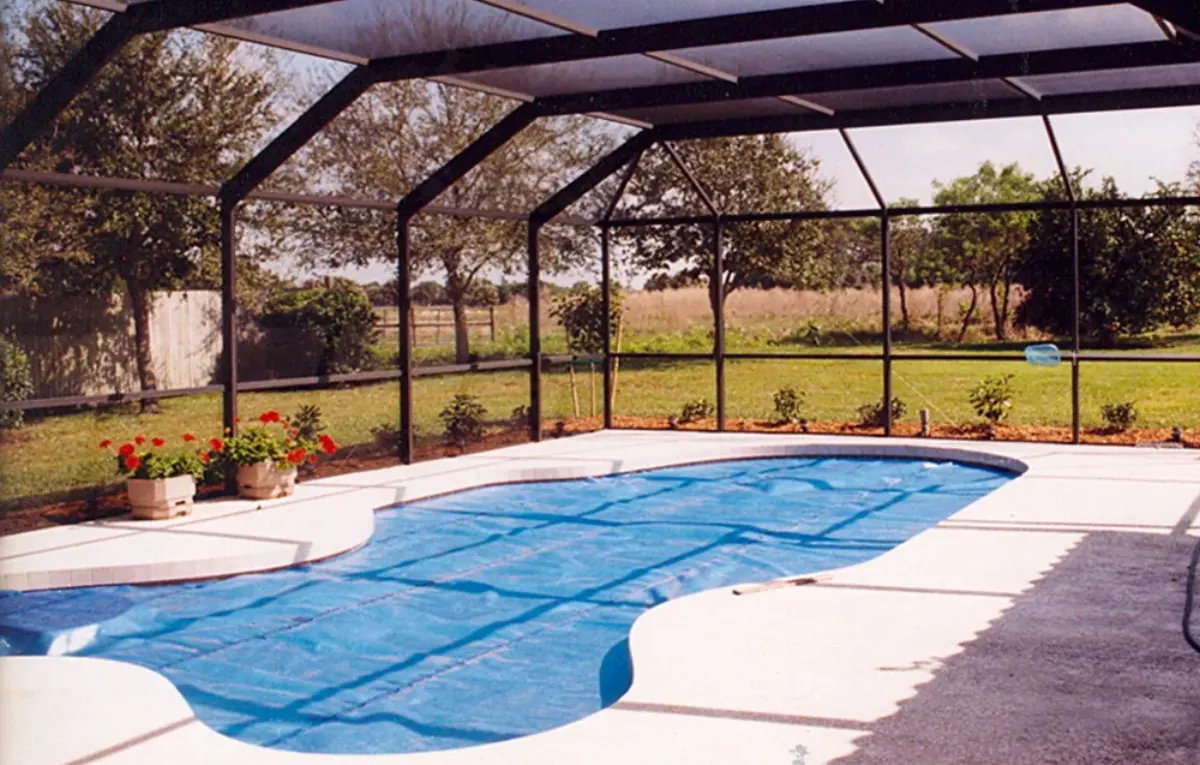
Pool cage removal in Tampa, FL means taking the aluminum screen enclosure off the pool deck and hauling it away, and a national cost guide puts it at about $800 to $2,000 including cleanup and dump fees. It is a different job from pool removal. The pool stays; only the cage over it goes. Pool cage removal Tampa homeowners ask about usually comes down to three questions: what it costs, whether a permit is needed, and what keeps the pool legal once the cage is gone.
This page covers those across Hillsborough, Pinellas, Pasco, Manatee, Sarasota and Hernando counties. If you want the pool itself filled in or the deck rebuilt, those are separate trades and not covered here.
Why Tampa Bay homeowners remove a pool cage
Most removals are either the first half of a replacement or the cleanup after a storm. The common reasons:
- The frame is corroded, bent or loose and is coming down before a new cage goes up
- A hurricane left the cage twisted or partly collapsed and it has to be cleared
- The owner wants an open view of a lake, canal or the Gulf
- The cage covers a pool that is being filled in by a separate pool contractor
- A buyer or a home sale needs a failing structure gone
- The space is being reworked and a smaller lanai enclosure will take its place
If the cage is coming down to be replaced, the removal is usually priced as part of the pool cage replacement. If the frame is still sound and only the screen is worn, a pool cage rescreening costs far less than removing it and building again later.
What pool cage removal costs
Plan on roughly $1.00 to $2.50 per square foot of enclosure, or $800 to $2,000 for a typical cage. That national figure (HomeGuide, 2023) includes cleanup and dump fees. We could not find a Florida or Tampa Bay source that publishes a removal-only price, so treat it as a starting point, and expect these to push the number up:
| Factor | Why it matters | Effect on price |
|---|---|---|
| Enclosure size | The national range is priced per square foot of enclosure | $1.00 to $2.50 per sq ft |
| Height and roof shape | Two-story and tall mansard cages mean more lifting and more aluminum | Higher |
| Storm damage | Twisted members are cut free one at a time and may be under tension | Higher |
| Super gutter | Coming off the house fascia means checking the fascia it leaves behind | Higher if the fascia needs repair |
| Lights, fans or outlets on the frame | Wiring has to be disconnected by an electrician | Separate trade |
| Permit | Many departments require one for demolition or work over a set value | Permit fee added |
| Replacement barrier | A pool that loses its cage barrier needs another barrier | Separate project |
| Haul-off and dump fees | Aluminum, screen and fasteners have to go somewhere | Included in the national range |
Swipe the table sideways to see every column →
Price range from HomeGuide's pool screen enclosure repair cost guide (September 2023), fetched 2026-10-13. Permit and barrier rules from Pinellas County, Florida Statute 515.29 and the Florida Residential Code. A planning range, not a quote.
The pool barrier rule: plan it before the cage comes down
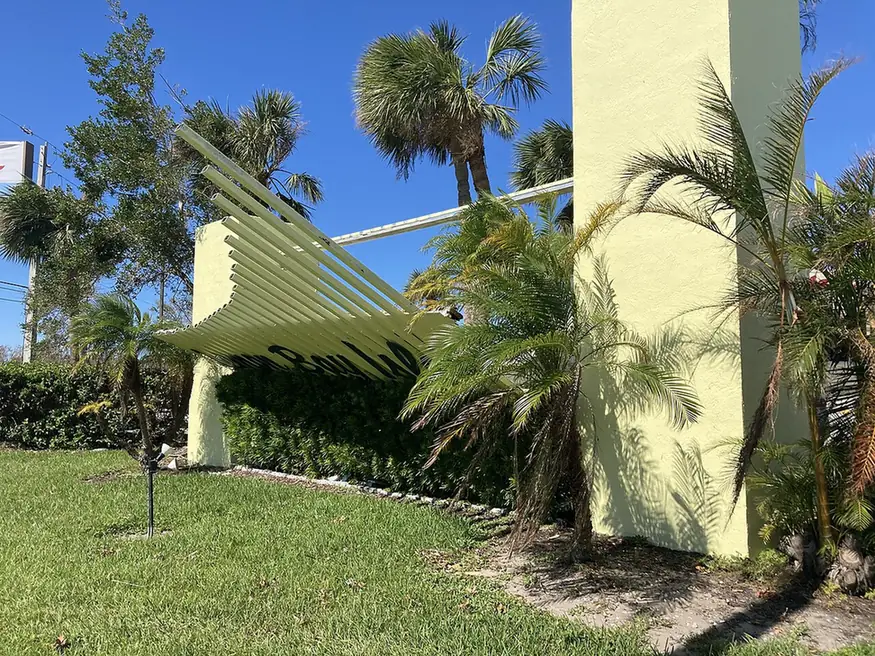
If your cage is the pool's safety barrier, removing it leaves the pool without one. The Florida Residential Code says a standard screen enclosure can serve as part or all of a pool barrier, and on many homes it is the only barrier between the yard and the water. Florida's Residential Swimming Pool Safety Act sets what a barrier has to be:
- At least 4 feet high on the outside
- No gaps, openings or footholds that would let a young child, defined as under 6, crawl under, squeeze through or climb over
- Gates that open outward, away from the pool, self-close and self-latch, with the release on the pool side out of a child's reach
- A house wall can be part of the barrier only if it has no door or window that opens to the pool
Florida Statute 515.27 also lets a new pool pass inspection with other safety features: an approved safety cover, pool alarms, or self-closing, self-latching devices on the house doors that open to the pool, with the release at least 54 inches above the floor. Which of these your building department will accept for an existing pool after its cage is removed is a question to ask before demolition, not after. The Florida pool enclosure requirements guide covers the barrier rules in full.
Permits for removing a pool cage
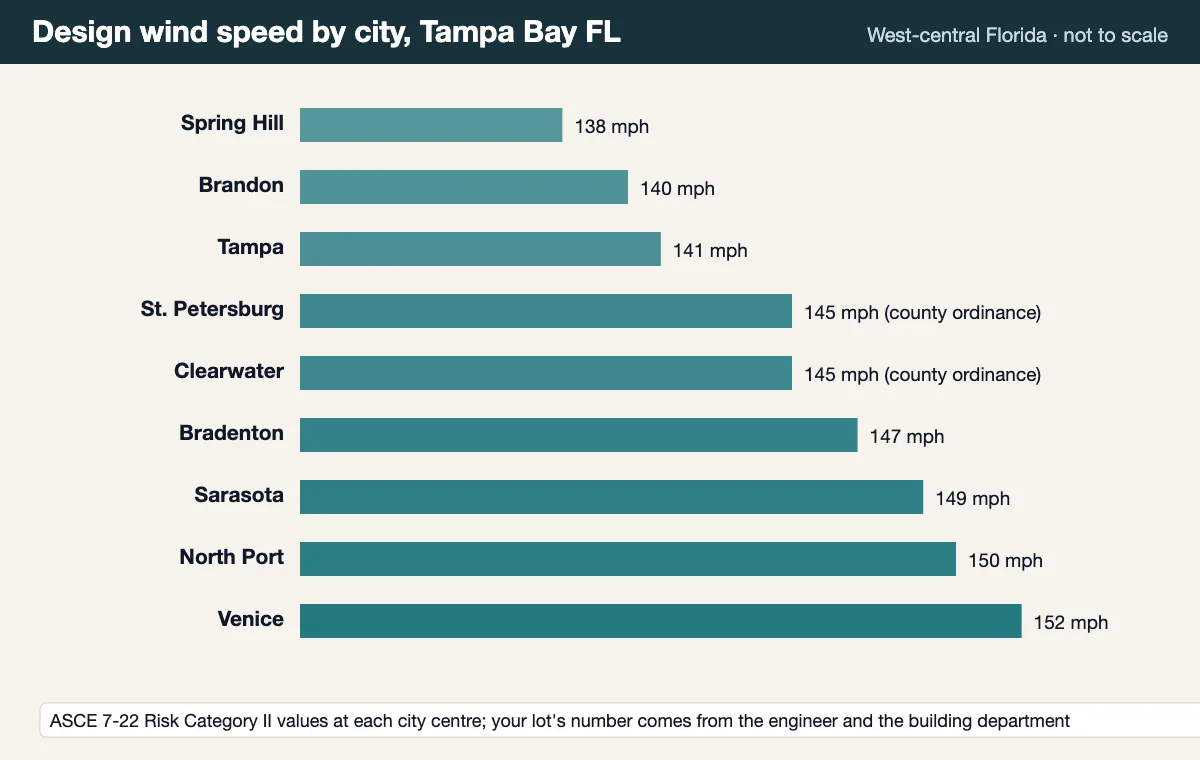
Ask before you tear it down: demolition is permitted work in many Tampa Bay departments. Unincorporated Pinellas County says it requires a permit for any new building, addition, remodeling, demolition or other work that is over $500 or needs an inspection, and Pinellas BDRS also issues permits for Oldsmar, Safety Harbor and several beach towns. Other departments do not publish a cage-removal rule, so check with yours.
| Question | Who decides | What the sources say |
|---|---|---|
| Does demolition need a permit? | Your building department | Pinellas: yes for demolition or work over $500. Others: not published; ask. |
| Does the pool need a new barrier? | Building department, under F.S. 515 | A screen enclosure can be the barrier; a barrier must be at least 4 ft with self-closing, self-latching gates. |
| Does the HOA need to approve? | Your association | Venetian Golf and River Club: removing a lanai cage needs approval. Seven Oaks: pools must have a screen enclosure or PVC fence. |
| Is wiring on the frame? | A licensed electrician | Florida's under-$7,500 permit exemption excludes electrical work. |
| Is it storm damage under a claim? | Your insurer | Photograph everything before removal; Citizens' HO-3 form says screen pool cages are not covered. |
| Who can take it down? | A licensed contractor | Florida's Specialty Structure license covers screened and pool enclosures; St. Petersburg requires licensed work at $1,000 or more. |
Swipe the table sideways to see every column →
Compiled 2026-10-13 from Pinellas County's residential permit page, Florida Statutes 515.29, 553.79 and 489.103 (as quoted by the City of St. Petersburg), the Venetian Golf and River Club and Seven Oaks design standards, and Citizens' HO-3 coverage worksheet.
HOA approval for a removal
Treat a removal like any other exterior change and file with the HOA first. Two published examples show why. The Venetian Golf and River Club in Venice lists removing a lanai cage among changes that need approval. Seven Oaks in Wesley Chapel requires pools to be enclosed by a screened enclosure or fenced with PVC fencing, so removing a cage there means installing a fence in its place. Heritage Springs in Trinity requires written approval for any change to the exterior of a home, and the replacement fence or cage will need its own approval.
Removing a storm-wrecked cage
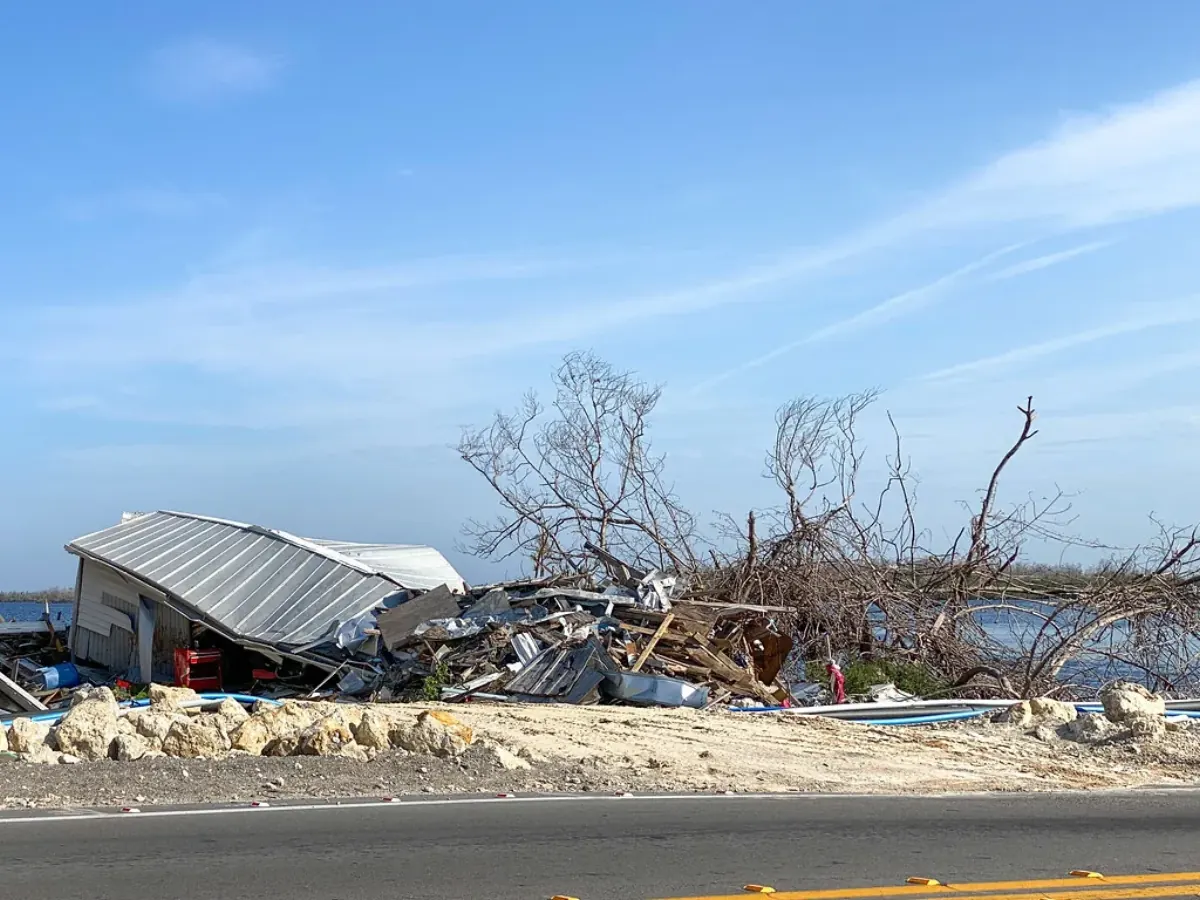
Document it before it moves, then get it down safely. Bent aluminum can be under tension and can shift or fall as pieces are cut free, so a storm-wrecked cage is not a job to take apart from a ladder. If an insurance claim is possible, photograph and video every part of the damage before removal. Once debris is hauled off, it can no longer be documented.
After Hurricane Milton, Manatee County said all storm-related repairs require permits, and Pinellas County's storm recovery page lists replacing or repairing a pool enclosure as permitted work. The hurricane damage repair page covers claims, deductibles and post-storm permit fee waivers.
How a pool cage removal goes
Paperwork and barrier plan first, then screen, roof, walls, anchors and haul-off. A typical sequence:
- 1Permit, HOA and barrier plan
Confirm whether the building department wants a permit, file any HOA application, and line up the replacement pool barrier if the cage is the barrier.
- 2Disconnect anything attached
Lights, fans or outlets mounted on the frame are disconnected first; that wiring is electrical work, which needs its own licensed trade.
- 3Strip the screen
Screen and spline come out panel by panel so the frame can be taken apart without the mesh catching the wind.
- 4Take down roof, then walls
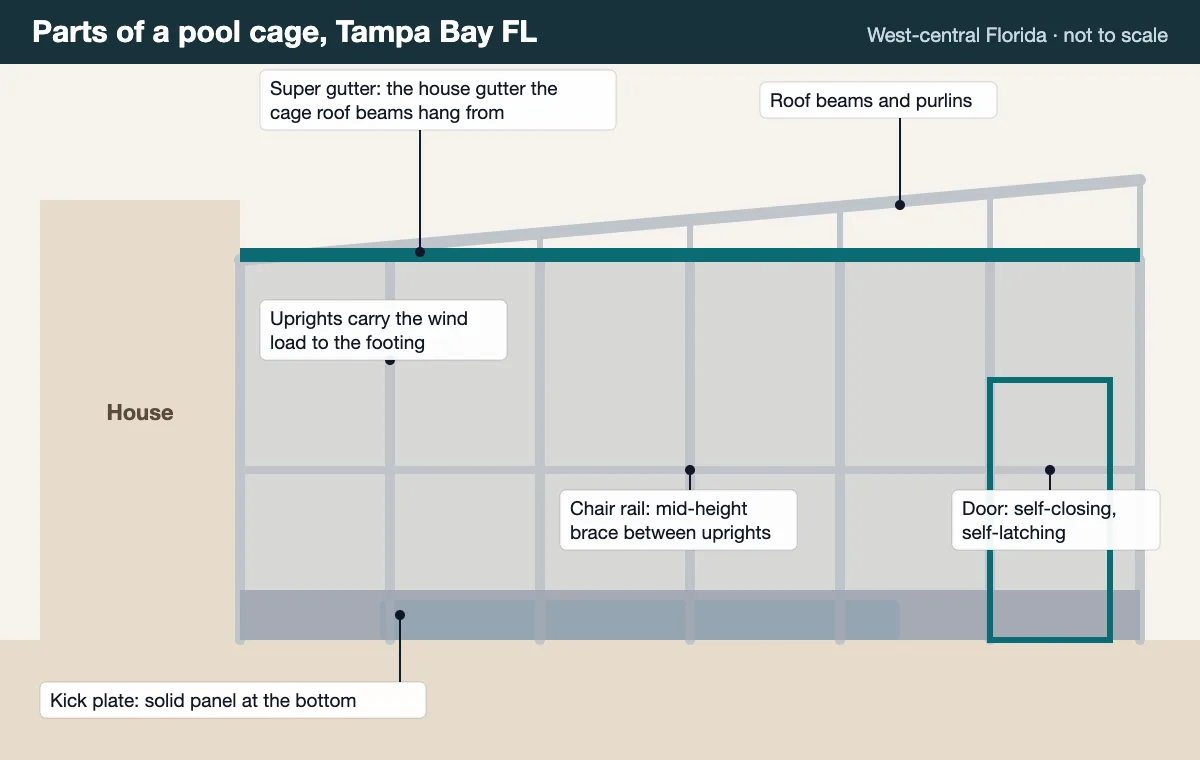
Roof purlins and beams come down first, then the wall posts and the super gutter, working away from the house.
- 5Deal with the anchors
Post anchors and fasteners at the deck and the house are removed or cut down so nothing is left sticking up.
- 6Haul it away and clean up
Aluminum, screen and fasteners are loaded out, and screws and offcuts are swept from the deck and fished out of the pool.
What is left after the cage is gone
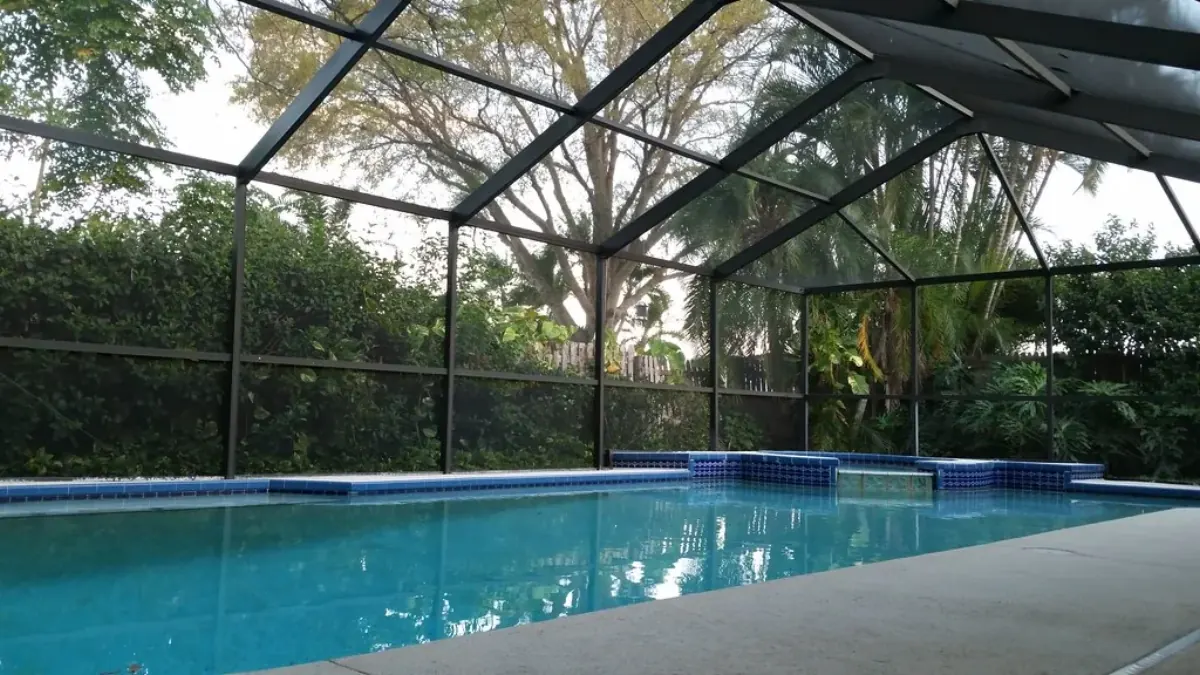
- Small anchor points or holes in the deck where the posts were fastened
- Screw holes and a clean line on the fascia where the super gutter was
- Leaves, pine needles and insects in the pool, which the cage used to keep out
Patching or resurfacing the deck afterward is deck work, a separate trade from screen enclosures. Fascia left exposed by the gutter can usually be painted or repaired along with the house.
Removal now, a new cage later?
If a new cage is likely, price the removal and the rebuild together. A replacement is designed to the current Florida Building Code and needs its own permit and engineering, and a new footprint has to meet setbacks such as Manatee County's 5 feet from side and rear property lines. For a first new cage on the cleared deck, see pool enclosure installation, and for a smaller screened space, patio screen enclosures.
Pool cage removal across Tampa Bay
Cage removal comes up across the region, from storm-hit areas of Sarasota, North Port and St. Petersburg to older cages in Largo and Plant City. Every town is on the service area page, or request a free quote.