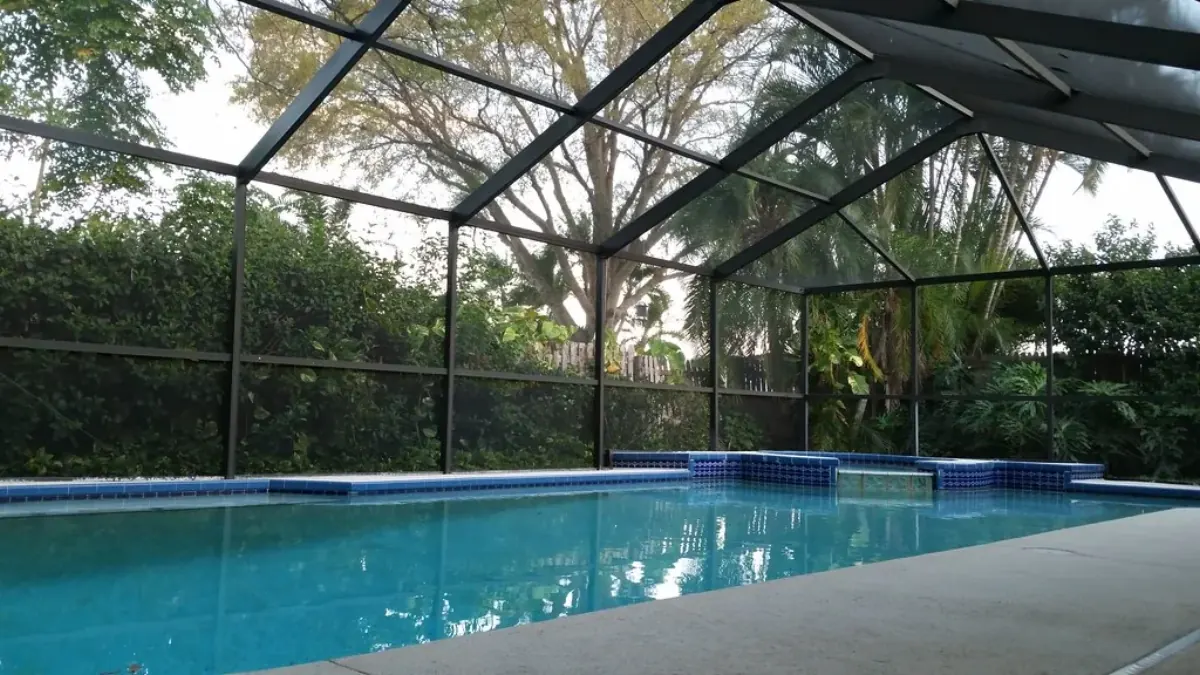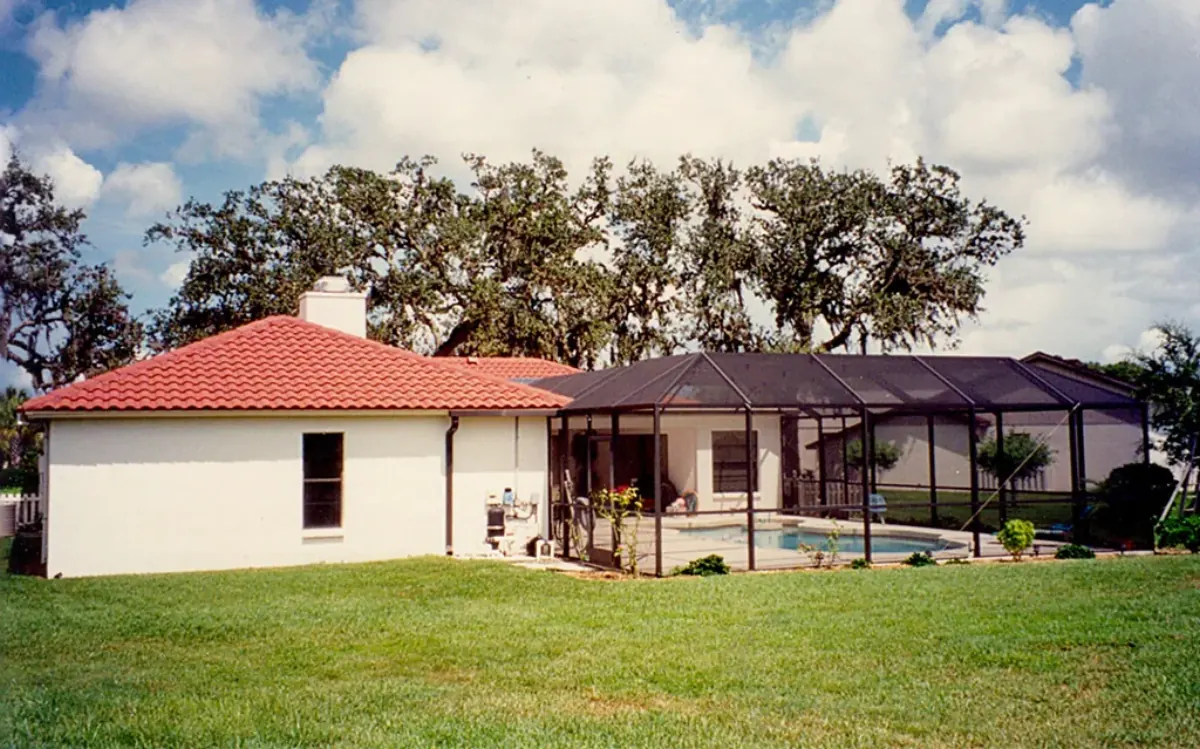
A new pool enclosure in Tampa Bay typically costs $10,000 to $30,000 or more, and every one of them needs a building permit and engineered plans. A pool cage is an aluminum structure designed for a specific hurricane wind speed under Section 2002 of the Florida Building Code, so the price reflects engineering, permits and inspection as much as aluminum and screen. This page covers pool enclosure installation Tampa homeowners plan for: cost, code, permits, HOA rules and styles.
It applies in Tampa, FL and across Hillsborough, Pinellas, Pasco, Manatee, Sarasota and Hernando counties.
What a new pool enclosure costs
Budget about $12 to $25 per square foot for a cage built to current Florida code, which works out to around $23,000 for a mid-size 1,500 square foot enclosure. Size, height and roof style move the price most. A summary of the published figures:
| Measure | Published price | Source and date |
|---|---|---|
| Typical new pool enclosure | $10,000 to $30,000+ | Pinellas and Pasco price list, 2026 |
| Code-built cage per sq ft | $12 to $25 per sq ft | Tampa Bay contractor guide, Feb 2026 |
| Mid-size 1,500 sq ft cage | About $23,000 | Tampa Bay contractor guide, Feb 2026 |
| Under 800 sq ft | $6,000 to $9,600 | Southwest Florida company, 2026 |
| 800 to 2,000 sq ft | $9,600 to $24,000 | Southwest Florida company, 2026 |
| Over 2,000 sq ft | $24,000+ | Southwest Florida company, 2026 |
| Mansard vs gable roof | Mansard $6 to $10; gable $7 to $12 per sq ft | Central Florida company |
| National average, any enclosure | $12,055 (most $6,944 to $18,831) | Angi, Sep 2026 |
Swipe the table sideways to see every column →
Compiled from published contractor pages and national cost guides fetched 2026-10-13. Older national guides (2023) quote $5 to $15 per sq ft for Tampa, well below what Florida contractors publish for 2026 code-built cages.
What moves the price
- Footprint and height: a two-story or tall-roof cage holds far more aluminum and screen than a one-story cage over the same deck.
- Roof style: gable cages cost about 10 to 20 percent more than a comparable mansard.
- Wind speed and exposure: coastal and open sites need heavier members than sheltered inland lots.
- Super gutter and footings: national guides add $1,500 to $2,500 or more for a super gutter or new concrete footings.
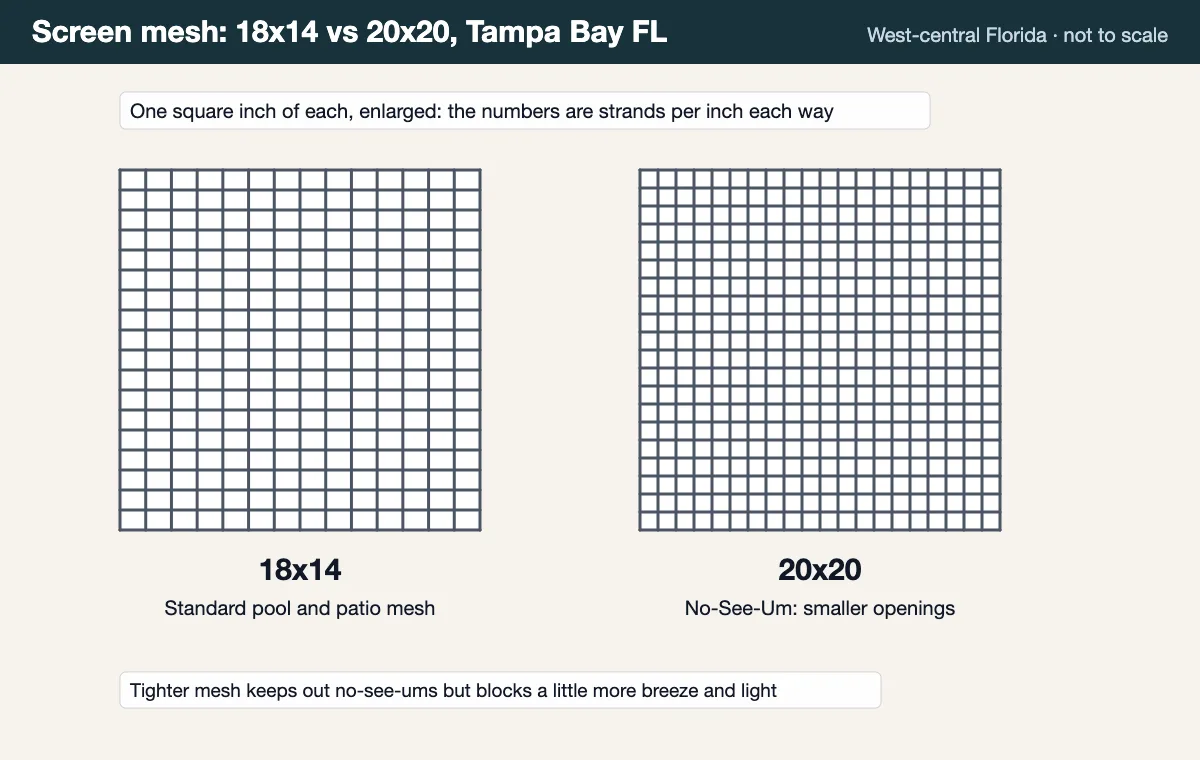
- Screen: No-See-Um, PetScreen or privacy panels cost more than standard 18x14 fiberglass.
- Doors and extras: each door, plus kick plates and chair rails, adds cost.
The full breakdown by size, roof style and county is in the pool cage cost guide for Tampa Bay.
What the Florida Building Code requires
A new pool enclosure must be designed for hurricane wind under the Florida Building Code, 8th Edition (2023), Section 2002. The key requirements:
- Aluminum used structurally must comply with the Aluminum Association standards AA ASM 35 and AA ADM 1.
- Extruded aluminum members in screen enclosures must have an actual wall thickness of at least 0.040 inch.
- Members must be designed for wind from two directions at right angles, using the pressures in Table 2002.4, which runs from 110 to 170 mph.
- Each primary member must also carry a 300-pound load applied downward along any 1 foot.
- The AAF Guide to Aluminum Construction in High Wind Areas is accepted as conforming engineering practice.
- The building official may require any aluminum structure to be designed by a Florida-registered professional engineer.
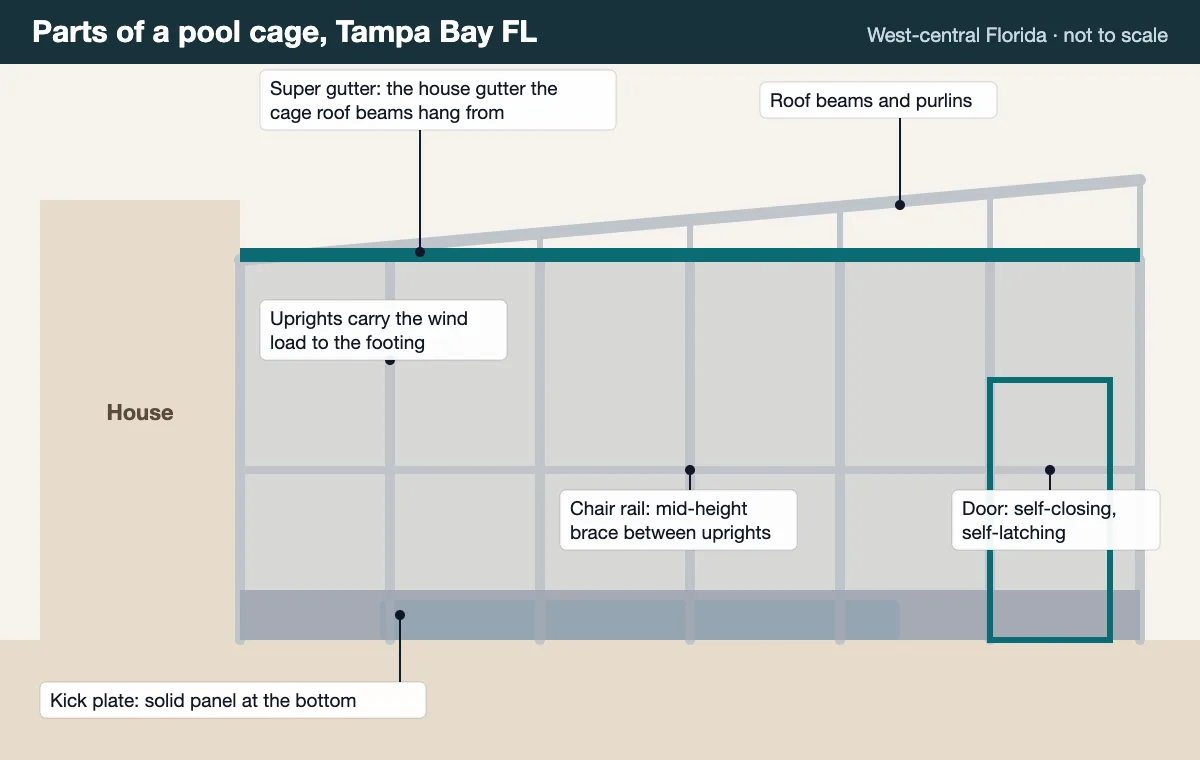
Primary members are the beams, posts, columns, structural gutters, headers, eave rails, purlins and roof braces that hold the cage up. Secondary members are kick plate rails, chair rails, roof or wall panels and wall braces. Hillsborough County's screen enclosure checklist adds that the plans must show the structure's Risk Category.
Design wind speeds across Tampa Bay
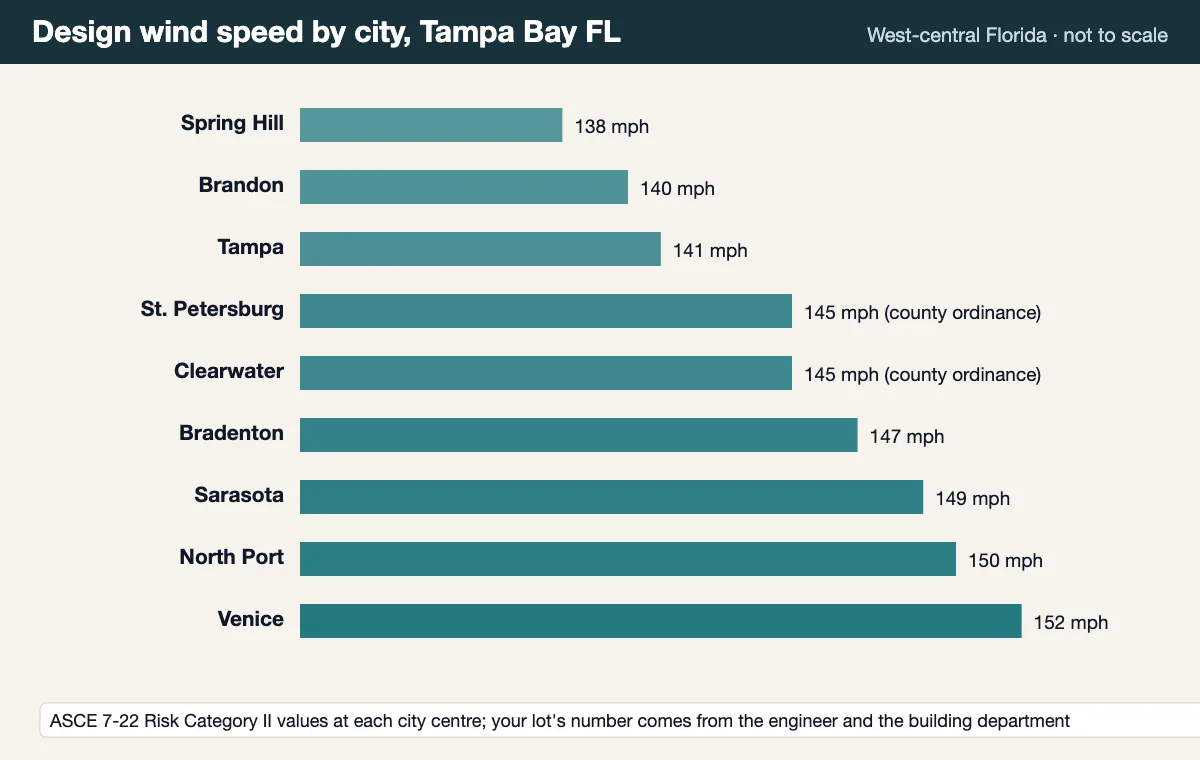
Tampa Bay pool cages are designed for ultimate wind speeds of roughly 138 to 152 mph, rising from north and inland to south and coastal. For ordinary homes (Risk Category II), that speed represents a 700-year return wind. The Florida Building Commission notes that peninsula wind speeds have not changed since the 2010 code, and that local maps are often modified, so the building department has the final word for your address.
| City | County | Design wind speed |
|---|---|---|
| Spring Hill | Hernando | About 138 mph |
| Wesley Chapel | Pasco | About 138 to 140 mph |
| Brandon | Hillsborough | About 140 mph |
| Tampa | Hillsborough | About 141 mph |
| St. Petersburg and Clearwater | Pinellas | 145 mph, set countywide by ordinance |
| Bradenton | Manatee | About 147 mph |
| Sarasota | Sarasota | About 149 mph |
| North Port | Sarasota | About 150 mph |
| Venice | Sarasota | About 152 mph |
Swipe the table sideways to see every column →
Pinellas value from the Pinellas County Construction Licensing Board's local technical amendment to FBC 8th Edition Section 1609.3. All other values are ASCE 7-22 geodatabase readings at each city center (700-year return, 3-second gust), queried 2026-10-13; county-adopted values were not confirmed. Confirm with your building department.
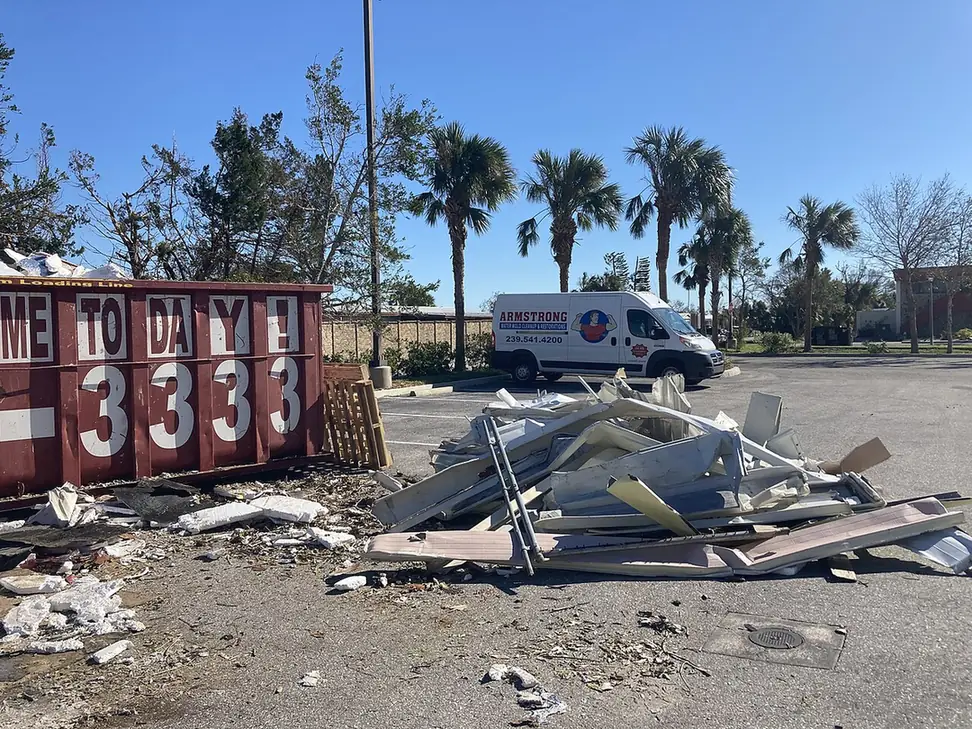
A design speed is not a guarantee. During Hurricane Milton in October 2024, gusts peaked at 101 mph at Albert Whitted Airport and 102 mph at Sarasota-Bradenton International Airport, well below these design speeds, and a pool cage in Mill Creek near Lakewood Ranch still blew apart. Age, condition, flying debris and how well a cage was built all matter. The hurricane-proof guide goes deeper.
Permits and fees for a new pool enclosure
Every jurisdiction in Tampa Bay requires a building permit for a new pool enclosure, and the under-$7,500 exemption Florida added in July 2026 (HB 803) never applies, because new framing is structural work. What each building department publishes:
| Jurisdiction | Permit and plans | Published fee |
|---|---|---|
| Hillsborough County (unincorporated) | Residential Miscellaneous Permit; plans signed and sealed; Notice of Commencement | $380 (schedule effective Oct 2024) |
| City of Tampa | Aluminum Screen Room/Pool Cage/Porch; plans signed and sealed | $316 plus state surcharge (2020 schedule) |
| Pinellas County (unincorporated, Oldsmar) | Aluminum Structure, Screen Room/Pool Enclosure; structural plans signed and sealed | Not published in fetched pages |
| Pasco County | Screen room checklist; two sets of signed and sealed engineered drawings | Not published in fetched pages |
| Manatee County | Aluminum Structure permit; building plans and site plan or survey | $210 (schedule effective Apr 2023) |
| City of Bradenton | Aluminum Structure permit | $300 (effective Jul 2026) |
| City of Sarasota | Signed and sealed plans or a named engineered specification; five copies | Not published in fetched pages |
| Hernando County | Screen Enclosure permit | $126.56 (2022 schedule) |
| Plant City | Fee by job value | $150 for a $10,001 to $25,000 job |
| City of Seminole | Fee by job value | $50 for the first $1,000, plus $9 per additional $1,000 up to $20,000 |
Swipe the table sideways to see every column →
From each jurisdiction's published permit pages and fee schedules, fetched 2026-10-13. Several schedules are dated, so fees may have changed. Clearwater requires a Notice of Commencement on contracts over $5,000 and accepts screen and pool permit applications through Accela only from licensed contractors.
After major storms, counties sometimes waive fees: following Hurricane Milton, Sarasota County suspended permit fees for storm repairs including pool cage repair, and Pinellas notes that fees may be waived at the County Commission's discretion. The Tampa Bay pool enclosure permit guide lists every jurisdiction, portal and checklist.
Setbacks and where a cage can go
Most Tampa Bay jurisdictions keep a pool enclosure at least 5 feet from side and rear property lines, and some restrict it to the back yard. Published rules:
- Pasco County: pool screen enclosures set back at least 5 feet from side and rear property lines.
- Manatee County: 5 feet from side and rear lines, and no pool cage may encroach on easements or drainage swales.
- New Port Richey: 5 feet from side and rear lines; waterfront yards may encroach up to 10 feet with see-through materials.
- Temple Terrace: screened enclosures without a weatherproof roof may sit in the rear yard, no nearer than 5 feet to any property line.
- Westchase: 5 feet from the rear or wetland setback line and 3 feet from a side lot line; crossing a county wetland setback needs county approval.
- City of Sarasota: no pool cage between the home's front facade and the street, and corner lots have two fronts.
Hillsborough County's checklist also asks the site plan to identify all easements, conservation or wetland areas and setbacks, which is why a recent survey matters before design starts.
HOA frame and screen rules
In master-planned Tampa Bay communities, the HOA often decides frame color, screen color, roof style and height before the county sees the plans. Published examples:
| Community | Frame | Screen and other rules |
|---|---|---|
| FishHawk Ranch (Lithia) | Bronze, white or black | Charcoal; never forward of the rear corners of the home |
| Seven Oaks (Wesley Chapel) | White or bronze; no mill finish | Charcoal; no flat roofs; one story unless approved |
| Meadow Pointe (Wesley Chapel) | White or brown | Smoke or aluminum-colored; no taller than the house |
| Starkey Ranch (Odessa) | Black or bronze aluminum | Rear yards only; no Florida Glass without approval |
| Twin Lakes of Brandon | Bronze or white | Gray or black; height capped at 80% of the house peak; no aluminum roofs |
| Panther Trace II (Riverview) | White or bronze | Pool cages required for all pools |
| Westchase | White or bronze | Charcoal; privacy screen up to 40% of the height |
| Country Club Village, Lakewood Ranch | Bronze | Charcoal 18x14 or 20x20; mansard roof on tops of 100 sq ft or more; no curved roofs |
| Venetian Golf & River Club (Venice) | Bronze | Charcoal; bronze super gutters |
Swipe the table sideways to see every column →
From each community's published design guidelines or rules, fetched 2026-10-13. Westchase rules are from a 2022 draft amendment; Starkey Ranch from its 2022 guidelines. Always check the current version with your association.
Pool enclosure styles
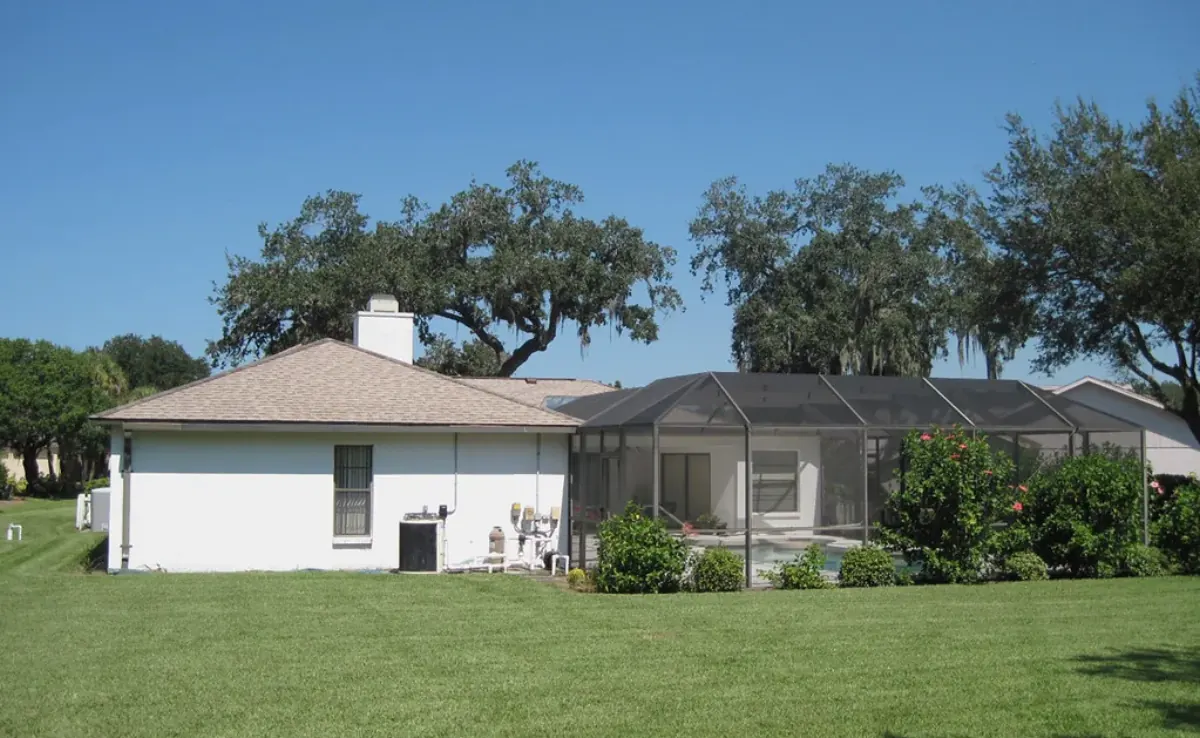
The roof shape is the biggest style choice, and it changes both price and HOA approval. Mansard cages, with sloped sides and a flat top, are the lower-cost shape and run about $6 to $10 per square foot in Central Florida pricing. Gable cages, with a peaked roof, run about $7 to $12 per square foot, or 10 to 20 percent more; on a 1,000 square foot cage that gap is about $1,000 to $2,000. National guides put domed, hip and other segmented roofs in the same 10 to 20 percent premium band.
Height rules often decide the style for you. Lakewood Ranch's Country Club and Edgewater villages require a mansard roof on any cage top of 100 square feet or more and allow no curved roofs, and Twin Lakes of Brandon caps enclosures at 80 percent of the house's peak. The pool enclosure styles guide compares each shape.
The pool barrier law and your new cage
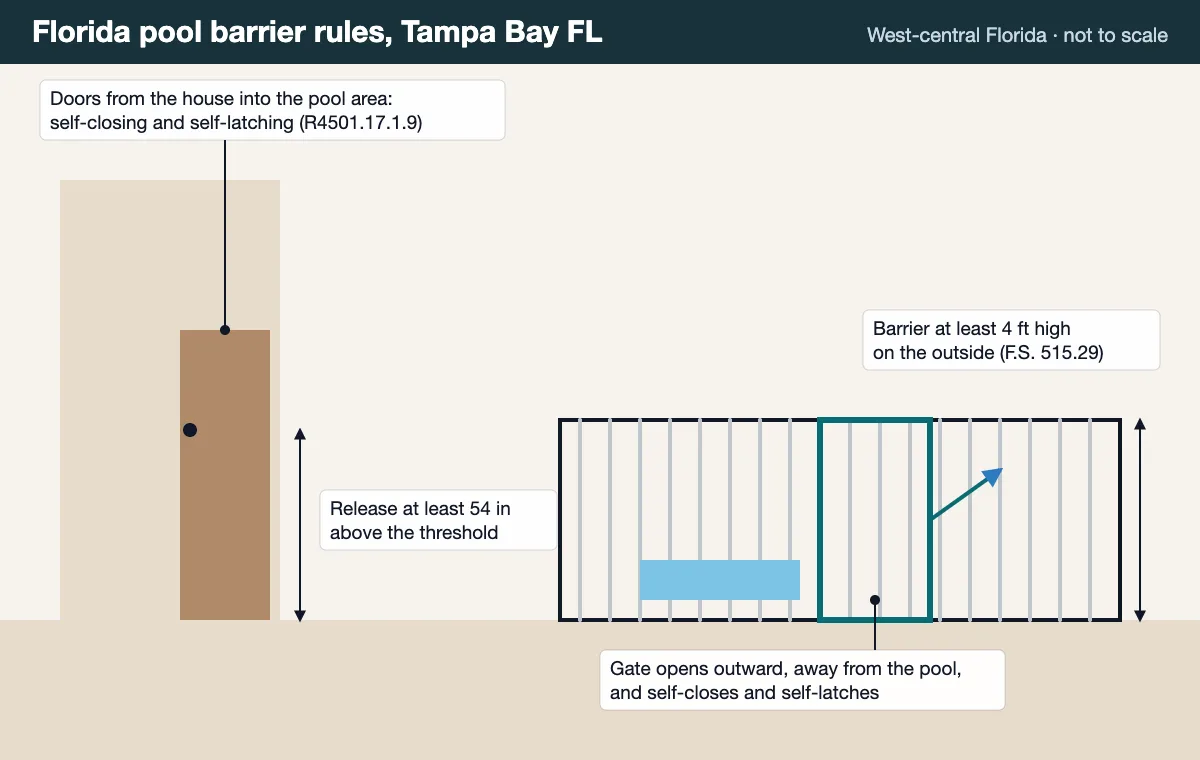
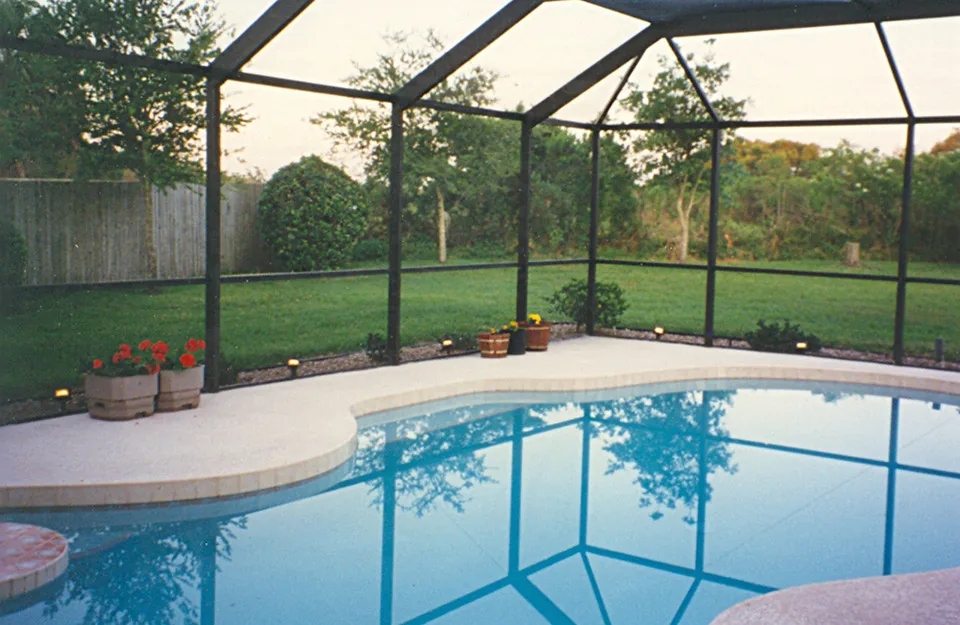
A new residential pool in Florida must have at least one approved safety feature, and a screen enclosure that meets the barrier rules is one of them. Under F.S. 515.27, the options include isolating the pool with an enclosure that meets 515.29, approved safety covers, pool alarms, and exit alarms and self-closing, self-latching devices on house doors that open to the pool.
- The barrier must be at least 4 feet high on the outside (F.S. 515.29).
- No gaps, openings or footholds that let a child under 6 crawl under, squeeze through or climb over.
- Gates open outward, away from the pool, and are self-closing and self-latching, with the release on the pool side out of a child's reach.
- A standard screen enclosure may serve as part or all of the barrier as a nondwelling wall (FBC Residential R4501.17.1.11).
- If a gate latch release sits at least 54 inches up, it may be on either side of the gate (R4501.17.1.8).
- On cut-screen designs, the barrier height must be kept even with panels removed or cut (FBC 2002.7).
Some HOAs go further: Twin Lakes of Brandon requires every pool to sit inside a screen enclosure or a 6-foot fence. The Florida pool enclosure requirements guide covers doors, latches and alarms in full.
How a new pool enclosure is installed
A new cage moves through approval, engineering and permitting before any aluminum arrives. The usual sequence:
- 1Check HOA rules and get approval
Most master-planned communities in Tampa Bay require an architectural application before any enclosure goes up, covering frame color, screen color, roof style and height.
- 2Survey and engineering
The cage is designed for the site's wind speed and exposure, and the plans are signed and sealed by a Florida-registered engineer or architect, or drawn from an engineered specification the jurisdiction accepts.
- 3Permit application
The contractor files the permit with the county or city, with the plans, a site plan or survey showing setbacks and easements, and, where required, a recorded Notice of Commencement.
- 4Footings and attachment
The frame is anchored to the deck or new footings and attached to the house, for example through a super gutter at the fascia.
- 5Frame and screen
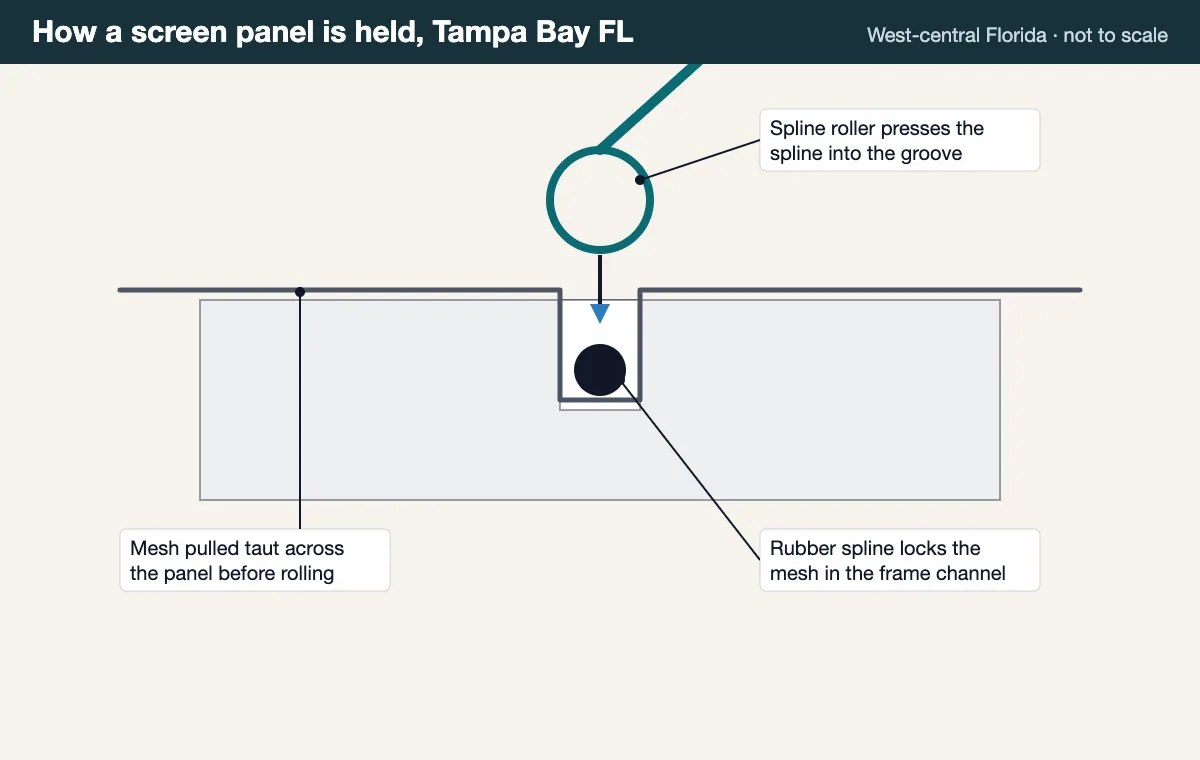
Posts, beams and purlins go up, then screen is rolled into every panel and the doors, closers and latches are set.
- 6Final inspection
The building department inspects the finished enclosure. Where the cage is the pool barrier, the doors must open outward and be self-closing and self-latching.
Coastal homes and corrosion
Near salt water, the fasteners are the weak point, not the aluminum. A 2017 University of Florida report to the Florida Building Commission found residential fastener corrosion more serious in coastal environments because of chloride, and saw the ceramic coating on stainless steel masonry screws, which it says are commonly used for screen enclosures, peel during testing. That can cause unlike-metal reactions in aluminum enclosures. On waterfront lots in St. Petersburg, Apollo Beach, Tarpon Springs or Venice, it is worth asking what fasteners a new cage will use.
Is a pool enclosure worth it in Tampa Bay?
For most Tampa Bay pools it is, because the cage solves problems that a pool alone creates here. UF/IFAS counts more than 80 mosquito species in Florida and suggests screens placed over decks and swimming pools as a defense against lovebugs, which swarm every April to May and August to September. A roof screen keeps oak leaves and Spanish moss out of the water, and the cage can double as the pool barrier.
- For: bugs, leaves and debris kept out; a usable deck through the rainy season; barrier compliance; HOA requirements met.
- Against: $10,000 to $30,000 or more upfront; rescreening every 7 to 15 years; standard policies such as Citizens' HO-3 do not cover screen pool cages.
- Lifespan: the frame lasts about 20 to 30 years or more with care, so a new cage is a long-term purchase.
The background is in why Florida pools have cages.
Who can build a pool enclosure in Florida
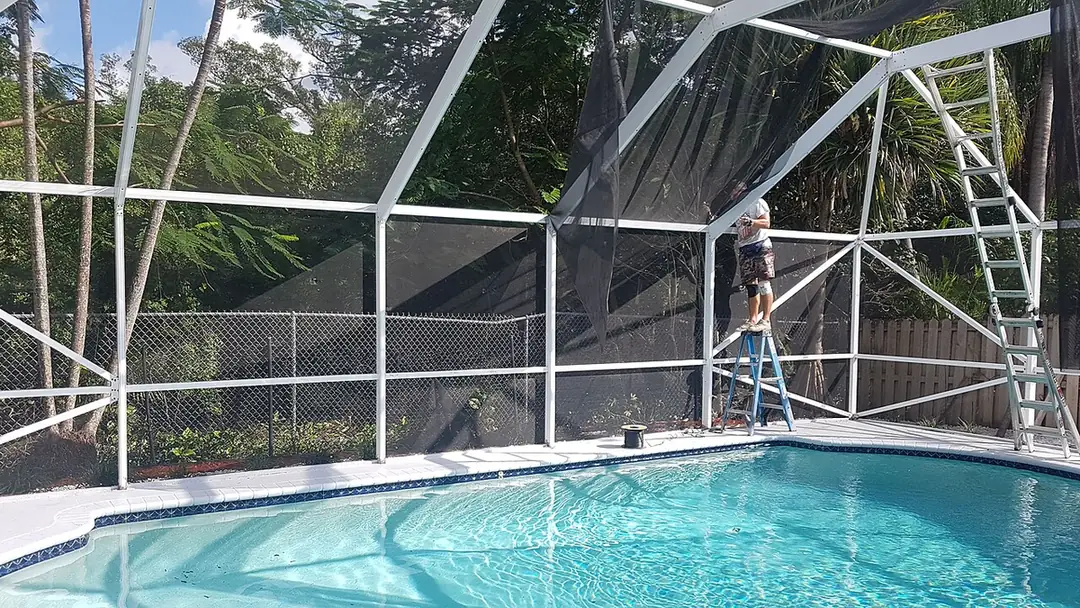
Pool enclosures fall under Florida's Specialty Structure Contractor license, whose scope (Rule 61G4-15.015) covers screened porches, screened enclosures and pool enclosures, but not work that alters the structural integrity of the house. Hillsborough County also issues a local Aluminum Structure license, Pinellas contractors must be registered with the Pinellas County Construction Licensing Board, and Florida Statute 489.113 directs the state board to add a voluntary certified category for structural aluminum or screen enclosures. Ask for the license number before you sign.
Pool enclosure installation across Tampa Bay
New cages go up across the region, including fast-growing communities from Wesley Chapel, Riverview and Parrish to Lakewood Ranch and North Port. Every town is on the service area page. If you already have a cage, see pool cage rescreening or pool cage replacement, or request a free quote.