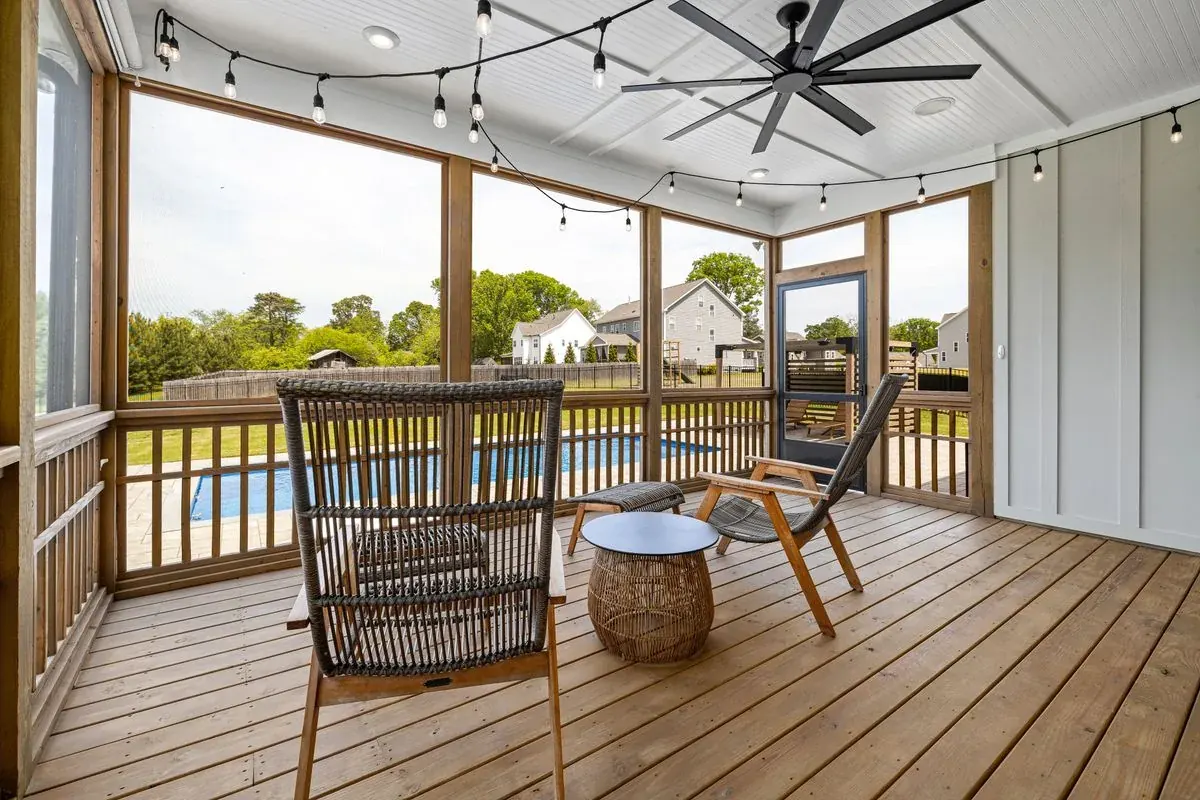
Lanai screen repair in Tampa Bay usually costs $75 to $150 a panel, and a full rescreen of a 200 to 400 square foot lanai about $800 to $1,600. A lanai is the screened patio or porch off the back (or side) of the house, whether or not there is a pool. It gets more daily use than most pool cages: chairs scrape the lower panels, dogs push through the door and the screen walls sit right where you sit. This page covers lanai screen repair Tampa homeowners ask about most: price, lifespan, fixing a panel yourself and the rules that apply.
It applies to lanais in Tampa, FL and across Hillsborough, Pinellas, Pasco, Manatee, Sarasota and Hernando counties.
What a lanai screen is, and how it differs from a pool cage
A lanai screen is the insect mesh set into the aluminum frame that encloses a covered patio attached to the house. Most Tampa Bay lanais fall into one of four types, and each wears differently:
| Lanai type | What it looks like | What usually wears out |
|---|---|---|
| Under-roof lanai | Screen walls set under the home's own roof and on its slab | Lower panels, door screen, spline at the corners |
| Screen-roof lanai | A small aluminum cage with a screen roof off the back of the house | Roof panels from sun and falling branches |
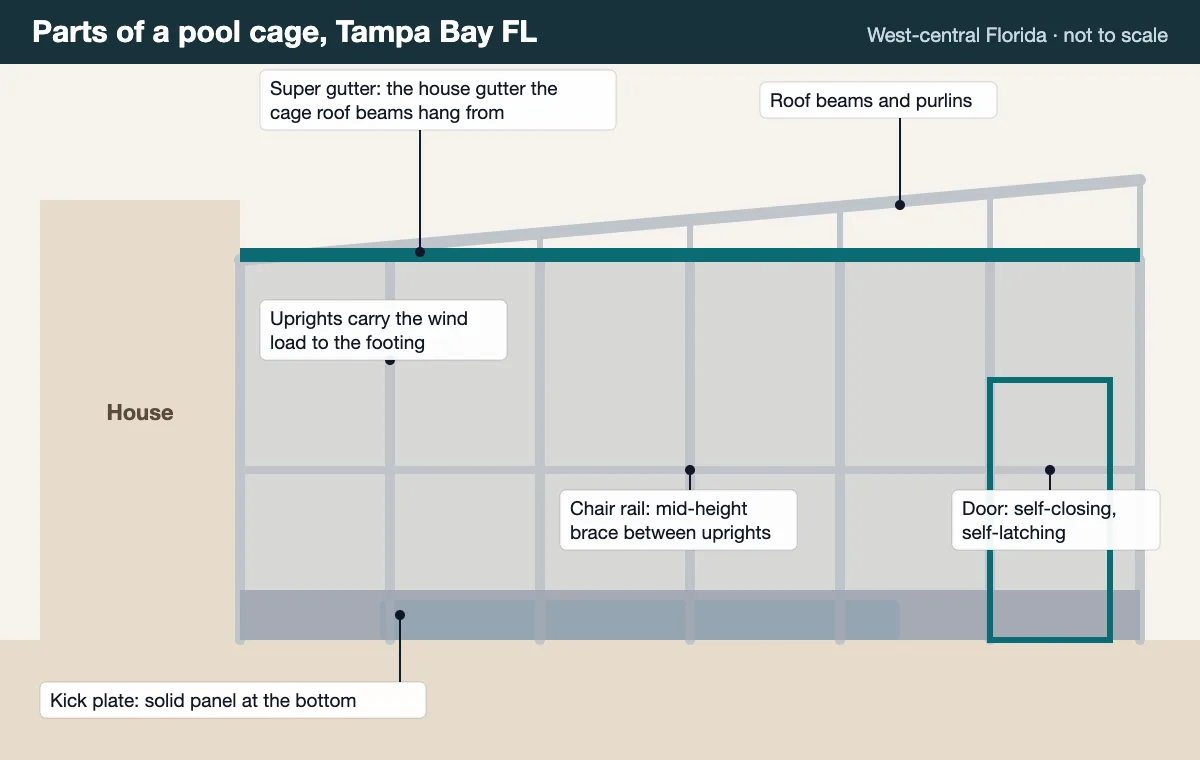
| Lanai inside a pool cage | A covered patio that opens into the pool enclosure | Usually repaired with the pool cage |
| Front or side screened porch | A screened porch at an entry or side door | Door screen, closer and latch |
Swipe the table sideways to see every column →
Lanai types as commonly built in Tampa Bay. Pool cages have their own page: see pool screen repair.
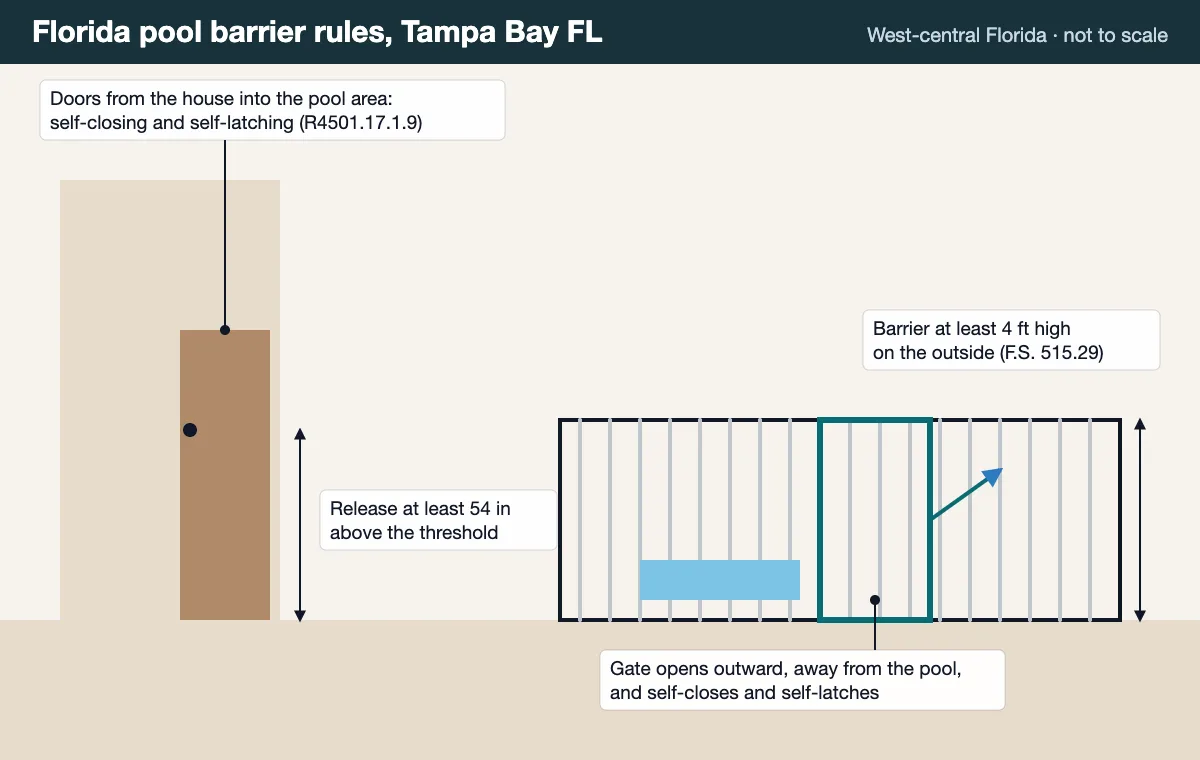
If the screen you need fixed is the big cage over the pool, see pool screen repair instead. The work is similar, but pool cages carry pool barrier rules and taller roof panels that most lanais do not.
What lanai screen repair costs in Tampa Bay
A few panels cost a few hundred dollars; a full lanai rescreen costs roughly $800 to $1,800, and upgraded mesh or a larger lanai push it higher. Published numbers:
| Job | Published price | Source and date |
|---|---|---|
| Single screen panel | $75 to $150 | Tampa Bay contractor guide, Jan 2026 |
| Existing lanai or patio screen project | From $895 to $1,295, by size | Pinellas and Pasco price list, 2026 |
| Full rescreen, 200 to 400 sq ft lanai, 18x14 fiberglass | $800 to $1,600 | Tampa Bay contractor guide, Mar 2026 |
| Small lanai or screened porch, under 20 panels | $800 to $1,800 | Central Florida screen company, 2026 |
| Patio screen repair, national | $1 to $3 per sq ft, or $25 to $50 per panel | HomeGuide, 2023 |
| Lanai rescreen, national | $1,500 to $3,000 | HomeGuide, 2023 |
| Patio, porch or sunroom rescreen, national | Average $2,900; range $800 to $5,200 | Angi, Sep 2026 |
| 10 x 20 ft St. Petersburg lanai, full restoration | $2,800 to $4,500 | Tampa Bay contractor guide, Jan 2026 |
Swipe the table sideways to see every column →
Compiled from published contractor price pages and national cost guides fetched 2026-10-13. The restoration row includes frame cleaning and painting, not just screen. Treat every figure as a planning range, not a quote.
What moves a lanai price
- Size and panel count: a small under-roof lanai may have fewer than 20 panels; a screen-roof lanai has roof panels too.
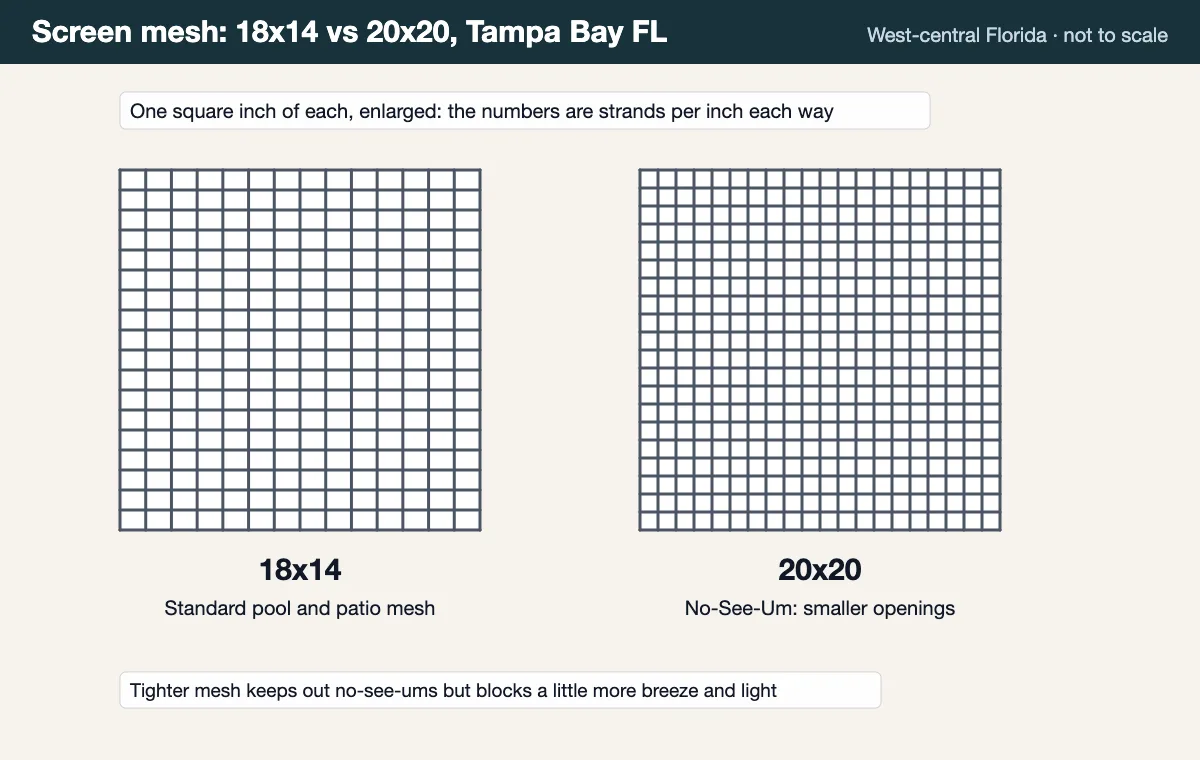
- Mesh: polyester adds about 20 to 30 percent over standard fiberglass, and No-See-Um adds about $10 to $20 per panel.
- Doors: a door screen, kick plate, closer or latch is priced on top of the panels.
- Frame condition: loose or rusted screws and dented channels add metal work.
- Access: furniture, grills and planters on the lanai all have to move.
What it costs to screen in a lanai from scratch
Screening in an existing covered lanai costs about $2,000 to $5,000 on national averages, or $10 to $25 per square foot. That is new aluminum framing and screen under a roof you already have. A complete new lanai enclosure is priced higher: Southwest Florida companies quote about $12 to $15 per square foot for a lanai enclosure with one door, and $5,000 to $15,000 for new lanai construction depending on size and options.
New framing is a build, not a repair, and usually a permit job. See patio screen enclosures for new screen rooms and porch screening.
How long lanai screens last in Florida
Standard fiberglass screen lasts about 5 to 10 years in Florida; premium and pet-resistant mesh about 8 to 15. Florida contractors put fiberglass at 5 to 7 years in harsh sun and 7 to 10 in a typical Tampa Bay yard. The aluminum frame lasts far longer, 20 to 30 years or more when it is kept up, so a lanai usually needs new screen several times before it needs a new frame.
Lanais under the home's roof are shaded from overhead sun, which helps. The walls that face the afternoon sun still take direct sun and usually fade first, and the lower panels wear from chairs, pets and kids long before the screen ages out.
Signs your lanai screens need attention
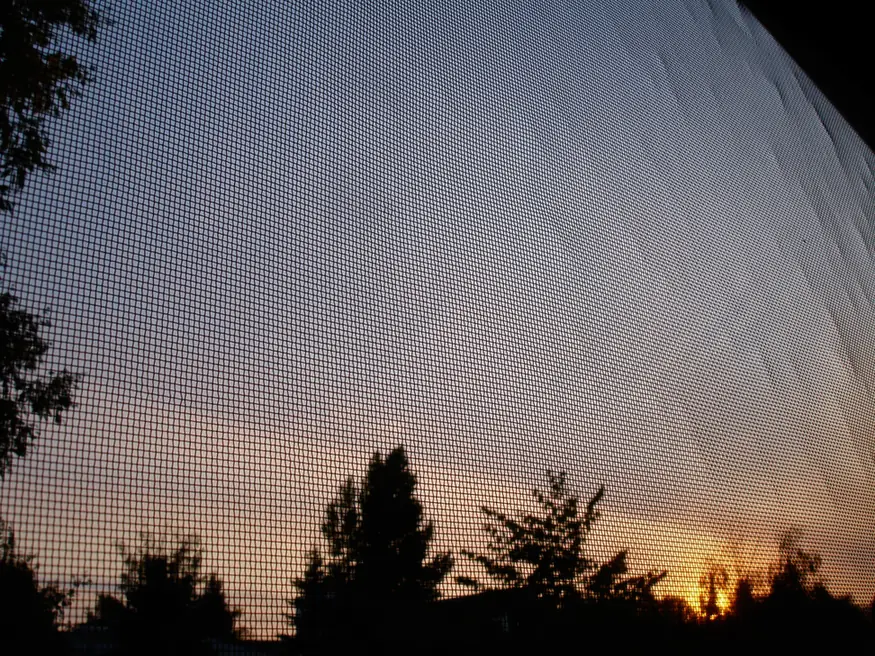
- Screen that has gone chalky or tears when you press it with a finger
- Mesh pulled out of the channel at a corner, with loose or missing spline
- Holes at chair height or where the dog waits at the door
- Sagging panels after a storm or after a pressure wash
- Mildew or black staining that does not wash out
- Mosquitoes or no-see-ums inside with the door shut
How to fix a broken lanai screen
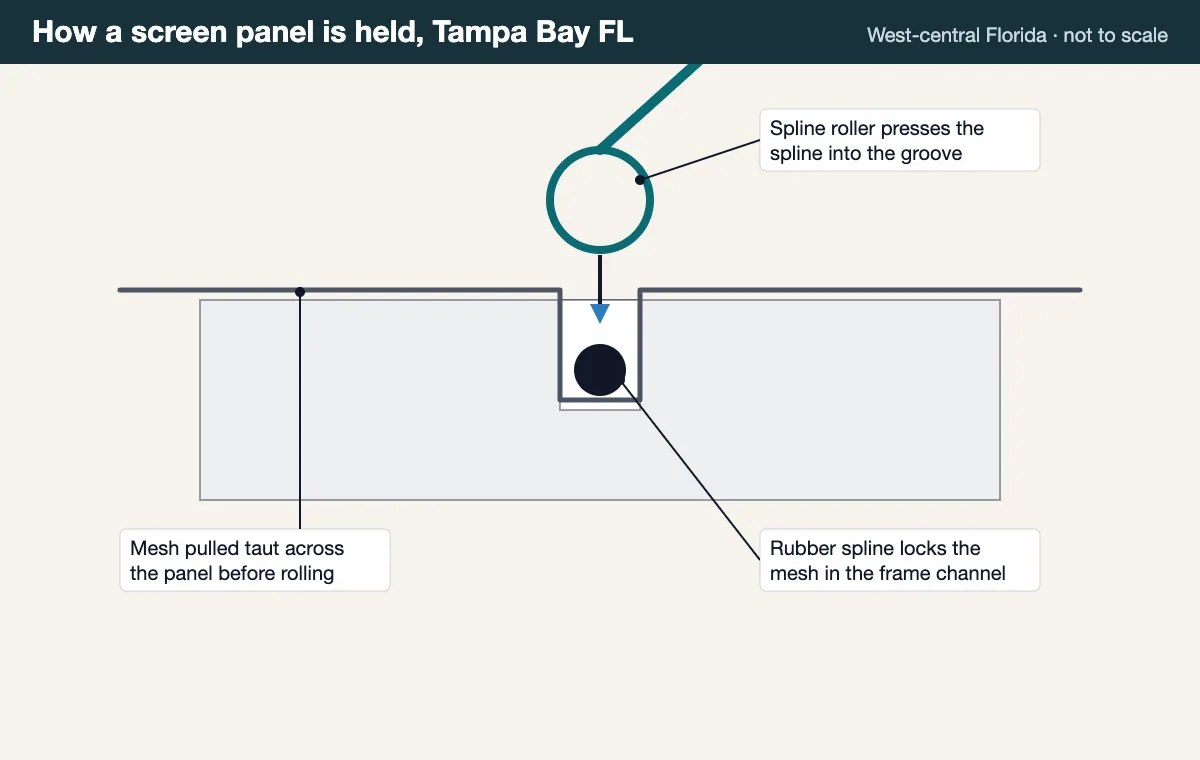
One torn ground-level panel is a job many handy homeowners can do themselves with a spline roller, a utility knife, new spline and a piece of matching mesh:
- 1Remove the old spline
Pry the end of the rubber spline out of the channel with a flat tool and pull it out all the way around the panel. Old spline is usually brittle and is replaced, not reused.
- 2Take out the torn mesh and clean the channel
Lift out the damaged screen and clear dirt, old spline bits and mildew from the channel so the new spline seats evenly.
- 3Lay new mesh over the opening
Cut the new screen a few inches larger than the opening on every side, and match the mesh to the rest of the wall.
- 4Spline one side, then the opposite side
Roll the new spline into one side with a spline roller, then pull the mesh taut across the panel and spline the opposite side, then the two remaining sides.
- 5Trim and check
Trim the extra mesh along the outside edge of the spline. The panel should be flat and tight with no ripples or gaps at the corners.
Licensing rules for screen work vary. Hernando County lets anyone repair or replace screen without a contractor license as long as no aluminum is installed, and the City of Venice lists re-screening as work that needs no license. Manatee County exempts rescreening from permits but says it requires a license.
Which screen to use on a lanai
Standard 18x14 fiberglass suits most lanais, but a lanai is where the upgrades earn their cost, because you sit right against the screen:
| Screen | What the maker says | Where it fits on a lanai |
|---|---|---|
| 18x14 fiberglass | The traditional choice for patio and pool enclosures | Most walls; lowest cost |
| PetScreen | Tear and puncture resistant; excellent for patio and porch enclosures | Lower panels and the door, where pets push |
| 20x20 No-See-Um | Tight weave for no-see-ums, gnats and sand flies | Lanais near ponds, canals, marsh or the bay |
| TuffScreen | Heavy-duty vinyl-coated polyester for high-traffic areas | Busy lanais with kids and furniture |
| Glas-Shield | Vinyl-laminated 18x14 for lower panels and privacy walls; not for roofs | Below the chair rail, or a wall facing a neighbor |
Swipe the table sideways to see every column →
Product descriptions from Phifer's own product pages (phifer.com), fetched 2026-10-13.
Privacy screen is where HOA rules bite. Westchase allows Florida Glass type privacy screening for no more than 40 percent of the screen height, and Starkey Ranch in Odessa prohibits Florida Glass or spray-on vinyl laminate without architectural approval. More on each mesh is in the screen types guide.
Lanai permits and HOA rules in Tampa Bay
Rescreening an existing lanai rarely needs a permit, but changing what the lanai is made of often does. Tampa Bay counties publish a few lanai-specific rules:
- Manatee County: no permit to screen an existing porch or lanai that already has a roof and a floor or slab. If any wall is closed in with panels, or a kick plate is higher than 12 inches, a permit is required.
- Pasco County: vertical aluminum screen inserts under the framed roof of a permitted lanai, and removable windbreaks set into existing screen room openings, are on the no-permit list (not in flood zones).
- Hernando County: aluminum screen enclosures under an existing roof are exempt, provided at least one entry has a 36-inch-wide door.
- Twin Lakes of Brandon HOA: no aluminum roofs on screen enclosures or lanai areas, and gray or black screen only.
- Meadow Pointe in Wesley Chapel: white or brown frames with smoke or aluminum-colored screen, no taller than the house.
- Venetian Golf & River Club in Venice: lanai cages in bronze aluminum with charcoal screen and bronze super gutters.
Matching the existing screen and frame keeps HOA review simple. Changing frame color, adding privacy screen or enclosing walls is where an architectural application comes in. The Tampa Bay permit guide covers county rules in full.
Vinyl windbreaks and storm season
Clear vinyl or acrylic windbreak panels are a popular lanai add-on, and Florida code says they come out before a storm. Under the Florida Building Code, Section 2002.3.3, removable vinyl, glass or acrylic panels in a screen enclosure must carry a decal reading that the panel shall be removed when wind speeds exceed 75 mph. Screen stays in; the solid panels do not.
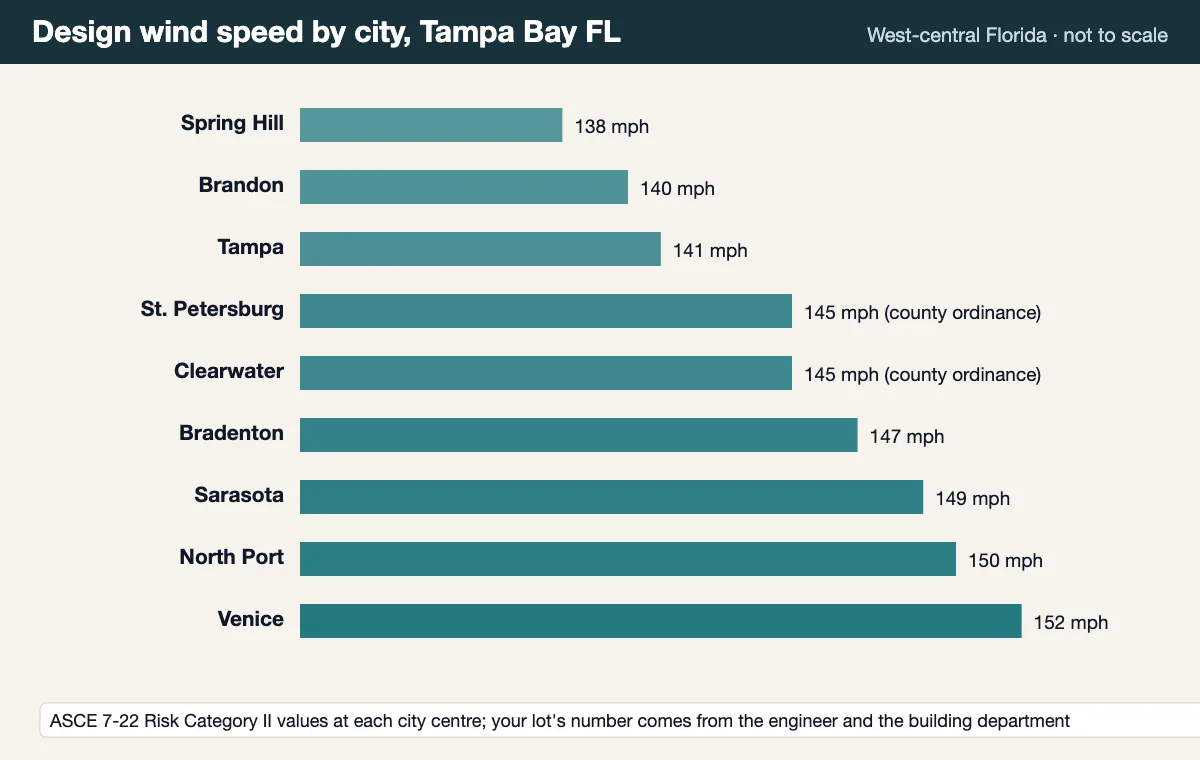
Storms are also when lanai screen fails. During Hurricane Milton in October 2024, the National Weather Service recorded a peak gust of 101 mph at Albert Whitted Airport in St. Petersburg and 93 mph near Tampa International Airport. Panels blown out of their channels can often be re-splined; bent frames and pulled-away attachments are hurricane damage repair.
Why Tampa Bay lanais need intact screen
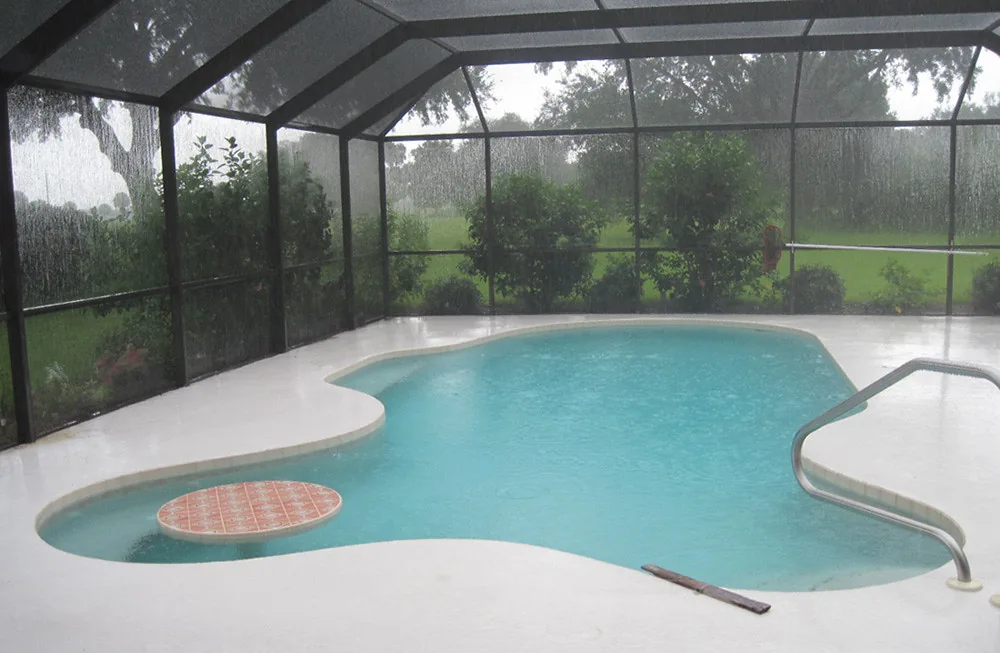
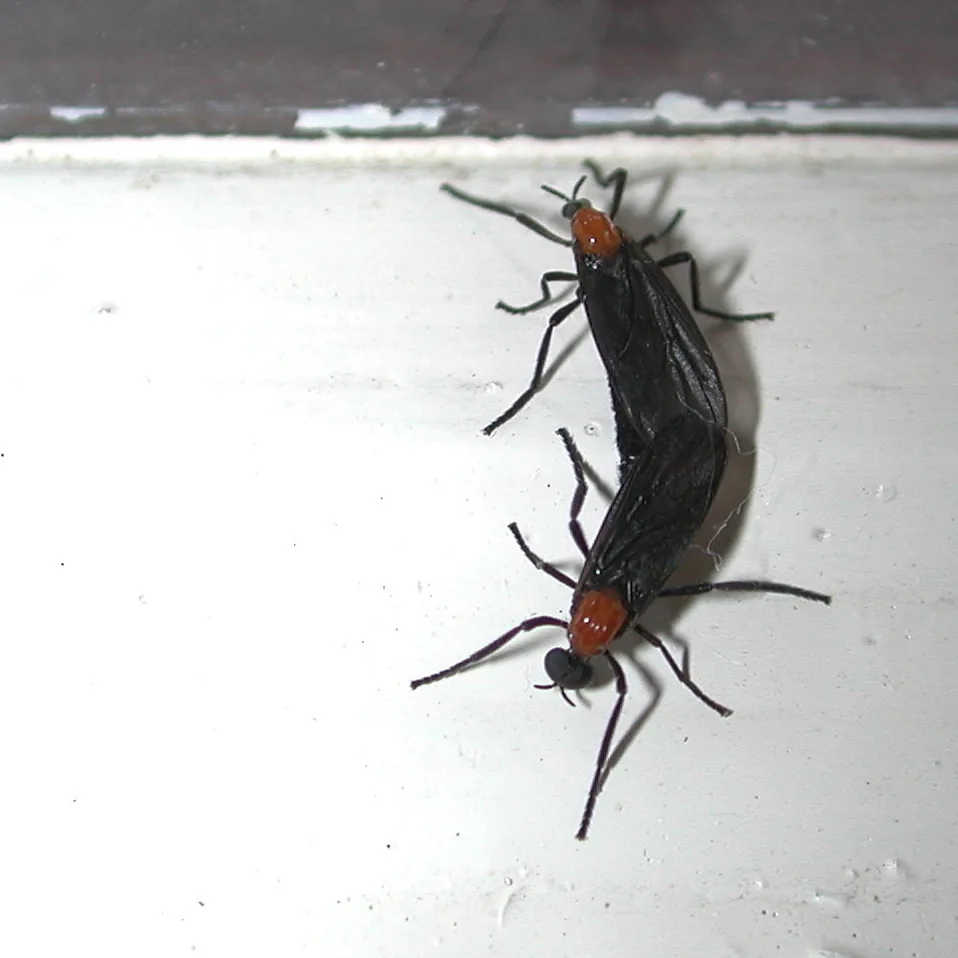
A lanai is only usable in Tampa Bay summers if the screen keeps the bugs out. University of Florida IFAS counts more than 80 mosquito species in Florida and advises repairing torn screens to keep them out. Lovebugs swarm in pairs for a few weeks every April to May and August to September, and UF/IFAS suggests screens on the prevailing windward side of a building. In Sarasota County, UF/IFAS notes, the rainy season from June 1 to September 30 is also peak mosquito season.
Rain is the reason. Tampa International Airport's 1991 to 2020 normals show 7.37 inches in June, 7.75 in July, 9.03 in August and 6.09 in September, against 49.48 inches for the whole year. A small hole that lets in a few mosquitoes in March lets in a lot more in August.
Lanai screen repair across Tampa Bay
Some Tampa Bay neighborhoods are known for their screened lanais. In Dunedin's Spanish Trails, built mostly in the 1960s and 1970s, most homes have private pools with screened lanais. Kings Point in Sun City Center has more than 5,000 homes, many of them villa condos in duplex configurations. Lanais like these are common in Dunedin, Sun City Center, Brandon, Seminole and Spring Hill, and every other town on the service area page. If the lanai is part of a pool cage that needs new screen throughout, see pool cage rescreening. For a whole building or community, see condo and HOA rescreening, or request a free quote.