Last reviewed October 2026
There are six pool cage screen types worth knowing in Tampa Bay, FL: standard 18x14 fiberglass, 20x20 No-See-Um, pet-resistant screen, heavy-duty polyester, vinyl-laminated privacy screen, and solar screen. Standard fiberglass covers most cages. The others each solve one problem: tiny biting bugs, pets, privacy, heat or hard wear. The right choice depends on where your house sits, from a canal lot in Apollo Beach to an oak-shaded yard in Temple Terrace.
Product details below come from the manufacturer's own pages where we could find them. Prices come from published Florida contractor guides, with dates, and are planning figures, not quotes.
Pool cage screens at a glance
Fiberglass is the cheapest and most common; pet, polyester and solar screens cost more per square foot and are usually chosen for specific panels. This table puts the facts side by side.
| Screen | What it is | Florida installed price | Best place on the cage |
|---|---|---|---|
| 18x14 fiberglass | Phifer's traditional pool and patio mesh | $0.75 to $1.25 per sq ft (about $900 to $1,600 for an average cage) | Roof and walls of most cages |
| 20x20 No-See-Um | Tighter 20x20 fiberglass weave for gnats and sand flies | About $10 to $20 more per panel than standard | Walls facing marsh, mangroves, ponds or the bay |
| Polyester | Stronger synthetic mesh; TuffScreen is Phifer's vinyl-coated version | $1.20 to $1.80 per sq ft (about $1,500 to $2,200) | High-wear panels, doors, whole cage for longer life |
| Pet-resistant (PetScreen) | Tear and puncture resistant mesh for dogs and cats | $1.50 to $2.50 per sq ft (about $2,000 to $3,000+) | Panels below the chair rail and doors |
| Glas-Shield (Florida Glass) | Vinyl-laminated 18x14 fiberglass | No published installed price found | Chair rail down and privacy walls only; never roofs |
| Solar screen | Denser mesh that cuts sun and glare | $1.80 to $3.00 per sq ft (about $2,700 to $4,500) | West and south walls that take afternoon sun |
Swipe the table sideways to see every column →
Product descriptions from Phifer product pages (phifer.com). Prices: a Florida contractor's rescreen price guide (Dec 2, 2025) for fiberglass, polyester, pet and solar; a Central Florida screen company's 2026 guide for the No-See-Um panel upcharge. Fetched 2026-10-13.
Each screen in detail
18x14 fiberglass: the standard
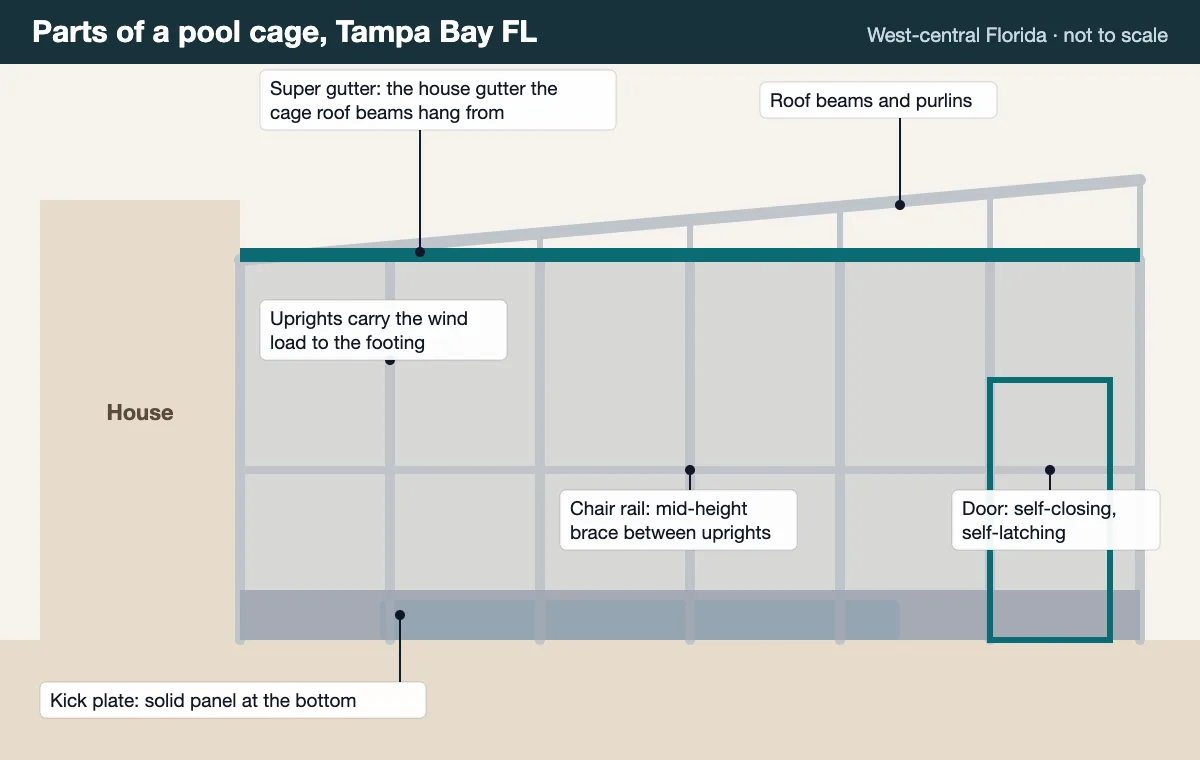
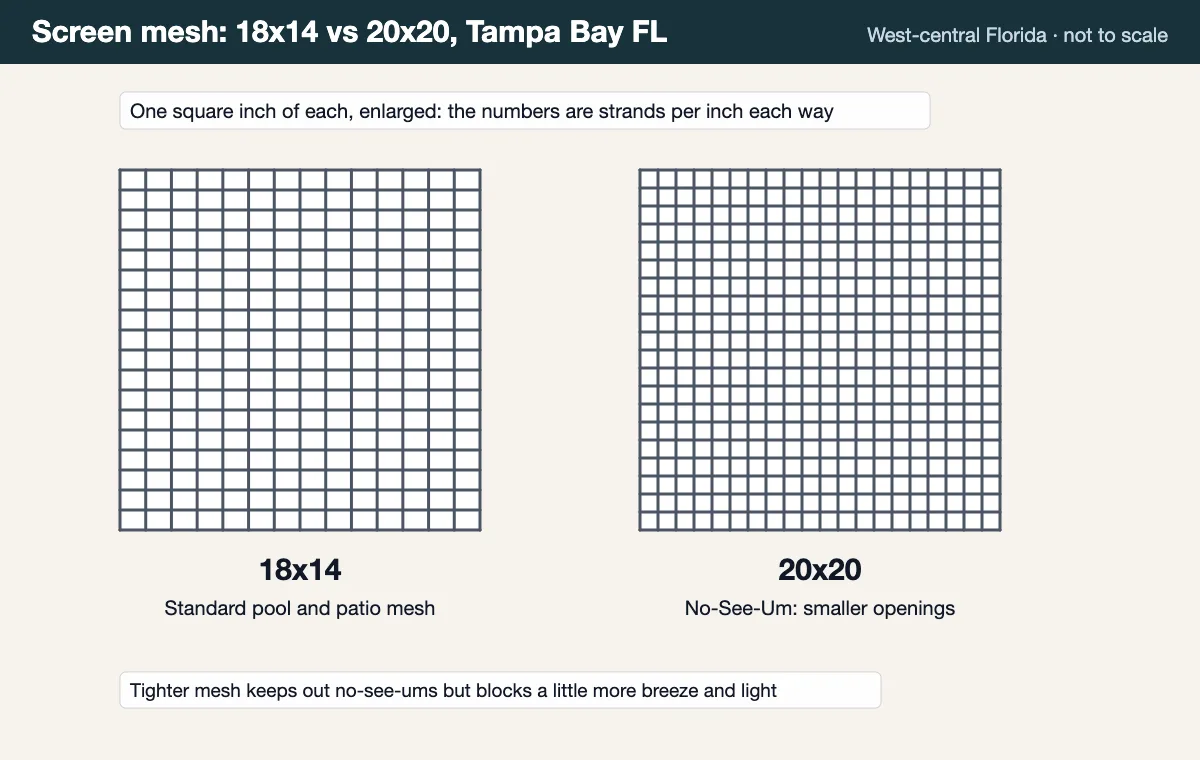
18x14 fiberglass is the default pool cage screen in Florida and the lowest-cost full rescreen. Phifer calls its 18x14 the “traditional choice for patio and pool enclosures,” made for uses where extra strength is wanted. The numbers are strands per inch: 18 one way, 14 the other. It is the mesh most Florida cages already have, and the one every screen contractor stocks.
The trade-off is life span. One Florida contractor puts fiberglass at about five to seven years in Florida sun and humidity; a Tampa Bay contractor guide says 7 to 10 years in Florida's climate. It fades, goes chalky and becomes brittle, then tears when you press on it.
20x20 No-See-Um: for tiny biting bugs
No-See-Um screen is a tighter 20x20 fiberglass weave that stops insects small enough to pass through 18x14. Phifer describes it as a “tightly woven 20x20 mesh designed to keep out most smaller flying insects like no-see-ums, gnats, sand flies, and other bugs that may inhabit marshy or coastal areas.”
That describes a lot of Tampa Bay: canal lots in Apollo Beach, homes on the water in Pinellas, and yards that back onto a pond or marsh anywhere in the region. Because it costs more per panel, many owners put it only on the walls that face the water.
Polyester and TuffScreen: for wear
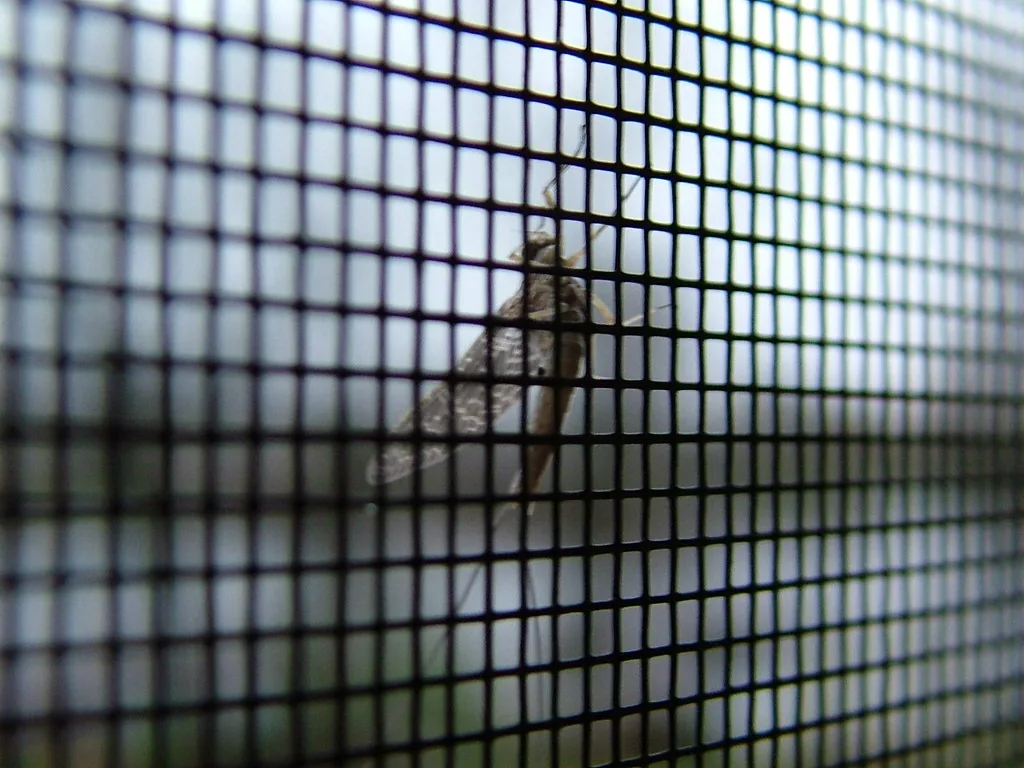
Polyester screen is stronger than fiberglass and costs about 20 to 30 percent more on a rescreen. Phifer's TuffScreen is “heavy-duty, vinyl-coated polyester insect screening that is ideal for use in high traffic areas.” Phifer also makes a TuffScreen No-See-Um that carries a 10-year warranty, the only manufacturer durability figure we found for any pool screen.
A Tampa Bay contractor guide from March 2026 prices a polyester rescreen of a 20x40 cage, which holds 800 to 1,200 square feet of screen, at $2,500 to $4,500.
PetScreen: for dogs and cats
Pet screen is a thick, tear and puncture resistant mesh that belongs on the panels pets can reach. Phifer says PetScreen is designed “to resist damage by most dogs and cats” and is ideal for high-traffic areas such as patio and porch enclosures, windows and doors. Most owners use it on the doors and below the chair rail, where paws and claws actually reach. In Florida it runs about $1.50 to $2.50 per square foot installed.
Glas-Shield (Florida Glass): privacy and dirt control
Florida Glass is vinyl-laminated screen for the lower walls of a cage, and it is not made for roofs. Phifer's Glas-Shield is 18x14 fiberglass that has been vinyl laminated. Per Phifer, it “can be installed in the lower enclosure panels (chair rail down) to keep dirt and debris out of pool enclosures,” and it works as a privacy screen on walls, but “it is not made to be used as roofing material or in horizontal applications.”
On a cage, that means less dirt blowing onto the deck and a lower wall that screens the pool from a neighbor's view. We found no published installed price for it and no privacy percentage from Phifer.
Solar and privacy screen: for heat and glare
Solar screen is a denser mesh that blocks more sun, used on the walls that face the afternoon sun. A Florida contractor prices a full solar rescreen at $1.80 to $3.00 per square foot, about $2,700 to $4,500, while a national cost guide lists solar and privacy screens at $0.75 to $1.28 per square foot of material. Because it is denser, it also cuts some of the view, so most owners use it on a few walls rather than the whole cage.
Which screen goes where: a panel plan
The smart way to spend on screen is by panel, not by cage. A single cage can mix three types, and each part of the cage takes a different beating.
- Roof panels: standard 18x14 or 20x20 No-See-Um. Never Glas-Shield, which Phifer says is not for horizontal use.
- Upper walls: the same as the roof for a uniform look, or No-See-Um on the side facing a pond, canal or marsh.
- Below the chair rail: PetScreen if you have dogs, or Glas-Shield to block dirt and add privacy.
- Doors and the panels beside them: polyester or PetScreen, since hands, hips and pets hit them daily.
- West-facing walls: solar screen if the deck is too hot to use in the afternoon.
How long each screen lasts in Florida
Plan on about 5 to 10 years for fiberglass and roughly 8 to 15 years for premium meshes in Tampa Bay. Florida sources consistently quote shorter lives than national ones.
| Screen | Florida sources | National sources |
|---|---|---|
| Standard fiberglass | 5 to 7 years (Florida, Dec 2025); 7 to 10 years (Tampa Bay, Jan 2026) | 10 to 15 years (Angi, Sep 2026) |
| Premium or pet-resistant mesh | 8 to 12 years (Central Florida, 2026); 10 to 15 years (Tampa Bay, Jan 2026) | Not stated separately |
| Polyester | Not stated separately | 20 to 30 years (Angi, Sep 2026) |
| TuffScreen No-See-Um | 10-year manufacturer warranty (Phifer) | Same |
| Aluminum frame (for comparison) | 20 to 30 years or more | 10 to 25 years (HomeGuide) |
Swipe the table sideways to see every column →
Compiled from a Florida contractor price guide (Dec 2025), a Tampa Bay screen contractor's cost guide (Jan 2026), a Central Florida screen company's guide (2026), Angi (updated Sep 28, 2026), HomeGuide and phifer.com, fetched 2026-10-13. Phifer's product pages give no lifespan in years.
The lesson is to price a rescreen against the years you expect to stay. If you plan to sell in five years, standard fiberglass makes sense. If this is the long-term house, a heavier mesh on the hard-wearing panels pays back in fewer repairs.
HOA screen rules in Tampa Bay
Many Tampa Bay HOAs dictate screen color, and some limit mesh type and privacy screen. Read your community's rules before choosing. Published examples:
| Community | Screen rule |
|---|---|
| Lakewood Ranch (Country Club and Edgewater villages) | Charcoal, either 18x14 or 20x20 mesh, fiberglass or fiberglass-coated PVC |
| Westchase | Charcoal screen; privacy screens similar to Florida Glass allowed for no more than 40% of the screen height |
| Starkey Ranch, Odessa | Florida Glass or spray-on vinyl laminate prohibited without review board approval |
| FishHawk Ranch, Lithia | Charcoal screening with bronze, white or black frames; written approval first |
| Seven Oaks, Wesley Chapel | Charcoal screen with white or bronze frames |
| Meadow Pointe, Wesley Chapel | Smoke or aluminum-colored screen with white or brown frames |
| Twin Lakes of Brandon | Gray or black screening with bronze or white frames |
Swipe the table sideways to see every column →
From each community's published design standards or guidelines (CEVA Homeowners Manual Mar 2022; Westchase 2022 draft amendments; Starkey Ranch rev. Oct 2022; FishHawk ACC May 2026; Seven Oaks Nov 2022; Meadow Pointe 2023; Twin Lakes recorded amendment). Rules change; confirm with your association.
Screen and the Florida Building Code
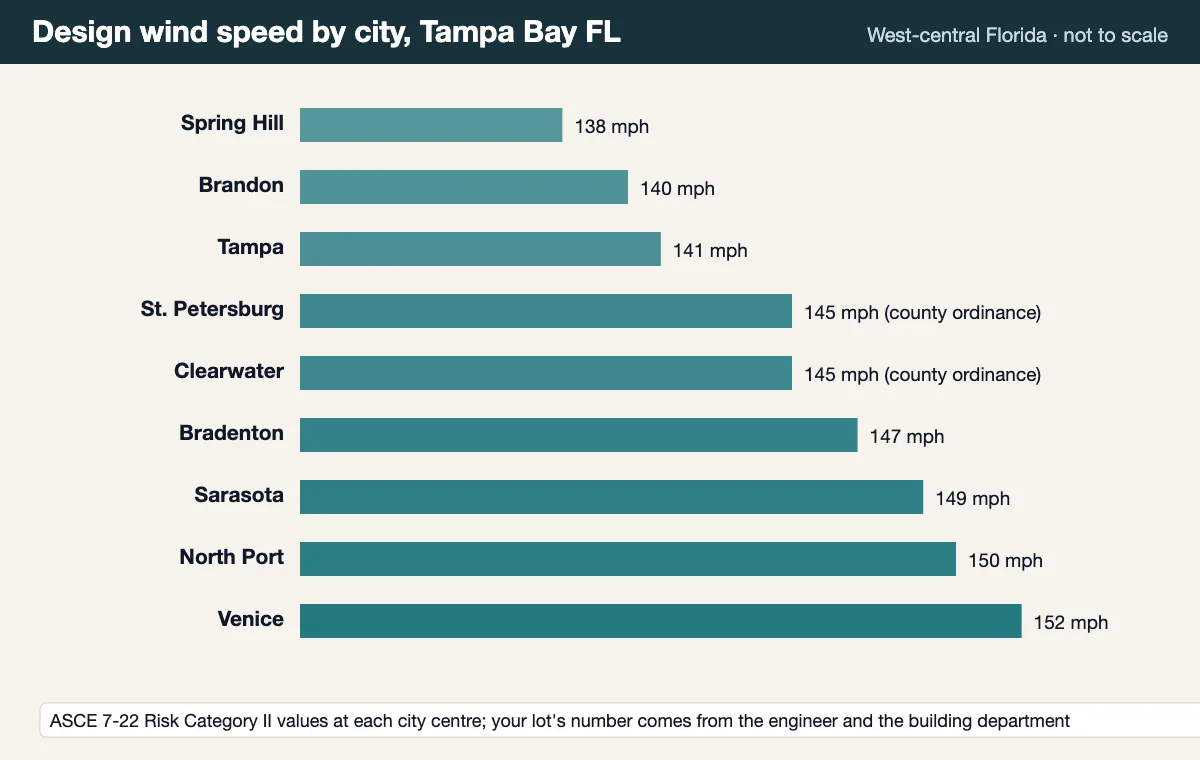
The code's wind numbers assume a specific screen, so a big change in screen type is an engineering question. Florida Building Code Table 2002.4, which sets screen enclosure wind pressures, is based on “20 x 20 x 0.013” mesh screen. Solid panels are treated differently: the code requires removable vinyl, glass or acrylic panels to carry a decal saying they shall be removed when wind speeds exceed 75 mph.
Before swapping large areas of standard mesh for solar, privacy or laminated screen, ask whether the cage's engineering allows it. For storm behavior in more depth, see are pool cages hurricane proof.
How pool cage screens are replaced
Replacing a pool cage screen means pulling the old spline, laying new mesh over the panel and rolling fresh spline into the channel so the screen sits tight. A single panel is a manageable DIY job on a ground-level wall with a spline roller. Roof panels and second-story walls are a different matter: they need ladders or scaffolding and someone used to working above a pool.
A handful of panels is a pool screen repair, priced per panel. When a quarter or more of the cage is worn out, a full pool cage rescreening replaces every panel with the mesh you choose, and the rescreening cost guide shows what that runs in Tampa Bay. Screened lanais without a pool use the same meshes; see lanai screen repair.
This site covers Hillsborough, Pinellas, Pasco, Manatee, Sarasota and Hernando counties; the service area page lists every town. When you know which mesh you want, request a free quote.